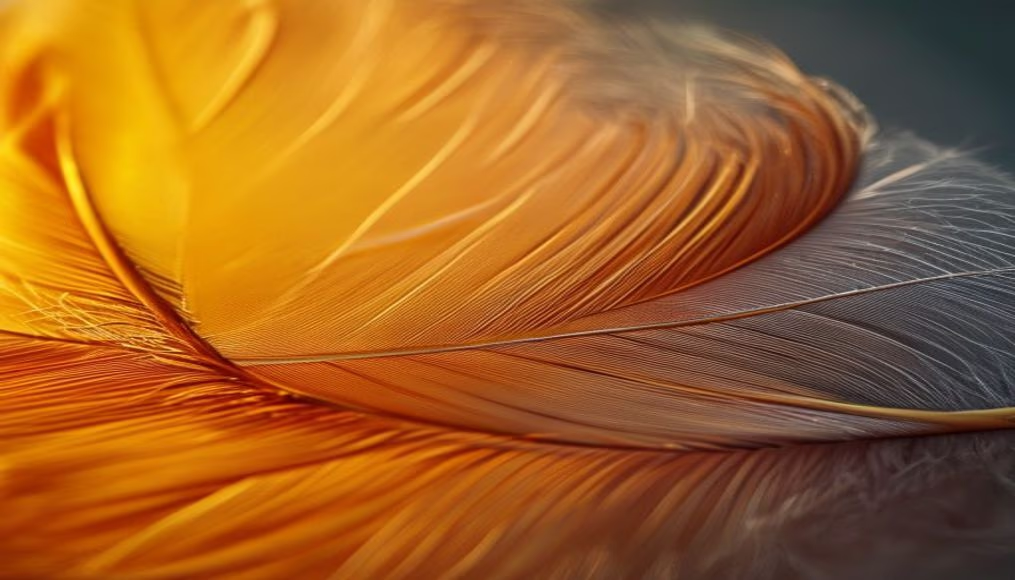
Feather macro detail
1344×768 · AVIF · CC BY 4.0
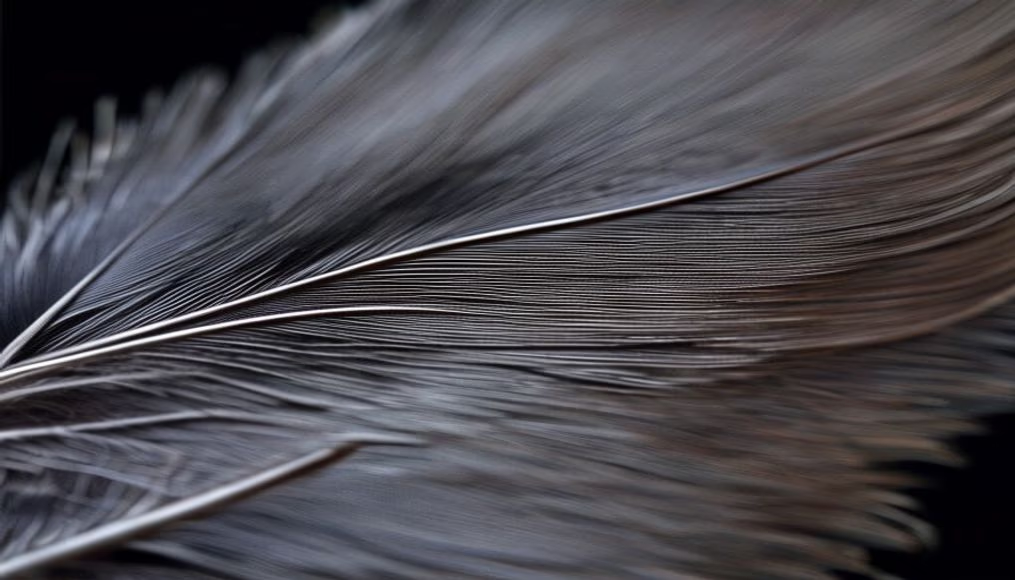
Microscopic details of a feather: structure, types, and biological functions of bird feathers.
About this subject
Feathers are complex integumentary structures unique to birds, composed mainly of keratin. Each feather has a central shaft called the rachis, from which barbs branch, and these further divide into barbules with hooks that interlock, forming a continuous surface. This architecture provides lightness, strength, and waterproofing, essential for flight, thermal insulation, and sexual display.
There are several types of feathers, each with specific functions. Contour feathers cover the body and give aerodynamic shape; flight feathers (remiges and rectrices) are elongated and asymmetrical for lift and steering; down feathers (plumules) provide thermal insulation; and filoplumes and bristles have sensory and protective roles. Coloration can be structural (iridescence) or pigmentary (melanins, carotenoids), serving for camouflage, communication, or mate attraction.
Culturally, feathers have been used for centuries in indigenous adornments, feather art, and as writing material (goose quills). In industry, eiderdown feathers are valued for high insulation in clothing and bedding. Macrophotography of feathers reveals details invisible to the naked eye, such as the complex barbule structure and color patterns that often exhibit fascinating optical properties, like fluorescence under UV light.
Frequently Asked Questions
How do feathers form in birds?
Feathers develop from follicles in the skin, similar to mammalian hair. Growth begins with a dermal papilla that produces keratin, forming a sheath that opens to reveal the mature feather. The process is regulated by hormones and molt cycles.
What is the difference between flight feathers and contour feathers?
Flight feathers (remiges on wings and rectrices on tail) are long, stiff and asymmetrical, optimized for aerodynamics. Contour feathers cover the body, are more symmetrical and flexible, providing shape and protection.
Why are some feathers iridescent?
Iridescence is caused by the microscopic structure of barbules acting as a diffraction grating, reflecting certain wavelengths of light. This creates colors that change with viewing angle, common in hummingbirds and peacocks.
Direct URL
https://pub-c7d6a6ea828543ac903a74a341ccb2e1.r2.dev/imagens/feather-macro-detail-commercial-product-photography-v9.avifHow to credit
Include a visible link back to UtilizAí. Copy one of the snippets below:
<a href="https://xn--utiliza-eza.com/en/midia/imagens/feather-macro-detail-commercial-product-photography-v9">Feather macro detail</a> by <a href="https://xn--utiliza-eza.com">UtilizAí</a>, licensed under <a href="https://creativecommons.org/licenses/by/4.0/">CC BY 4.0</a>.
[Feather macro detail](https://xn--utiliza-eza.com/en/midia/imagens/feather-macro-detail-commercial-product-photography-v9) by [UtilizAí](https://xn--utiliza-eza.com), CC BY 4.0
License: CC-BY-4.0