Fanuc robot orange
1344×768 · AVIF · CC BY 4.0
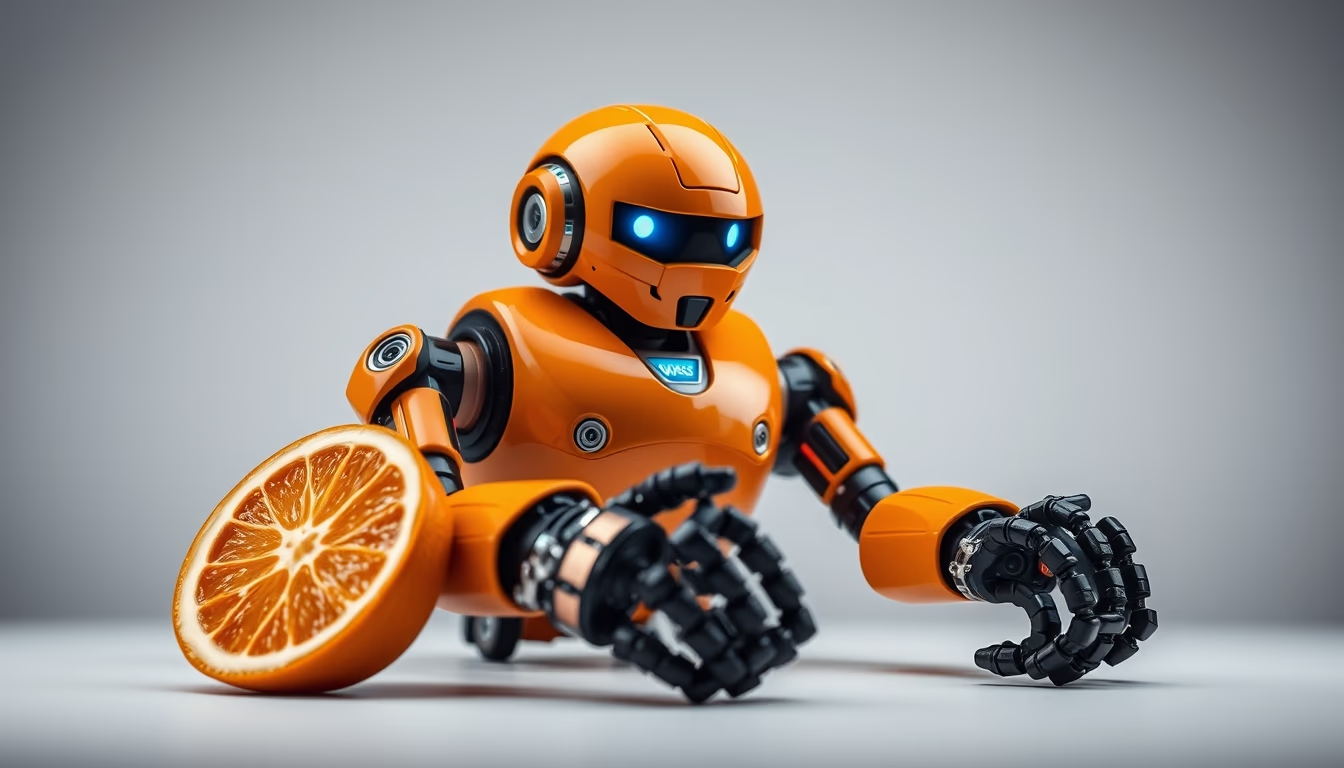
Orange Fanuc industrial robot, a symbol of precision and automation in global manufacturing, highlighted.
About this subject
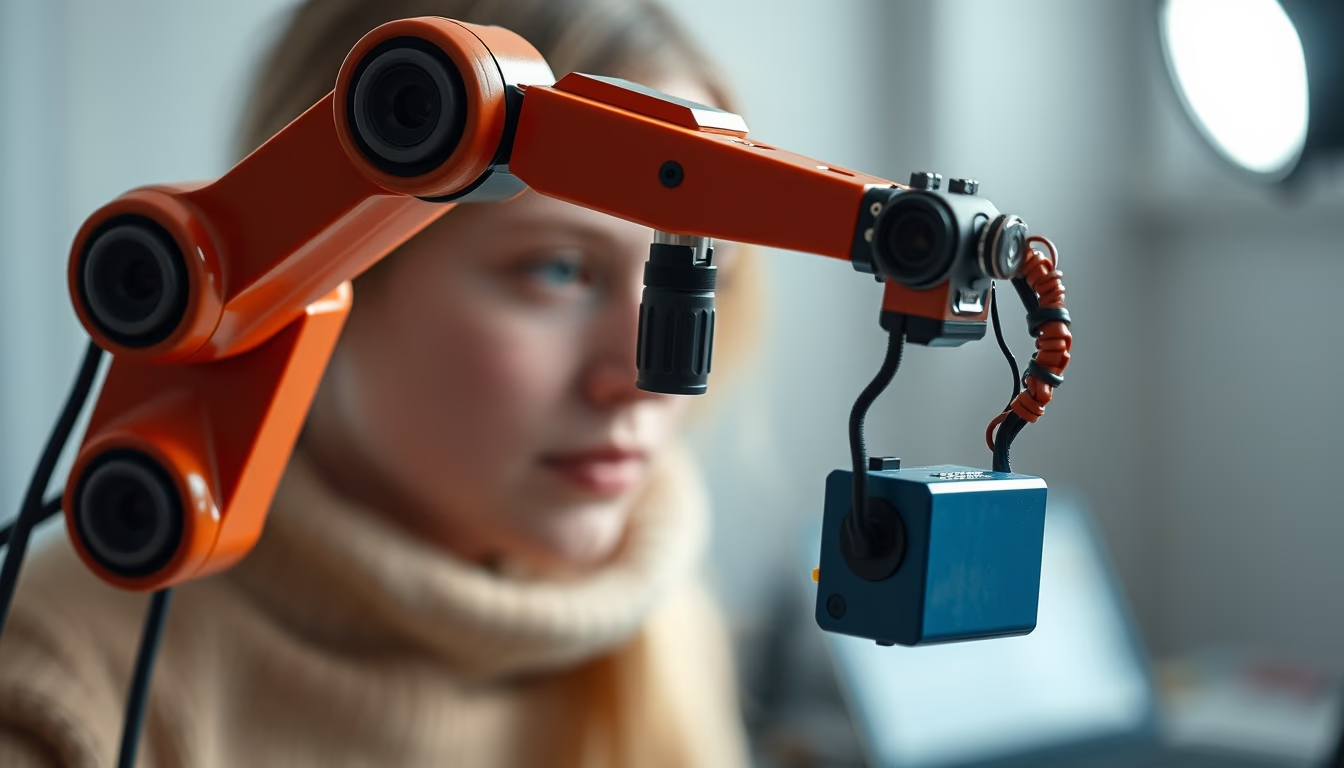
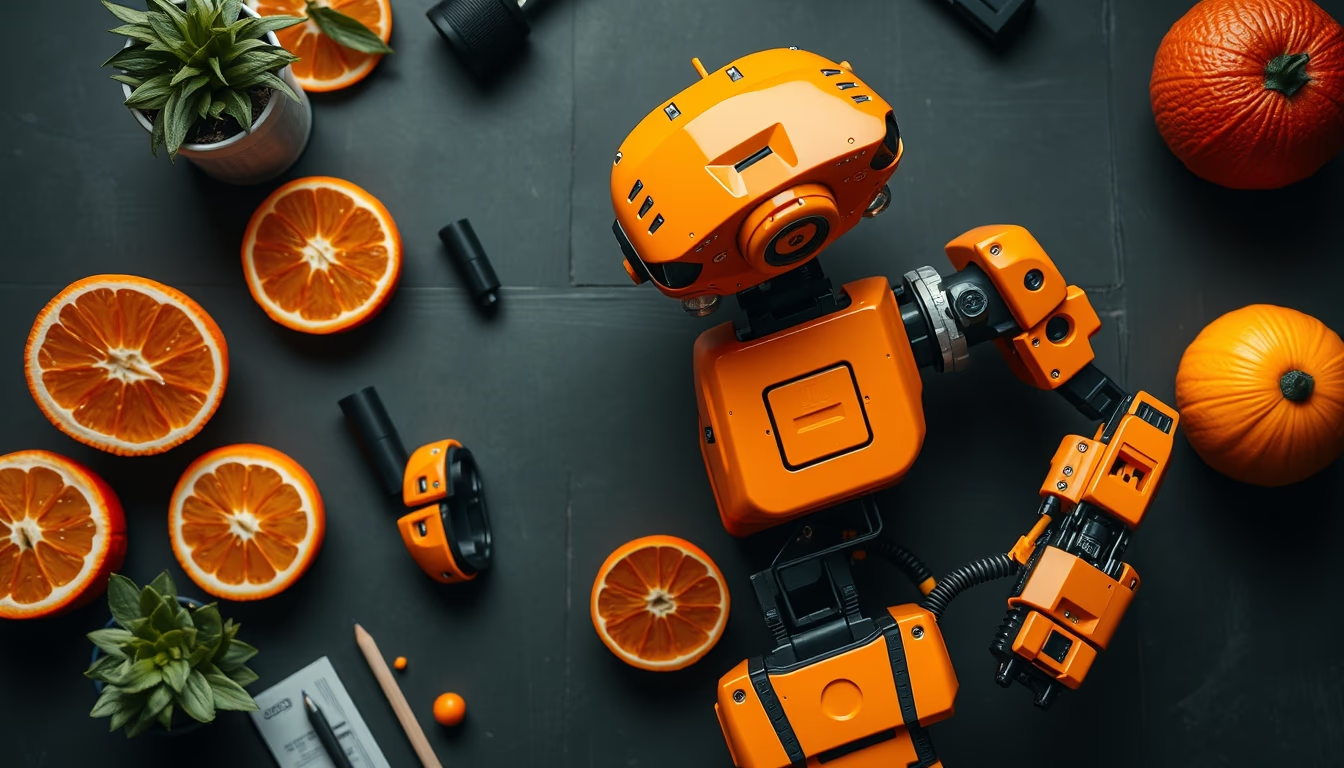
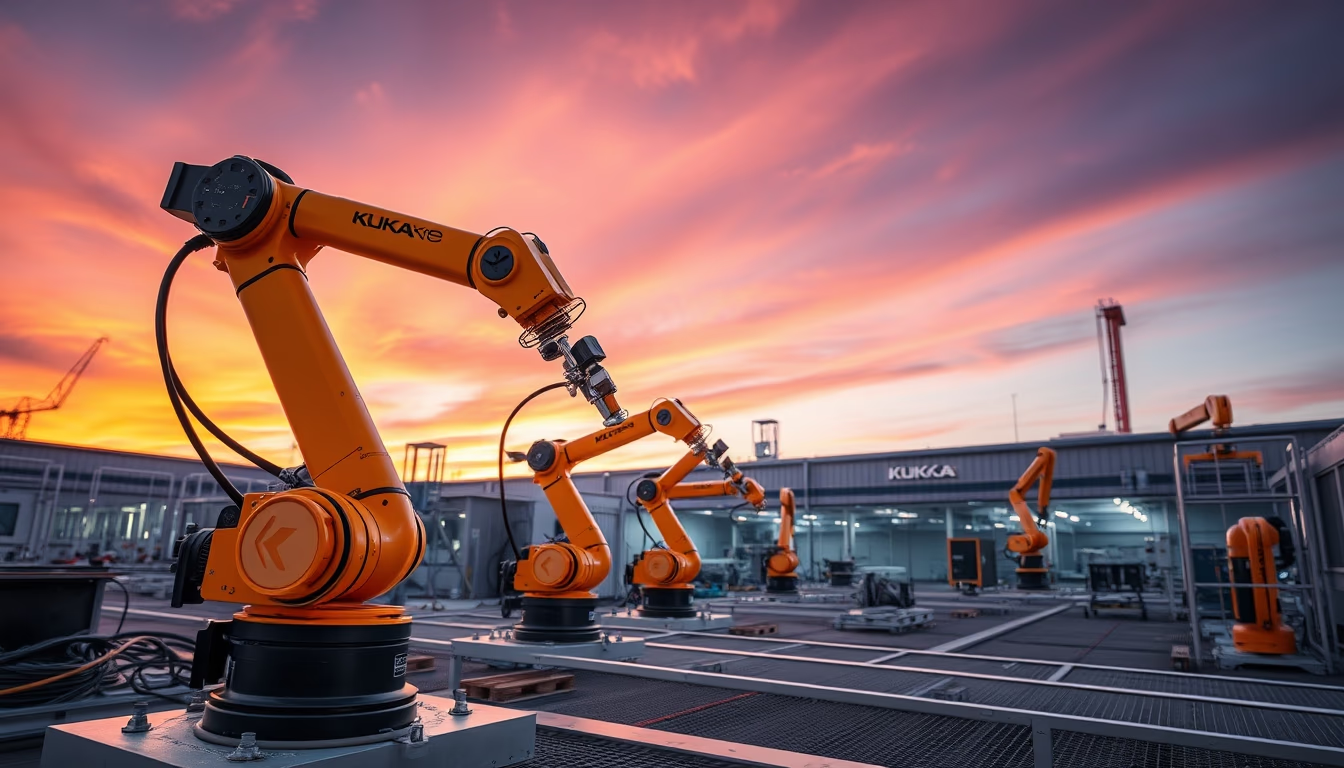
Fanuc robots, instantly recognizable by their bright orange coating, have been a global benchmark in industrial automation since the company's founding in Japan in 1956. The articulated robotic arms, like the one commonly featured in studio still-life photography, offer payload capacities ranging from 3 kg to over 2000 kg and reaches that can exceed 3 meters. They are widely deployed in automotive assembly, welding, material handling, and painting, where repeatability down to micrometers is critical.
The orange color is not merely aesthetic; it is a corporate identity rooted in Japanese heritage and safety: high visibility helps sensors and workers detect the machine. Fanuc is one of the few manufacturers to develop its own CNC controllers, servo motors, and robots in-house, ensuring seamless integration. Their robots boast 99.99% uptime reliability, backed by a global service network.
In the context of Industry 4.0, Fanuc robots connect via protocols like OPC UA and support machine learning for task optimization. Collaborative models such as the CRX series work alongside humans without safety cages. The company has over 1 million robots installed worldwide, leading markets in China and the United States.
Trivia: Fanuc holds the world speed record for a robot with the R-2000iC model, and the orange shade is standardized as RAL 2004. The company also produces green (CRX series) and gray (older series) robots, but orange remains the brand icon.
Frequently Asked Questions
What is the typical payload capacity of an orange Fanuc robot?
Payload varies by model: from 3 kg for small robots up to over 2000 kg for large versions like the M-2000 series.
Why are Fanuc robots painted orange?
Orange is Fanuc's corporate color since the 1970s, chosen for high visibility on the factory floor, aiding safety and identification.
Can Fanuc robots work alongside humans without safety cages?
Yes. Collaborative models like the CRX series are designed for safe human-robot collaboration, with torque sensors and force limits.
Direct URL
https://pub-c7d6a6ea828543ac903a74a341ccb2e1.r2.dev/imagens/fanuc-robot-orange-studio-still-life-p10.avifHow to credit
Include a visible link back to UtilizAí. Copy one of the snippets below:
<a href="https://xn--utiliza-eza.com/en/midia/imagens/fanuc-robot-orange-studio-still-life-p10">Fanuc robot orange</a> by <a href="https://xn--utiliza-eza.com">UtilizAí</a>, licensed under <a href="https://creativecommons.org/licenses/by/4.0/">CC BY 4.0</a>.
[Fanuc robot orange](https://xn--utiliza-eza.com/en/midia/imagens/fanuc-robot-orange-studio-still-life-p10) by [UtilizAí](https://xn--utiliza-eza.com), CC BY 4.0
License: CC-BY-4.0