Collaborative robot cobot
1344×768 · AVIF · CC BY 4.0

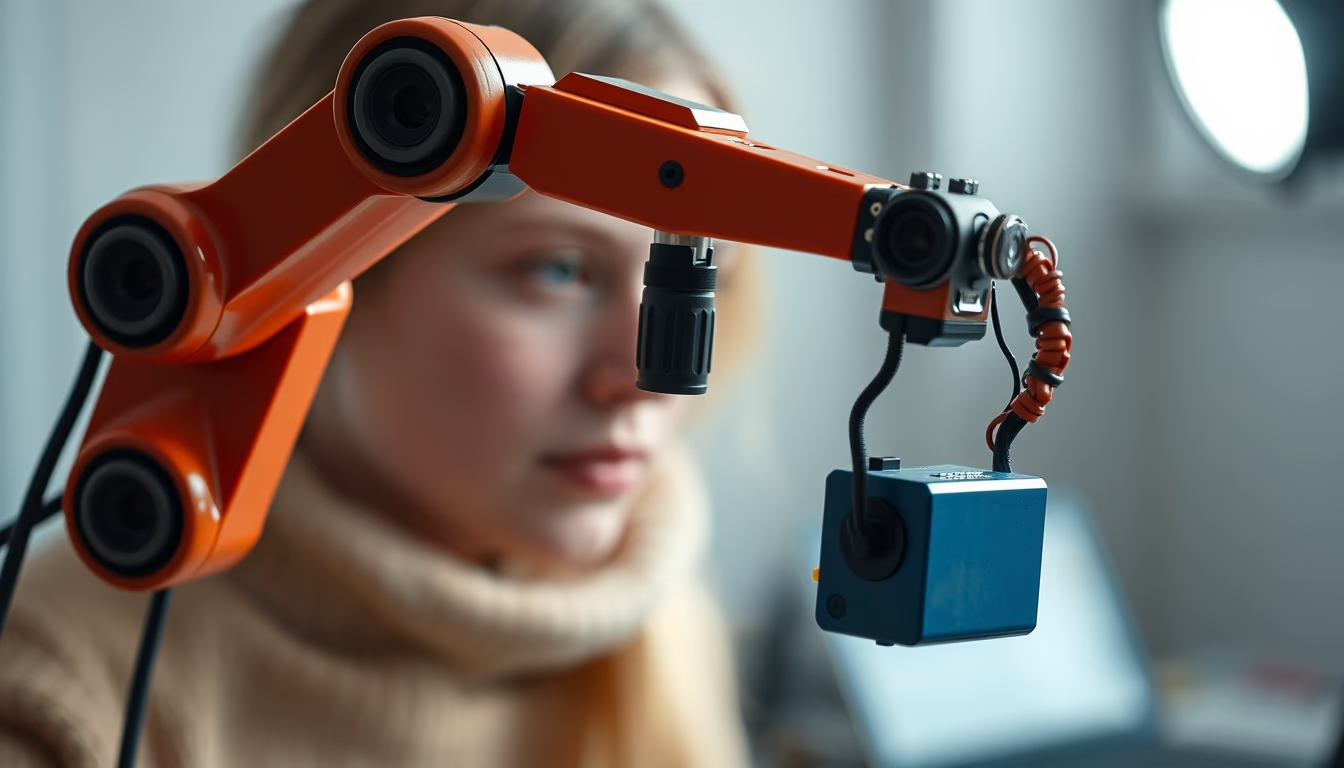
A collaborative robot, or cobot, is a type of industrial robot designed to safely share workspace with humans while boosting productivity.
About this subject
Collaborative robots, commonly known as cobots, represent a significant evolution in industrial automation. Unlike traditional robots that operate in isolation behind safety cages, cobots are designed to interact directly with human workers in a shared workspace. This is made possible by advanced sensors, force and torque limits, and vision systems that detect human presence and automatically stop or reduce speed to prevent accidents.
The origin of cobots dates back to the 1990s, when researchers at Northwestern University led by J. Edward Colgate and Michael Peshkin developed the first prototypes. Their goal was to create machines that could collaborate with humans in tasks requiring physical effort or repetition but still needing human judgment. Since then, the technology has evolved rapidly, and cobots are now widely used in automotive, electronics, logistics, pharmaceutical, and even small and medium-sized enterprises.
A key advantage of cobots is their ease of programming. Many models allow operators without advanced technical knowledge to teach them through manual lead-through or intuitive interfaces. This drastically reduces setup time and enables automation of smaller batches, increasing production flexibility. Additionally, cobots can be equipped with various end effectors, such as grippers, suction cups, or specialized tools, adapting to different tasks: assembly, packaging, quality inspection, light welding, and painting.
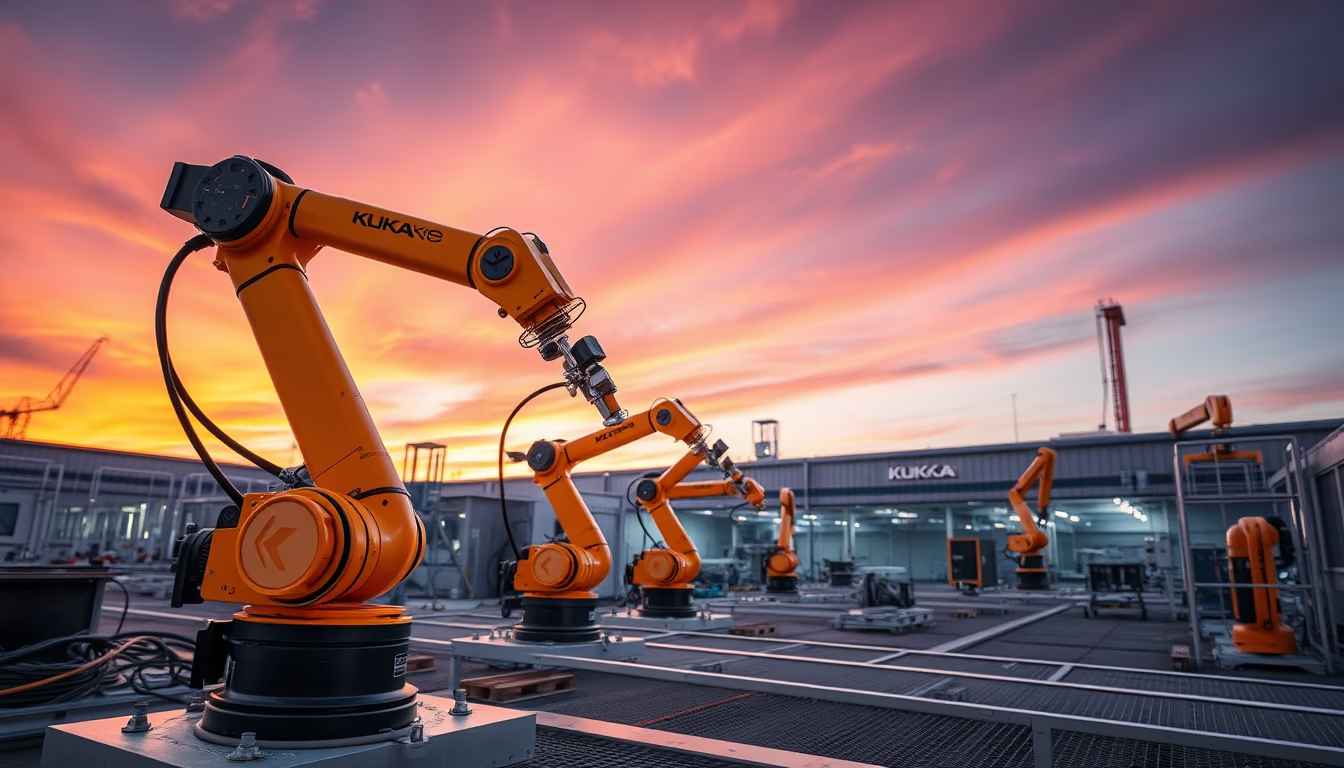
In terms of safety, cobots adhere to strict standards such as ISO 10218 and technical specification ISO/TS 15066, which define requirements for collaborative operation. Force and torque sensors ensure that in case of accidental contact, the robot immediately retreats or stops. Leading global suppliers include Universal Robots, Fanuc, KUKA, and ABB, with prices becoming increasingly accessible. The cobot market is estimated to grow at annual rates above 20%, driven by the pursuit of efficiency and safety on the factory floor.
Frequently Asked Questions
What is the difference between a cobot and a traditional industrial robot?
Cobots are designed to collaborate directly with humans without safety cages, while traditional robots operate in isolation. Cobots feature force sensors and automatic stops, plus simplified programming.
In which industries are cobots most commonly used?
They are common in automotive, electronics, logistics, pharmaceutical, and food industries. They are also gaining traction in small and medium-sized enterprises due to flexibility and lower implementation costs.
What are the main benefits of cobots for companies?
Increased productivity, reduced errors and rework, improved ergonomics for workers, ease of reprogramming for different tasks, and quick integration into existing production lines.
Direct URL
https://pub-c7d6a6ea828543ac903a74a341ccb2e1.r2.dev/imagens/collaborative-robot-cobot-film-grain-authentic-p4.avifHow to credit
Include a visible link back to UtilizAí. Copy one of the snippets below:
<a href="https://xn--utiliza-eza.com/en/midia/imagens/collaborative-robot-cobot-film-grain-authentic-p4">Collaborative robot cobot</a> by <a href="https://xn--utiliza-eza.com">UtilizAí</a>, licensed under <a href="https://creativecommons.org/licenses/by/4.0/">CC BY 4.0</a>.
[Collaborative robot cobot](https://xn--utiliza-eza.com/en/midia/imagens/collaborative-robot-cobot-film-grain-authentic-p4) by [UtilizAí](https://xn--utiliza-eza.com), CC BY 4.0
License: CC-BY-4.0