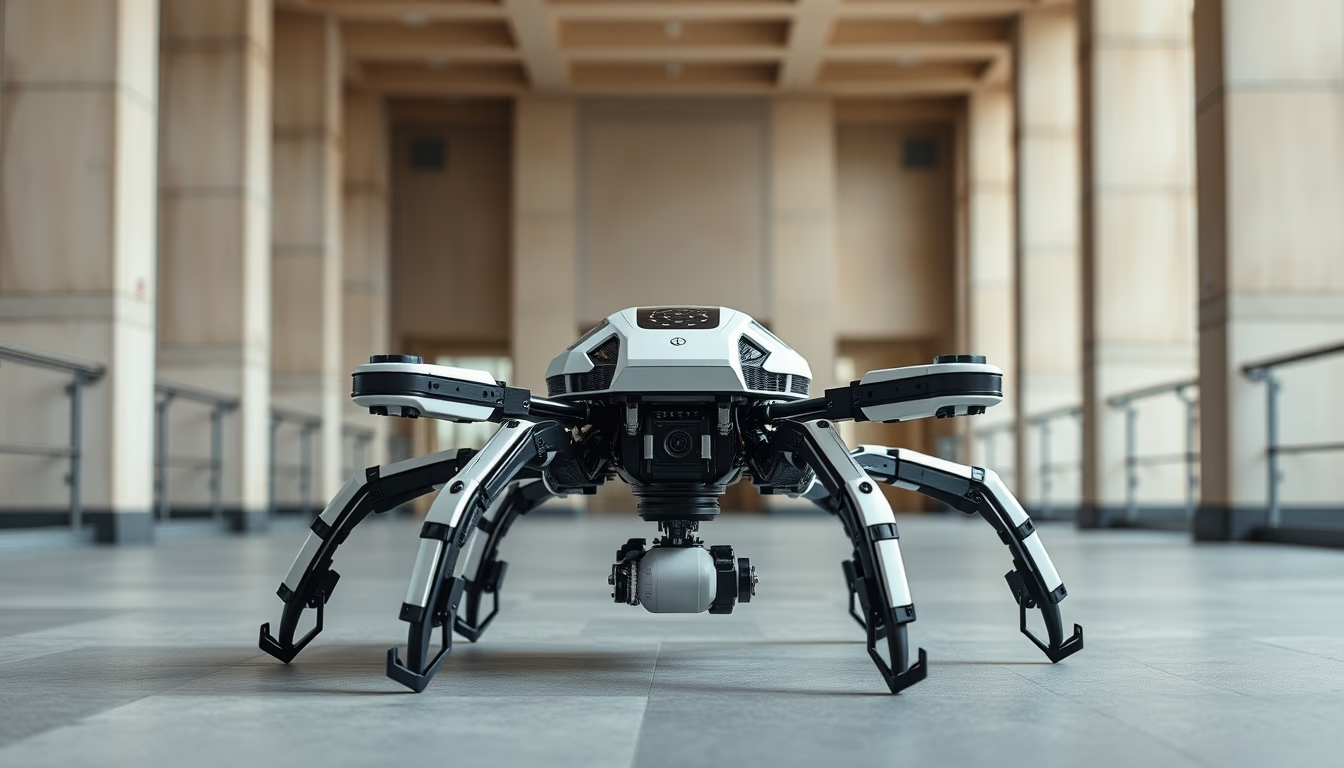
Collaborative robot cobot
1344×768 · AVIF · CC BY 4.0

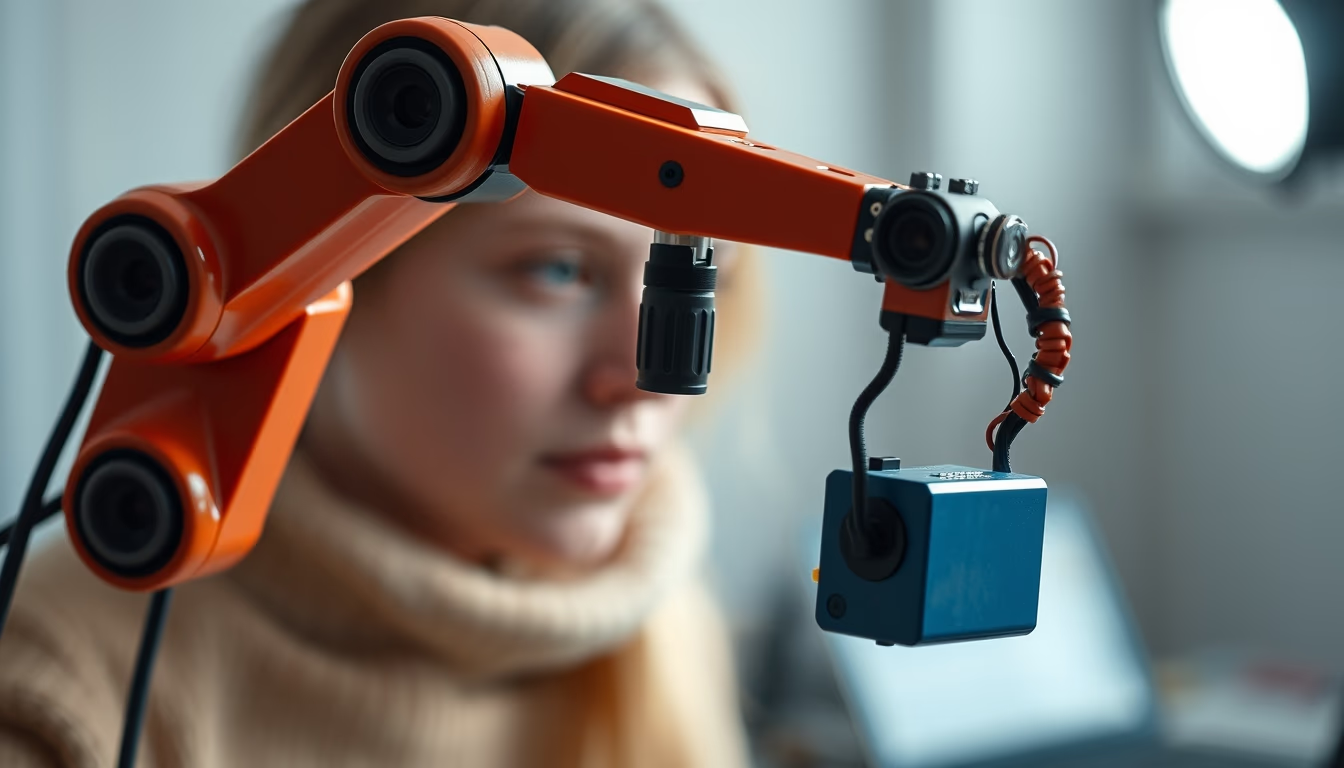
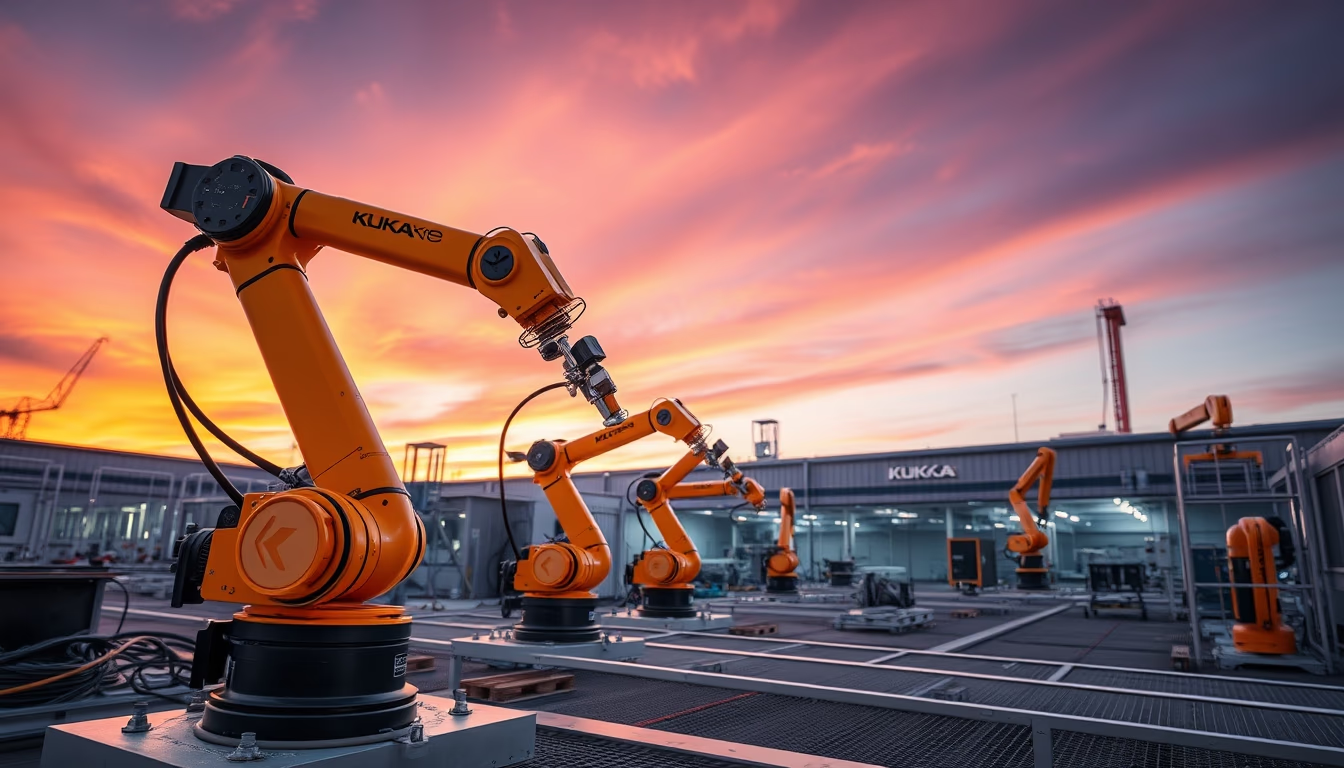
Collaborative robots (cobots) are designed to work alongside humans, combining safety and efficiency in industrial automation.
About this subject
Collaborative robots, or cobots, represent a significant evolution in industrial robotics. Unlike traditional robots that operate inside safety cages, cobots are designed to interact directly with human operators. This capability relies on torque sensors, computer vision, and programmed force limits, enabling immediate stops upon unexpected contact.
Cobots gained traction in the 2000s, with companies like Universal Robots and Fanuc leading the market. They are widely used in tasks such as assembly, inspection, packaging, and material handling. According to the International Federation of Robotics, the cobot market is expected to grow over 20% annually, driven by demand for flexibility in small and medium-sized factories.
Beyond manufacturing, cobots are applied in healthcare (rehabilitation and surgical assistance) and logistics (warehousing and order picking). Their ease of programming, often via graphical interfaces or manual guidance, drastically reduces deployment time. A notable example is ABB's YuMi, capable of assembling small electronic devices with millimeter precision.
Safety standards such as ISO 10218 and ISO/TS 15066 define force and speed limits for cobots. In Brazil, adoption is still modest but growing, especially in automotive and metalworking sectors, where productivity gains exceeding 30% have been reported.
Frequently Asked Questions
What differentiates a collaborative robot from a traditional industrial robot?
Collaborative robots are designed to work in direct contact with humans, using sensors that limit force and speed to prevent accidents. Traditional robots require isolation inside safety cages.
What are the main applications of cobots?
They are used in assembly, inspection, packaging, material handling, logistics, and even assisted surgery. Their flexibility makes them ideal for repetitive tasks in small and medium enterprises.
Are cobots safe to operate near people?
Yes. They comply with standards like ISO 10218 and ISO/TS 15066, which set limits on speed, force, and automatic stopping. Torque and vision sensors prevent dangerous collisions.
Direct URL
https://pub-c7d6a6ea828543ac903a74a341ccb2e1.r2.dev/imagens/collaborative-robot-cobot-cinematic-wide-shot-p12.avifHow to credit
Include a visible link back to UtilizAí. Copy one of the snippets below:
<a href="https://xn--utiliza-eza.com/en/midia/imagens/collaborative-robot-cobot-cinematic-wide-shot-p12">Collaborative robot cobot</a> by <a href="https://xn--utiliza-eza.com">UtilizAí</a>, licensed under <a href="https://creativecommons.org/licenses/by/4.0/">CC BY 4.0</a>.
[Collaborative robot cobot](https://xn--utiliza-eza.com/en/midia/imagens/collaborative-robot-cobot-cinematic-wide-shot-p12) by [UtilizAí](https://xn--utiliza-eza.com), CC BY 4.0
License: CC-BY-4.0