Codex pages ancient
1344×768 · AVIF · CC BY 4.0
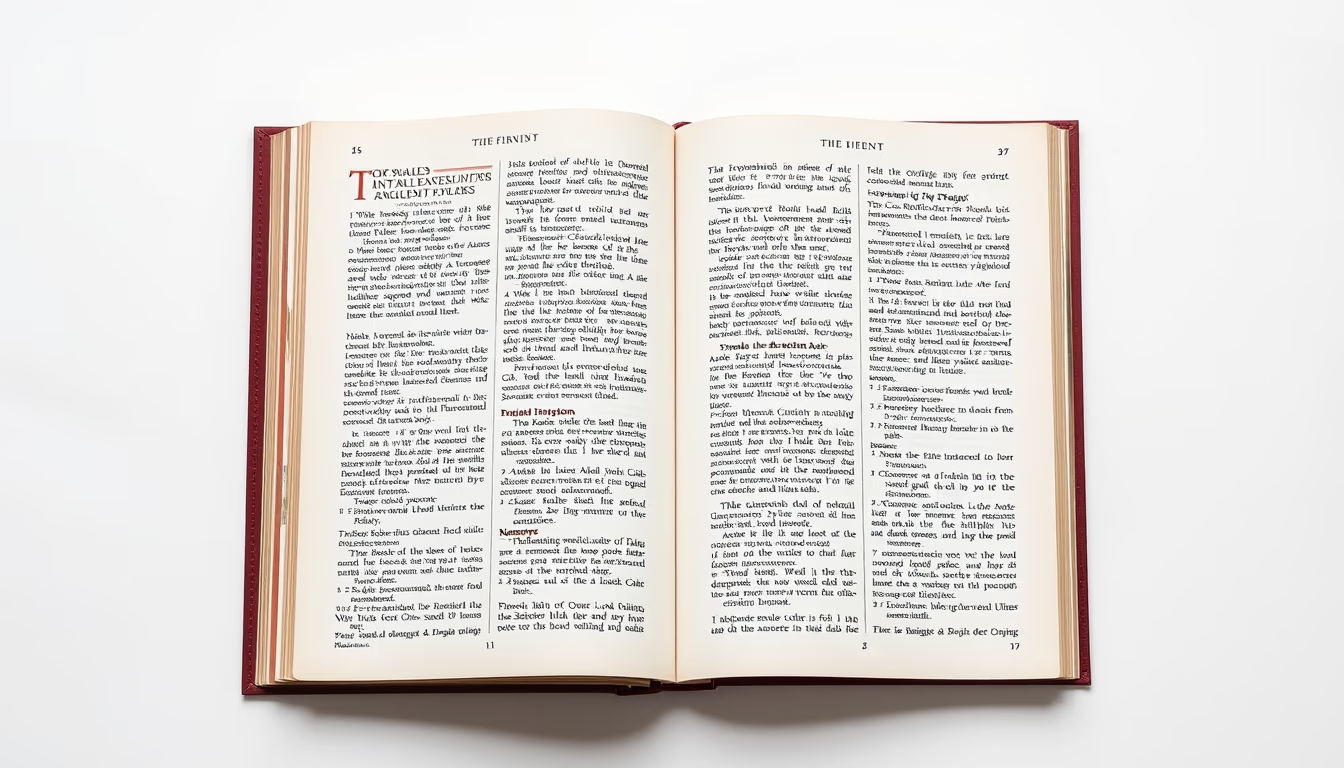
Pages of an ancient codex reveal the evolution of writing and binding, with manuscripts dating back centuries and witnessing the transmission of knowledge.
About this subject
The codex, precursor of the modern book, emerged in the Roman Empire around the 1st century AD, gradually replacing papyrus scrolls. Its structure of folded and sewn pages allowed faster access to specific passages and accommodated larger volumes of text. Early codices were written on papyrus or parchment, the latter made from animal skin and more durable. Over time, the format spread across the Mediterranean and Europe, becoming the primary medium for religious, literary, and scientific texts during the Middle Ages.
The production of an ancient codex involved several artisanal steps. Scribes copied texts by hand, often in monastic scriptoria, using vegetable or mineral inks. Pages were numbered and, in special cases, illuminated with illustrations and gold ornaments. Famous examples like the Codex Sinaiticus (4th century) and the Codex Vaticanus preserve ancient versions of the Bible, while the Codex Leicester (Leonardo da Vinci) contains scientific notes from the Renaissance.
The preservation of these manuscripts is crucial for history. Factors such as humidity, light, and improper handling can quickly deteriorate them. Institutions like the Vatican Library and the British Library employ modern conservation techniques, including digitization, to ensure future access. Ancient codices not only document the past but also reveal the evolution of calligraphy, languages, and binding methods, offering a window into long-vanished civilizations.
Frequently Asked Questions
What is the difference between a codex and a scroll?
A codex consists of folded and sewn pages, while a scroll is a long rolled strip. The codex allowed quicker access to specific passages and could contain more text.
How were ancient codices produced?
They were handwritten by scribes on materials like papyrus, parchment, or vellum, and often illuminated with decorations and richly ornamented initials.
Why are codices important for history?
They preserved ancient texts that might otherwise have been lost, being essential for the study of religions, philosophies, sciences, and literatures of past civilizations.
Direct URL
https://pub-c7d6a6ea828543ac903a74a341ccb2e1.r2.dev/imagens/codex-pages-ancient-commercial-product-photography-p7.avifHow to credit
Include a visible link back to UtilizAí. Copy one of the snippets below:
<a href="https://xn--utiliza-eza.com/en/midia/imagens/codex-pages-ancient-commercial-product-photography-p7">Codex pages ancient</a> by <a href="https://xn--utiliza-eza.com">UtilizAí</a>, licensed under <a href="https://creativecommons.org/licenses/by/4.0/">CC BY 4.0</a>.
[Codex pages ancient](https://xn--utiliza-eza.com/en/midia/imagens/codex-pages-ancient-commercial-product-photography-p7) by [UtilizAí](https://xn--utiliza-eza.com), CC BY 4.0
License: CC-BY-4.0