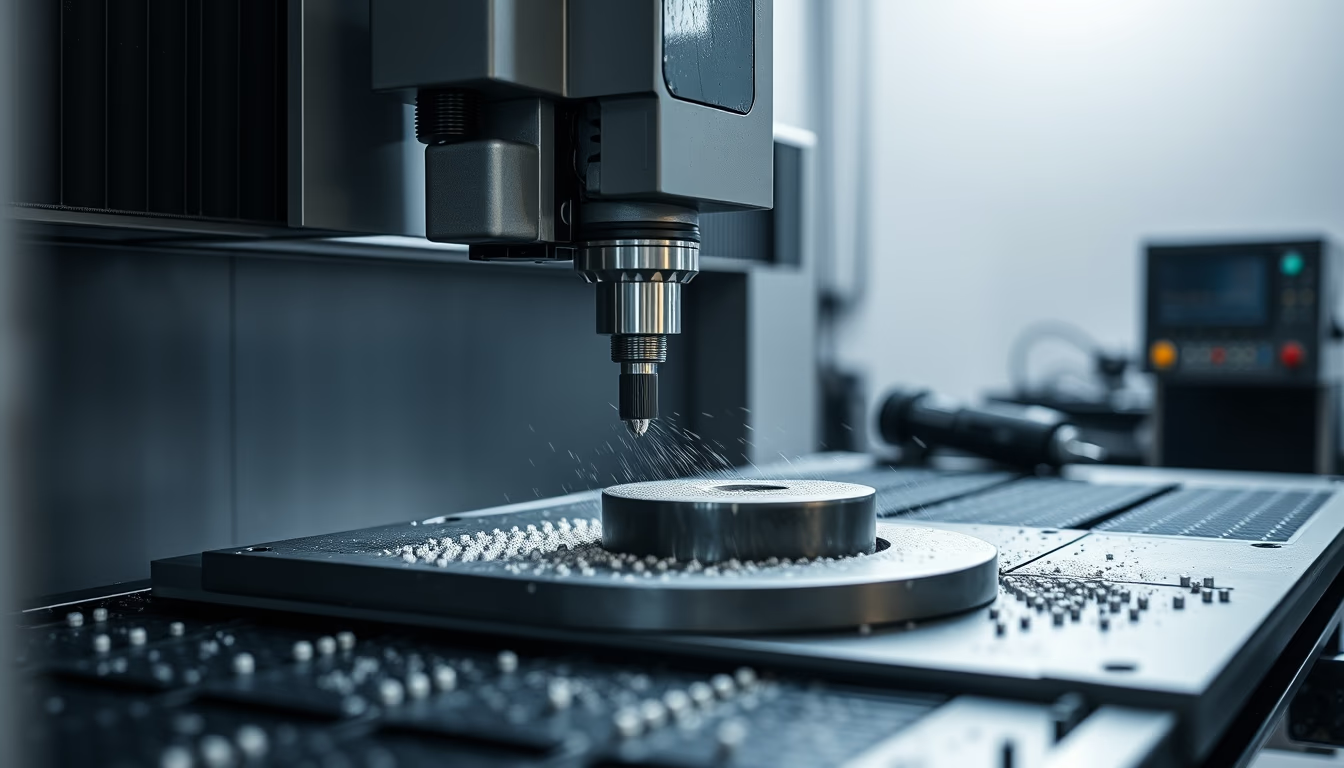
Cnc machine cutting
1344×768 · AVIF · CC BY 4.0
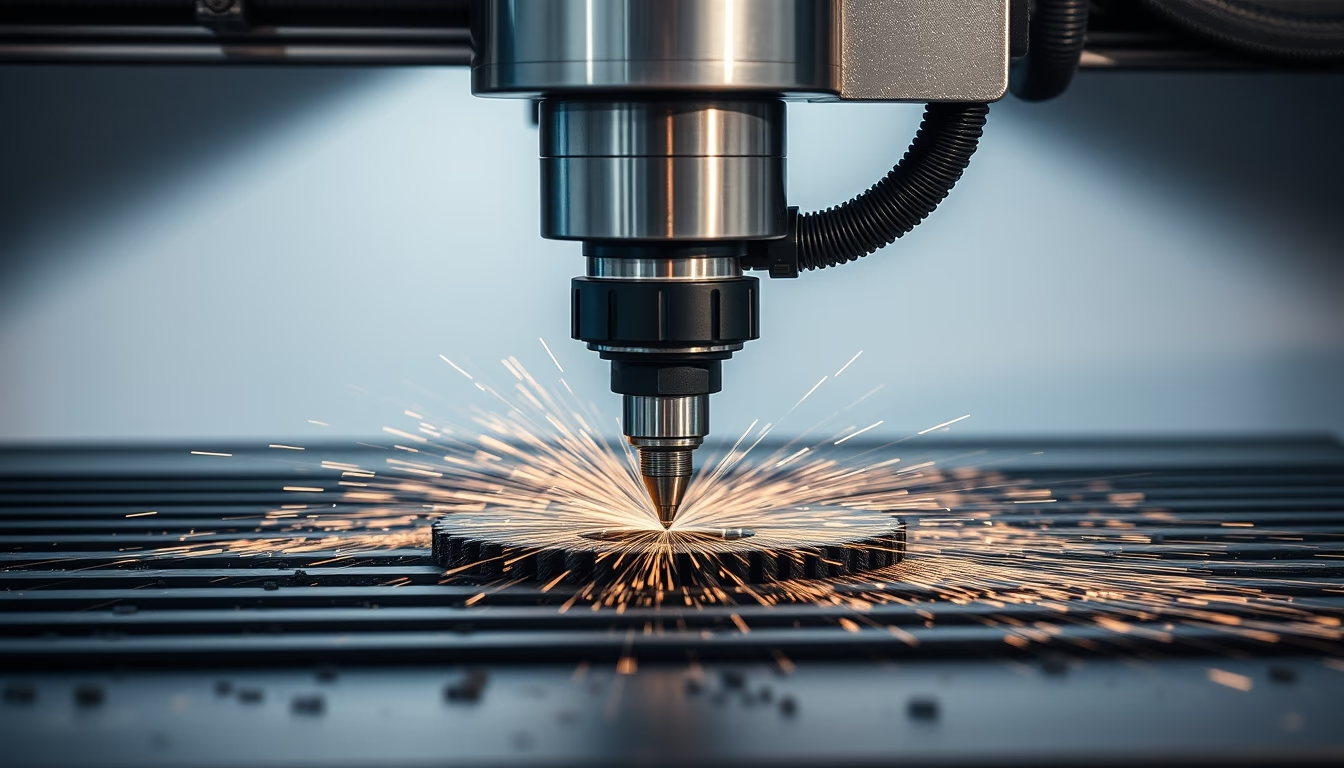
Máquinas CNC realizam cortes de alta precisão em materiais como metal, madeira e plástico, essenciais na indústria moderna.
Sobre o tema
O corte por máquina CNC (Controle Numérico Computadorizado) revolucionou a manufatura ao automatizar ferramentas como fresadoras, tornos e roteadores. Desenvolvido a partir de projetos do MIT nos anos 1950, o sistema permite programar movimentos precisos por meio de códigos G e M, eliminando erros manuais. Os cortes podem ser feitos por diferentes métodos: plasma (para chapas metálicas), laser (para detalhes finos) ou jato d'água (sem gerar calor).
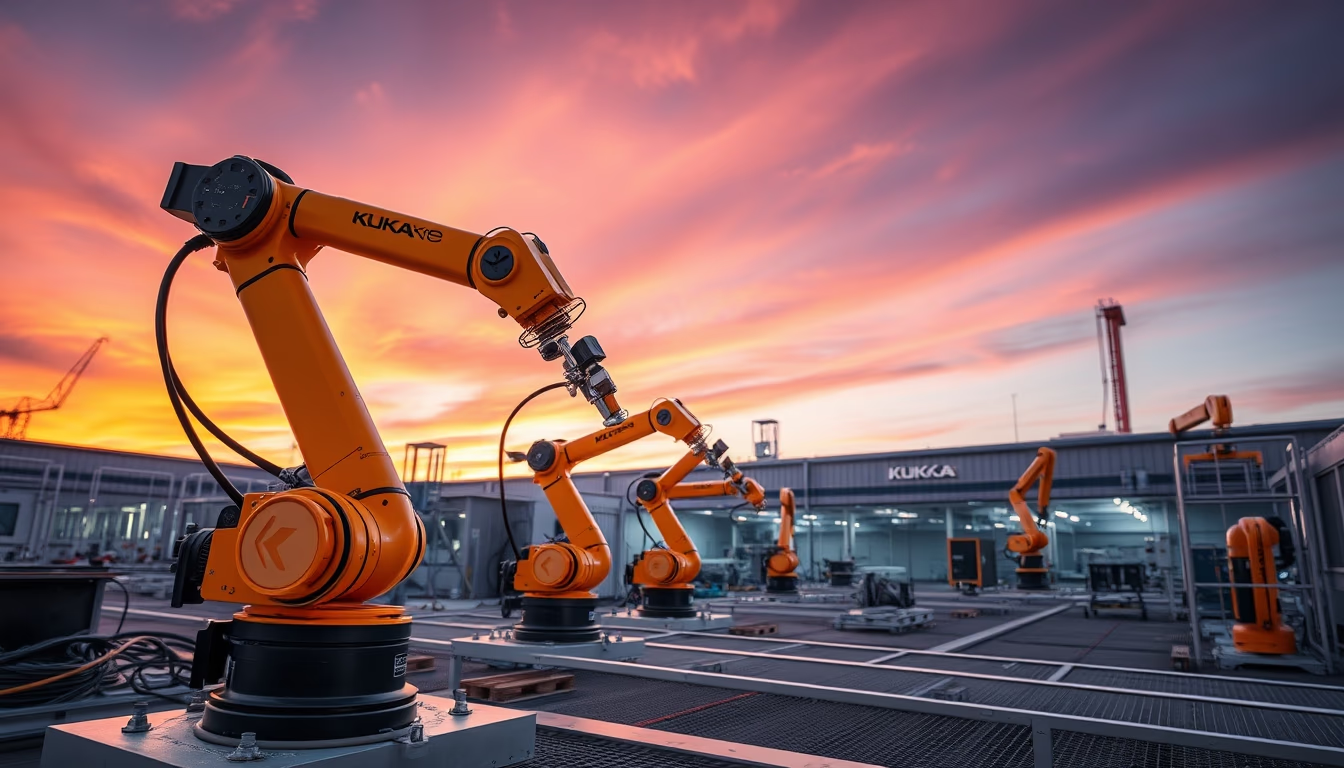
No Brasil, a tecnologia é amplamente usada em indústrias automotiva, moveleira e metalmecânica. Por exemplo, a Fiat utiliza robôs CNC para cortar peças de carroceria com repetibilidade milimétrica. Já em marcenarias, roteadores CNC esculpem móveis personalizados a partir de desenhos digitais, reduzindo desperdício de matéria-prima.
Um fato curioso: a primeira máquina CNC foi uma fresadora modificada em 1952 pela Universidade MIT, que precisava de um leitor de fita perfurada para receber instruções. Hoje, os controladores modernos integram-se a softwares de CAD/CAM e sensores IoT, permitindo monitoramento remoto e manutenção preditiva. A precisão típica chega a 0.001 mm, dependendo do eixo e do tipo de ferramenta.
Embora associadas à indústria pesada, máquinas CNC também são usadas em pequenos negócios e makerspaces. No Brasil, o Senai oferece cursos de programação CNC, formando técnicos que operam esses equipamentos em setores como aeroespacial e de instrumentos médicos. A tendência é a integração com inteligência artificial para otimizar trajetórias de corte e reduzir o tempo de ciclo.
Perguntas frequentes
Quais materiais podem ser cortados por uma máquina CNC?
Máquinas CNC cortam metais (aço, alumínio, cobre), madeira, plásticos, acrílico, espumas e até compostos como fibra de carbono. O método de corte depende do material: plasma para metais, laser para precisão em plásticos, jato d'água para evitar deformações térmicas.
Qual a diferença entre CNC e impressão 3D?
CNC é um processo subtrativo: remove material de um bloco para criar a peça. Impressão 3D é aditiva: constrói a peça camada por camada. CNC é mais rápido para produção em larga escala e materiais metálicos, enquanto a impressão 3D é ideal para protótipos e geometrias complexas.
Como é programado um corte CNC?
O programador cria um modelo 3D em software CAD (ex: SolidWorks) e gera o código G no CAM (ex: Fusion 360). O código define trajetórias, velocidades e troca de ferramentas. O operador carrega o arquivo no controlador da máquina e executa o corte.
URL direta
https://pub-c7d6a6ea828543ac903a74a341ccb2e1.r2.dev/imagens/cnc-machine-cutting-magazine-editorial-p4.avifComo creditar
Inclua um link visível de volta pro UtilizAí. Copie um dos snippets abaixo:
<a href="https://xn--utiliza-eza.com/midia/imagens/cnc-machine-cutting-magazine-editorial-p4">Cnc machine cutting</a> by <a href="https://xn--utiliza-eza.com">UtilizAí</a>, licensed under <a href="https://creativecommons.org/licenses/by/4.0/">CC BY 4.0</a>.
[Cnc machine cutting](https://xn--utiliza-eza.com/midia/imagens/cnc-machine-cutting-magazine-editorial-p4) by [UtilizAí](https://xn--utiliza-eza.com), CC BY 4.0
Licença: CC-BY-4.0