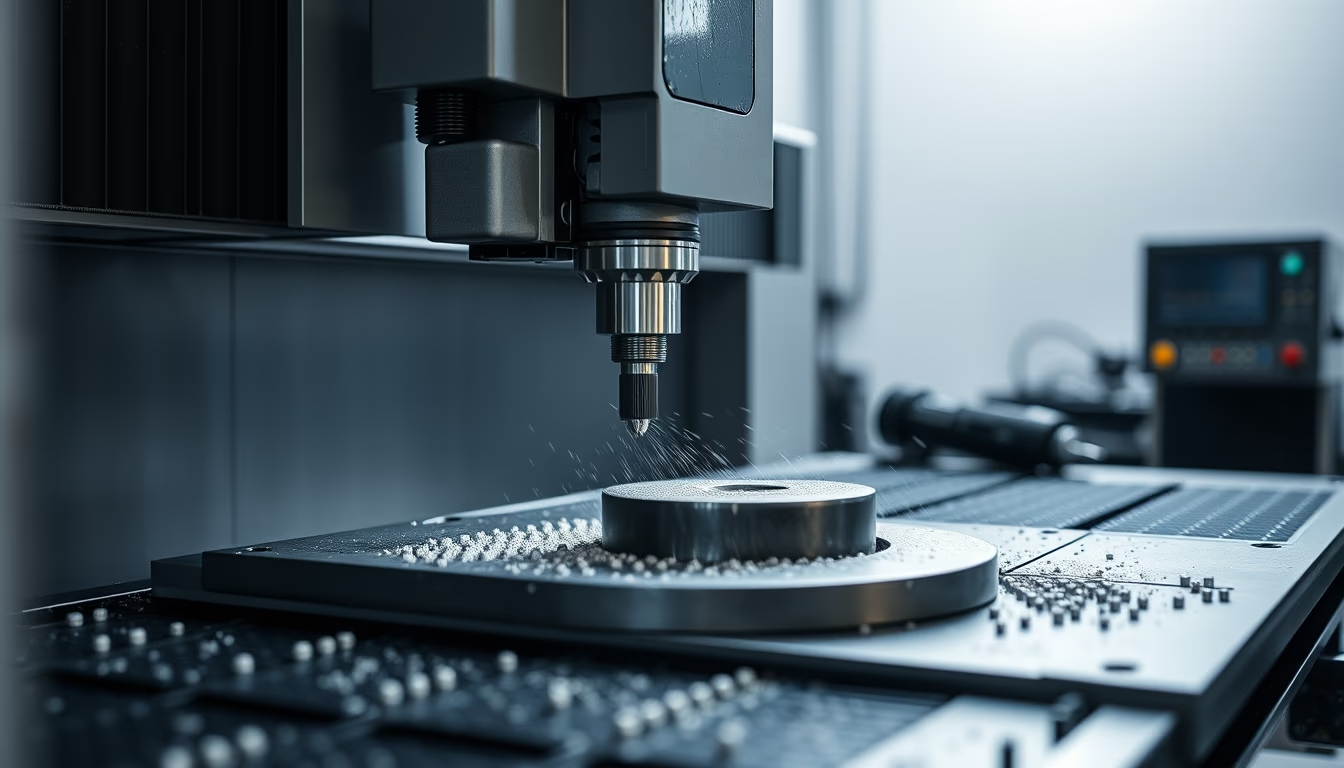
Cnc machine cutting
1344×768 · AVIF · CC BY 4.0
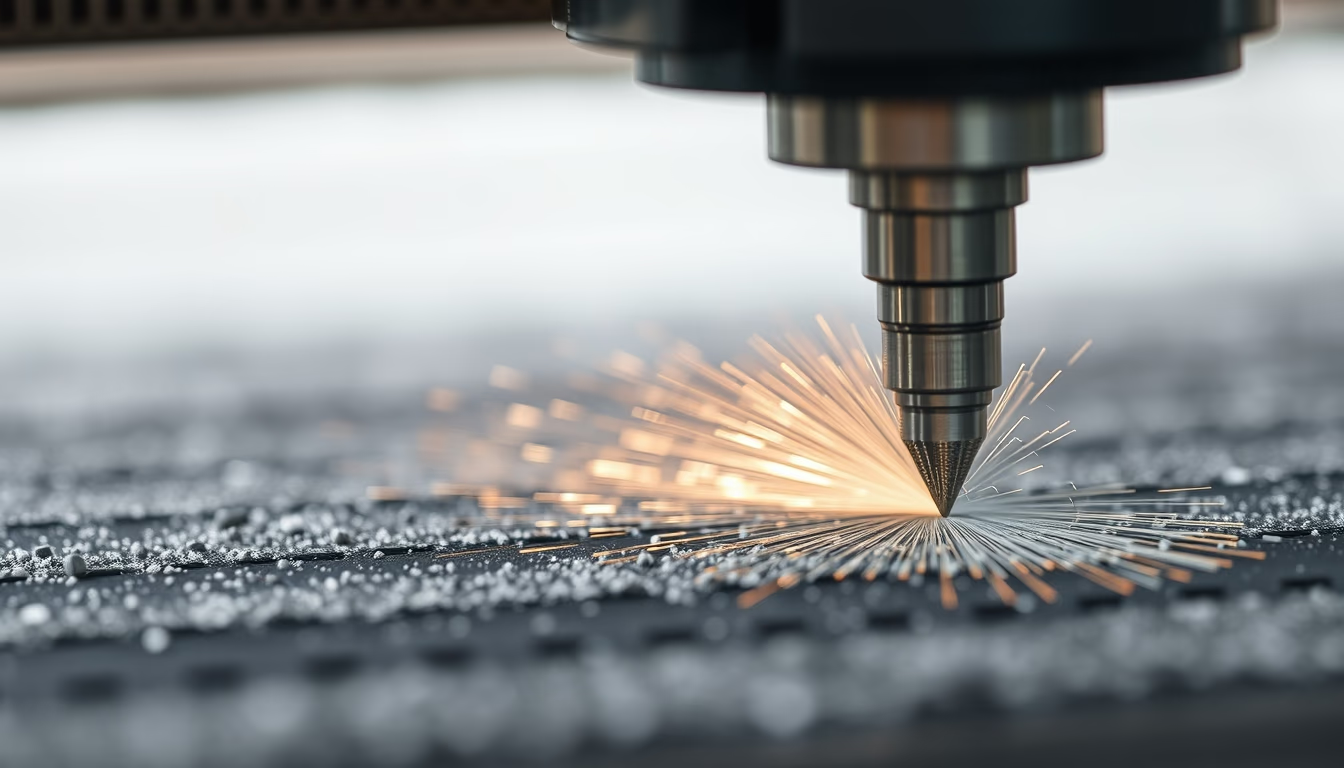
CNC machines use computerized controls to perform high-precision cuts and machining on various materials, essential in modern manufacturing.
About this subject
Computer Numerical Control (CNC) machines are automated tools that execute machining operations based on coded instructions generated by software. The process starts with a 3D model created in CAD (Computer-Aided Design), which is converted into G-code by CAM (Computer-Aided Manufacturing). This code controls the machine axes, positioning cutting tools with micrometer precision.
Common types of CNC machines include mills, lathes, plasma cutters, laser cutters, and waterjet cutters. Each is suited to different materials: metals (aluminum, steel, titanium), plastics, wood, composites, and even foam. CNC mills can operate on 3, 4, or 5 axes, enabling complex geometries and reduced setups. Automation through CNC has brought enormous gains in repeatability, efficiency, and safety, replacing error-prone manual operations.
The history of CNC dates back to the 1950s, when MIT developed the first prototype milling machine using punched tape. Since then, technology has evolved rapidly, integrating with robotic systems and Industry 4.0. Today, CNC machines are essential in aerospace (turbine components), automotive (engine blocks), medical (orthopedic implants), and electronics (circuit boards). Typical precision reaches tolerances of ±0.005 mm.
A critical factor in CNC operation is the correct choice of cutting parameters: spindle speed, feed rate, depth of cut, and coolant. Proper lubrication extends tool life and improves surface finish. Efficient programming reduces material waste and cycle time, maximizing productivity.
Frequently Asked Questions
What does CNC stand for?
CNC stands for Computer Numerical Control. It is a system that automatically controls machine tools through programmed instructions.
What materials can be cut using a CNC machine?
CNC machines can cut a variety of materials, including metals (steel, aluminum, copper), wood, plastics, acrylics, composites, foam, and even glass, depending on the tooling (mill, laser, plasma, waterjet).
What are the main benefits of CNC machining?
The main benefits are high precision, repeatability, automation, reduction of human errors, ability to produce complex geometries, and increased productivity at scale.
Direct URL
https://pub-c7d6a6ea828543ac903a74a341ccb2e1.r2.dev/imagens/cnc-machine-cutting-macro-closeup-p1.avifHow to credit
Include a visible link back to UtilizAí. Copy one of the snippets below:
<a href="https://xn--utiliza-eza.com/en/midia/imagens/cnc-machine-cutting-macro-closeup-p1">Cnc machine cutting</a> by <a href="https://xn--utiliza-eza.com">UtilizAí</a>, licensed under <a href="https://creativecommons.org/licenses/by/4.0/">CC BY 4.0</a>.
[Cnc machine cutting](https://xn--utiliza-eza.com/en/midia/imagens/cnc-machine-cutting-macro-closeup-p1) by [UtilizAí](https://xn--utiliza-eza.com), CC BY 4.0
License: CC-BY-4.0