Cnc machine cutting
1344×768 · AVIF · CC BY 4.0
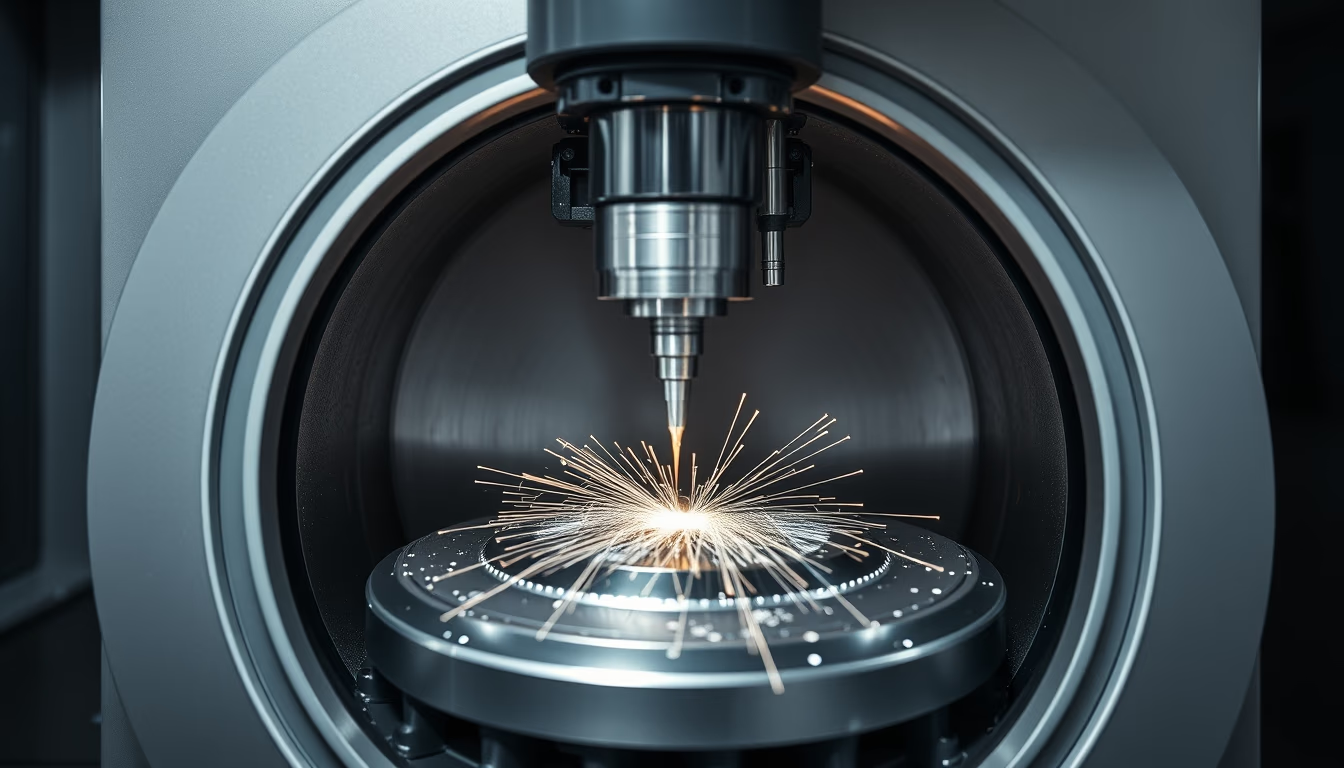
CNC (Computer Numerical Control) machines revolutionize architectural fabrication with millimeter precision and complex shapes.
About this subject
CNC (Computer Numerical Control) machines are automated tools that interpret software instructions to cut, mill, engrave, or drill materials such as wood, metal, plastic, and composites. In architecture, they enable the production of custom components, from conceptual models to full-scale structures. The precision achieved, on the order of hundredths of a millimeter, makes possible complex geometries like parametric facades and organic joints, unattainable with manual methods.
The history of CNC machines dates back to the 1940s and 1950s, when American engineer John T. Parsons developed the first numerical control system for manufacturing helicopter blades. With the spread of computers and CAD/CAM software, the technology became democratized from the 1980s onward. Today, from small workshops to large construction firms, CNC use is standard for rapid prototyping and batch production. In contemporary architecture, firms like Zaha Hadid Architects employ CNC routers to create concrete molds with fluid curves.
An important note: the term 'router' often refers to smaller CNC machines, while 'machining center' denotes larger industrial equipment. Beyond cutting, they can perform tasks like engraving and component insertion. Regular maintenance is crucial for accuracy, especially axis calibration and cutting tool replacement. For architects, mastering the workflow from parametric modeling (e.g., Grasshopper) to G-code is a valued skill in the job market.
The connection to architectural photography arises when these machines produce detailed models or prototypes for visual tests. Images of CNC machines in operation convey the intersection of digital design and physical fabrication, a central theme in Industry 4.0. Dramatic lighting and selective focus often used in these photographs highlight sparks and chips, elements that underscore the subtractive process.
Frequently Asked Questions
What does CNC stand for in architecture?
CNC stands for Computer Numerical Control. In architecture, it refers to the use of automated machines to cut and shape materials with high precision, enabling the fabrication of complex and custom components.
What materials can be cut by a CNC machine?
Wood, plywood, MDF, acrylic, aluminum, steel, plastics, foam, and even stone, depending on the machine's power and the cutting tool type.
How do you program a CNC machine?
Use CAD software to design the part and CAM software to generate G-code, the machine's instruction language. Programs like Fusion 360, VCarve, and Mach3 integrate these steps.
Direct URL
https://pub-c7d6a6ea828543ac903a74a341ccb2e1.r2.dev/imagens/cnc-machine-cutting-architectural-photography-p9.avifHow to credit
Include a visible link back to UtilizAí. Copy one of the snippets below:
<a href="https://xn--utiliza-eza.com/en/midia/imagens/cnc-machine-cutting-architectural-photography-p9">Cnc machine cutting</a> by <a href="https://xn--utiliza-eza.com">UtilizAí</a>, licensed under <a href="https://creativecommons.org/licenses/by/4.0/">CC BY 4.0</a>.
[Cnc machine cutting](https://xn--utiliza-eza.com/en/midia/imagens/cnc-machine-cutting-architectural-photography-p9) by [UtilizAí](https://xn--utiliza-eza.com), CC BY 4.0
License: CC-BY-4.0