Chameleon color changing
1344×768 · AVIF · CC BY 4.0
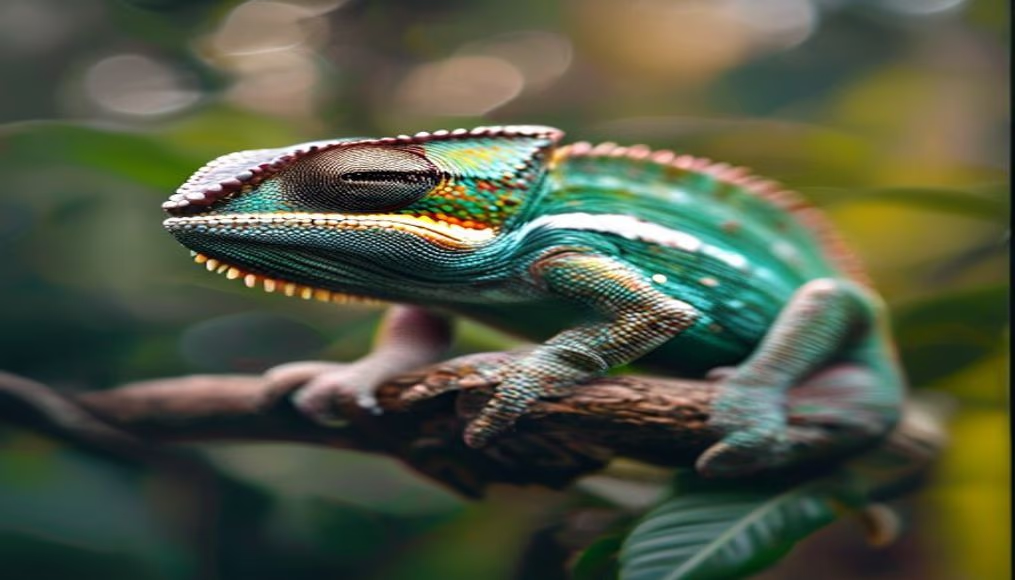
Chameleons change color for communication, thermoregulation, and camouflage using specialized skin cells.
About this subject
Chameleons are reptiles famous for their incredible ability to change color, a phenomenon made possible by specialized skin cells called chromatophores. These cells contain pigments that can be dispersed or concentrated, altering the skin's coloration. Contrary to popular belief, color change is not solely for camouflage; it also serves social communication, such as expressing aggression or attracting mates, and thermoregulation, as darker colors absorb more heat.
There are over 200 species of chameleons, most native to Madagascar and Africa, with some found in southern Europe, southern Asia, and Indian Ocean islands. They have independently moving eyes, tongues that can project long distances to capture prey, and prehensile tails that aid in climbing. Color change is controlled by the nervous system and hormones, occurring within seconds to minutes.
Recent studies have revealed that chameleons have iridescent nanocrystals in the top layer of their skin, which reflect light in specific ways, contributing to vibrant colors. The ability to change color varies by species and depends on factors like age, sex, and season. For instance, the panther chameleon (Furcifer pardalis) is known for displaying a wide range of colors during mating displays.
The tilt-shift miniature photographic technique uses optical effects to make real objects appear as miniatures by selectively blurring parts of the image. While the image employs this effect, the focus here is on the chameleon's natural behavior: color change remains one of the most fascinating evolutionary adaptations in the animal kingdom.
Frequently Asked Questions
Why do chameleons change color?
Chameleons change color primarily for social communication, temperature regulation, and camouflage. Each color or pattern can convey different messages to other chameleons.
How do chameleons change color so quickly?
They have specialized cells called chromatophores that contain pigments. Through nerve and hormone signals, these cells expand or contract, altering pigment distribution and thus the skin's color.
Do all chameleons change color?
Yes, all chameleon species have this ability, but the intensity and range of colors vary greatly. Some change only between shades of green and brown, while others display vibrant colors like red, blue, and yellow.
Direct URL
https://pub-c7d6a6ea828543ac903a74a341ccb2e1.r2.dev/imagens/chameleon-color-changing-tilt-shift-miniature-p0.avifHow to credit
Include a visible link back to UtilizAí. Copy one of the snippets below:
<a href="https://xn--utiliza-eza.com/en/midia/imagens/chameleon-color-changing-tilt-shift-miniature-p0">Chameleon color changing</a> by <a href="https://xn--utiliza-eza.com">UtilizAí</a>, licensed under <a href="https://creativecommons.org/licenses/by/4.0/">CC BY 4.0</a>.
[Chameleon color changing](https://xn--utiliza-eza.com/en/midia/imagens/chameleon-color-changing-tilt-shift-miniature-p0) by [UtilizAí](https://xn--utiliza-eza.com), CC BY 4.0
License: CC-BY-4.0