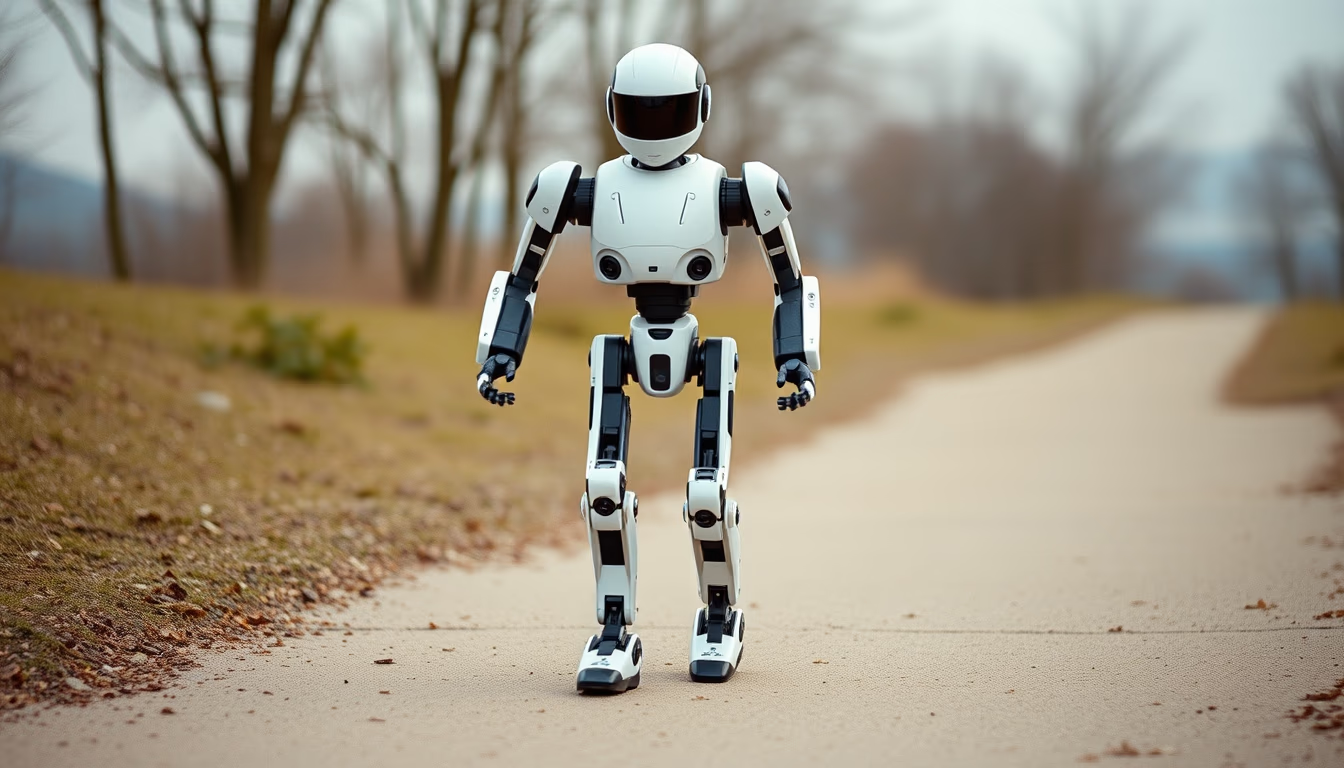
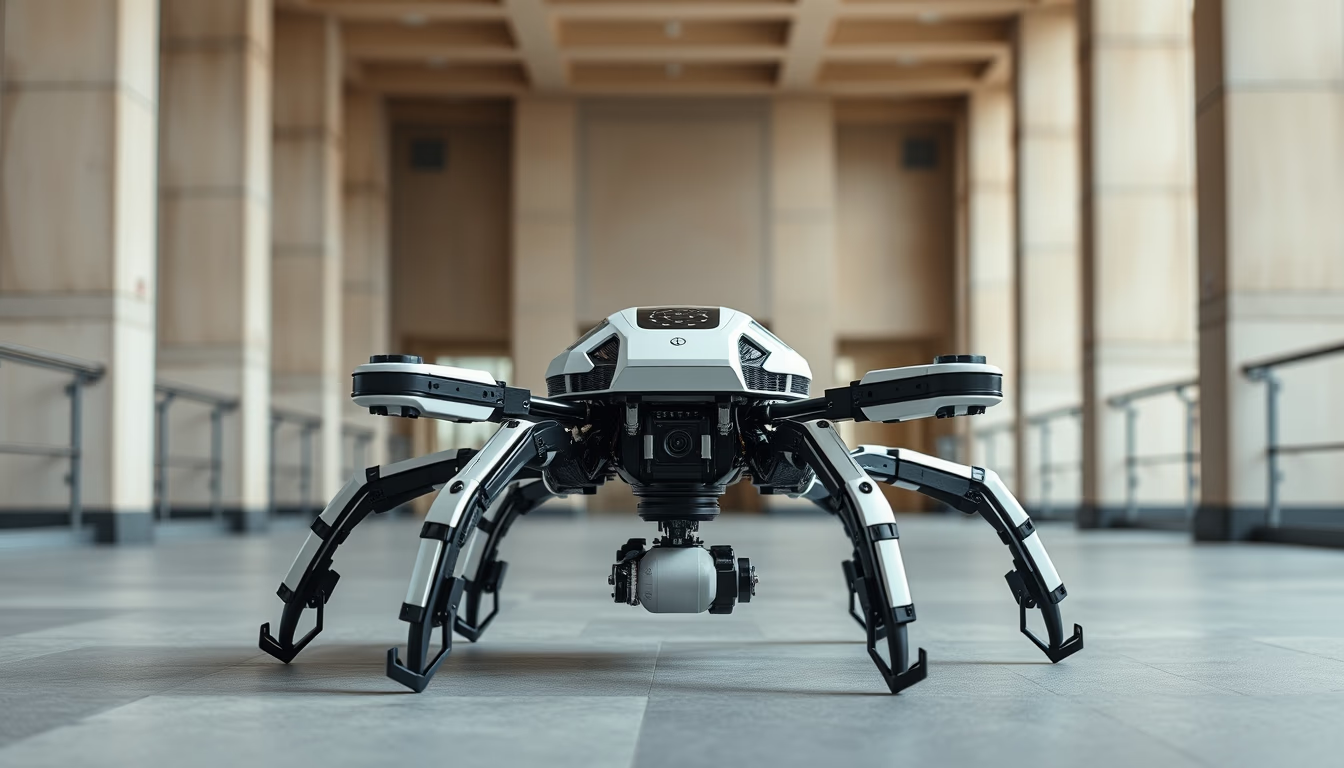
Bipedal robot walking
1344×768 · AVIF · CC BY 4.0
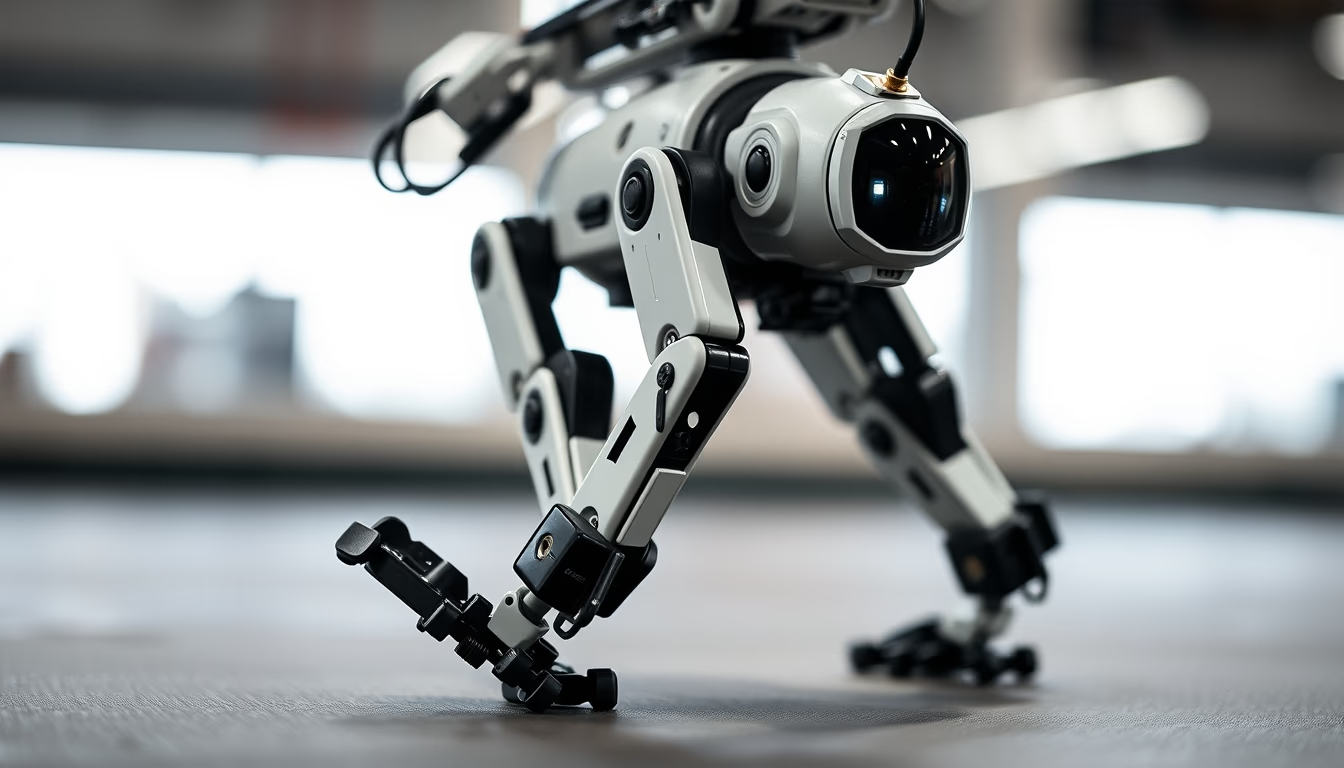
Bipedal robots are machines designed to walk on two legs, mimicking human locomotion and facing challenges of balance and control.
About this subject
Bipedal robots represent one of the most fascinating areas in robotics, aiming to replicate the complex biomechanics of human walking. From the early steps of Honda's ASIMO in 2000 to recent advances by Boston Dynamics' Atlas, these robots have evolved to perform movements such as running, jumping, and even acrobatics. Bipedal locomotion is particularly challenging because it requires dynamic balance control, coordination of multiple actuators, and real-time processing of sensors like gyroscopes and accelerometers.
The technology combines high-precision servomotors, hydraulic or electric systems, and predictive control algorithms. Companies like Agility Robotics have developed Digit, focused on logistics, while Tesla introduced Optimus, a humanoid robot for domestic tasks. In Brazil, research at USP and ITA explores bipedal robots for industrial inspection and disaster assistance, but high costs and complexity limit large-scale adoption.
Key challenges include locomotion on uneven terrain, energy efficiency, and the ability to recover from falls. Robots like Atlas already demonstrate jumps and spins but are still far from human agility. Future applications include space exploration, search and rescue in hazardous environments, and home interaction, where the bipedal form facilitates navigation in human-designed spaces. Interestingly, some bipedal robots use cushioned feet to absorb impact, similar to human tendons.
The technological race for functional bipedal robots drives innovations in materials, artificial intelligence, and biomechatronics. Although not yet common, they are expected to become more affordable in the next decade, with applications ranging from industry to elderly care. Progress depends on advances in batteries, sensors, and reinforcement learning algorithms, areas of intense global research.
Frequently Asked Questions
Why build bipedal robots instead of using wheels or tracks?
Bipedal robots can navigate human-designed environments like stairs and narrow corridors, where wheels or tracks struggle. They also offer greater versatility on uneven terrain and more natural interaction with people.
What is the most advanced bipedal robot currently?
Boston Dynamics' Atlas is widely considered the most advanced, capable of running, jumping, and performing maneuvers like backflips. Other competitors include Digit (Agility Robotics) and Optimus (Tesla), each with different focuses.
What are the main technical challenges in developing bipedal robots?
Challenges include maintaining dynamic balance, especially on unstable surfaces; energy efficiency for prolonged operation; and coordinating multiple actuators for smooth movements. Fall recovery and sensor robustness are also critical areas.
Direct URL
https://pub-c7d6a6ea828543ac903a74a341ccb2e1.r2.dev/imagens/bipedal-robot-walking-macro-closeup-p3.avifHow to credit
Include a visible link back to UtilizAí. Copy one of the snippets below:
<a href="https://xn--utiliza-eza.com/en/midia/imagens/bipedal-robot-walking-macro-closeup-p3">Bipedal robot walking</a> by <a href="https://xn--utiliza-eza.com">UtilizAí</a>, licensed under <a href="https://creativecommons.org/licenses/by/4.0/">CC BY 4.0</a>.
[Bipedal robot walking](https://xn--utiliza-eza.com/en/midia/imagens/bipedal-robot-walking-macro-closeup-p3) by [UtilizAí](https://xn--utiliza-eza.com), CC BY 4.0
License: CC-BY-4.0