Autonomous drone military
1344×768 · AVIF · CC BY 4.0
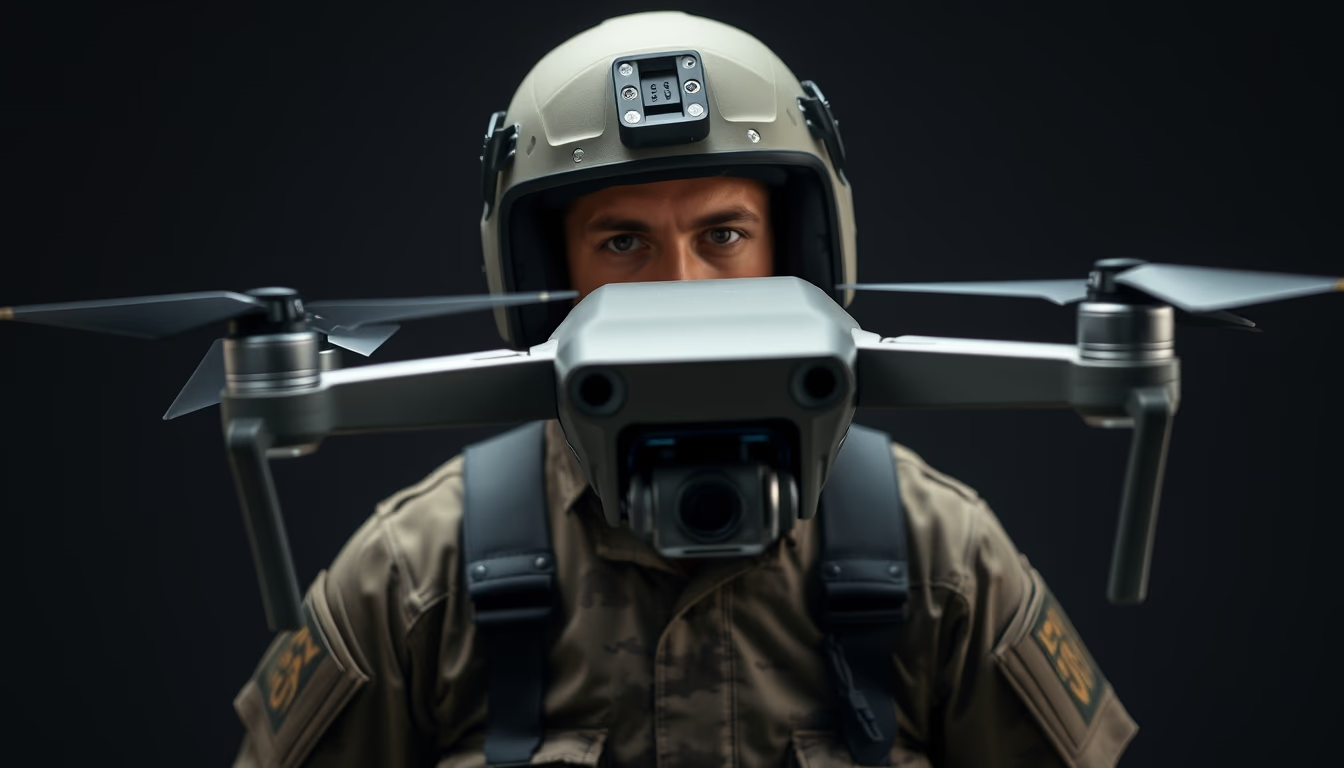
Advantages and controversies of autonomous military drones: technology, strategy, and ethical dilemmas on the modern battlefield.
About this subject
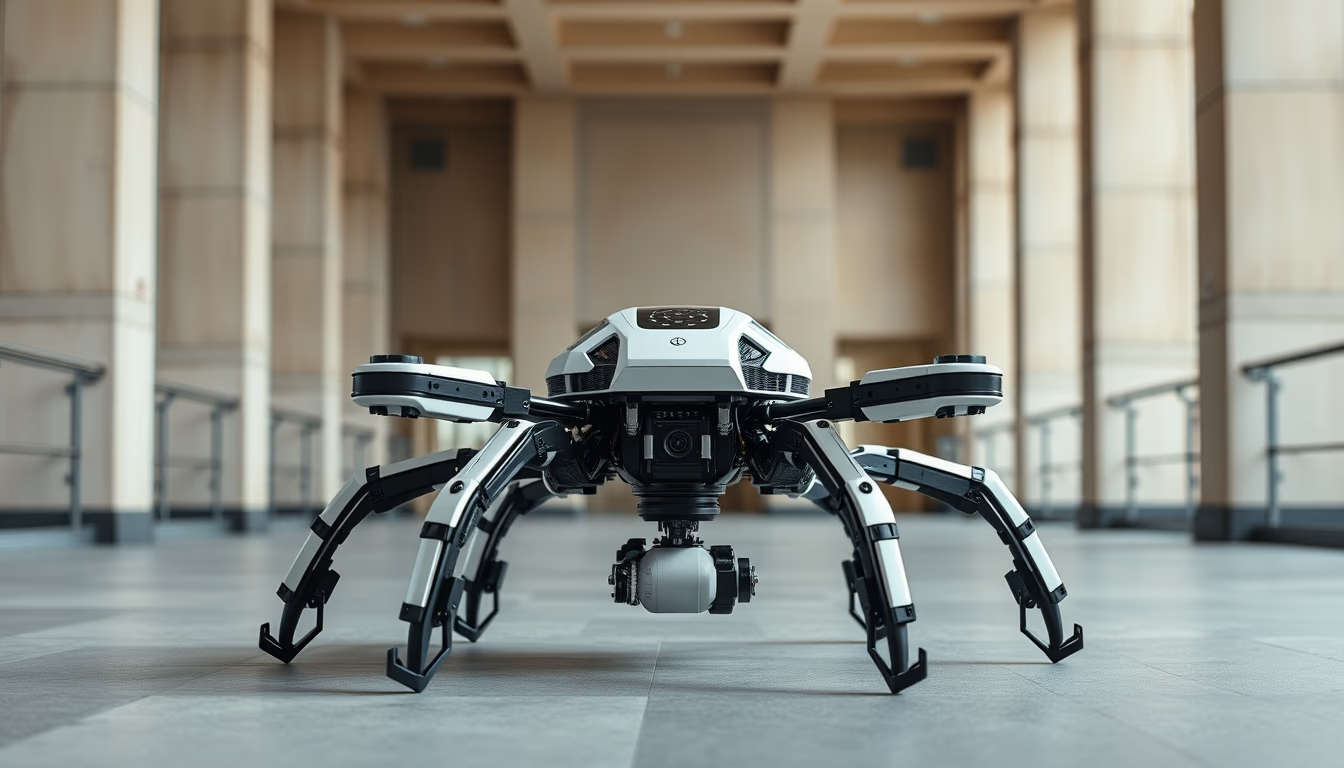
Autonomous military drones are unmanned aircraft capable of executing missions without direct human intervention, using artificial intelligence for navigation, reconnaissance, and attack. Unlike remotely piloted drones such as the MQ-1 Predator, autonomous models can make real-time decisions based on sensors and algorithms. Countries like the United States, China, Israel, and Turkey lead development, with examples including Turkey's Bayraktar TB2, used in Ukraine, and China's CH-4, operating in the Middle East. Autonomy ranges from assisted levels to full autonomy, where the drone selects targets without human approval.
The history of autonomous drones dates back to the 1990s with early autonomous flight tests, but advancement accelerated after the 9/11 attacks when the US increased operations in Afghanistan. Use grew exponentially in conflicts such as Syria, Yemen, and Nagorno-Karabakh. Data shows that drones reduce risks to pilots and cost less than manned fighters, but they also raise concerns about misidentification, collateral damage, and the escalation of asymmetric warfare.
A critical issue is the ethical and legal debate over lethal autonomous weapons. In 2021, the UN discussed restrictions, but no consensus was reached. The technology employs computer vision and machine learning to distinguish combatants from civilians, yet failures have caused tragedies, such as attacks on civilians in conflict zones. Additionally, autonomous drones can be hacked or fed false data, creating cybersecurity risks.
In Brazil, the Air Force operates surveillance drones like the Hermes 900, but no offensive autonomous use is recorded. National industry, such as Avibras and Mac Jee, develops prototypes for defense. Interestingly, the largest autonomous drone ever tested was the US Navy's X-47B, capable of landing on aircraft carriers without a pilot. The trend is for drones to become smaller and operate in swarms, challenging traditional air defenses.
Frequently Asked Questions
Can autonomous drones attack without human authorization?
Yes, at maximum autonomy levels, the drone may decide to engage targets without human intervention. However, most current systems require human approval for attacks, but there is controversy over using AI for lethal decisions.
What is the difference between an autonomous drone and a remotely controlled one?
A remotely controlled drone depends on a human pilot via a radio link, while an autonomous drone uses sensors and algorithms to navigate and make decisions without continuous command. An autonomous drone can operate even without communication, but it may still be supervised.
Are autonomous drones legal under international law?
There is no specific treaty banning autonomous drones, but their use raises questions of proportionality and distinction under International Humanitarian Law. Some countries advocate a moratorium until clear rules are established.
Direct URL
https://pub-c7d6a6ea828543ac903a74a341ccb2e1.r2.dev/imagens/autonomous-drone-military-studio-editorial-portrait-p3.avifHow to credit
Include a visible link back to UtilizAí. Copy one of the snippets below:
<a href="https://xn--utiliza-eza.com/en/midia/imagens/autonomous-drone-military-studio-editorial-portrait-p3">Autonomous drone military</a> by <a href="https://xn--utiliza-eza.com">UtilizAí</a>, licensed under <a href="https://creativecommons.org/licenses/by/4.0/">CC BY 4.0</a>.
[Autonomous drone military](https://xn--utiliza-eza.com/en/midia/imagens/autonomous-drone-military-studio-editorial-portrait-p3) by [UtilizAí](https://xn--utiliza-eza.com), CC BY 4.0
License: CC-BY-4.0