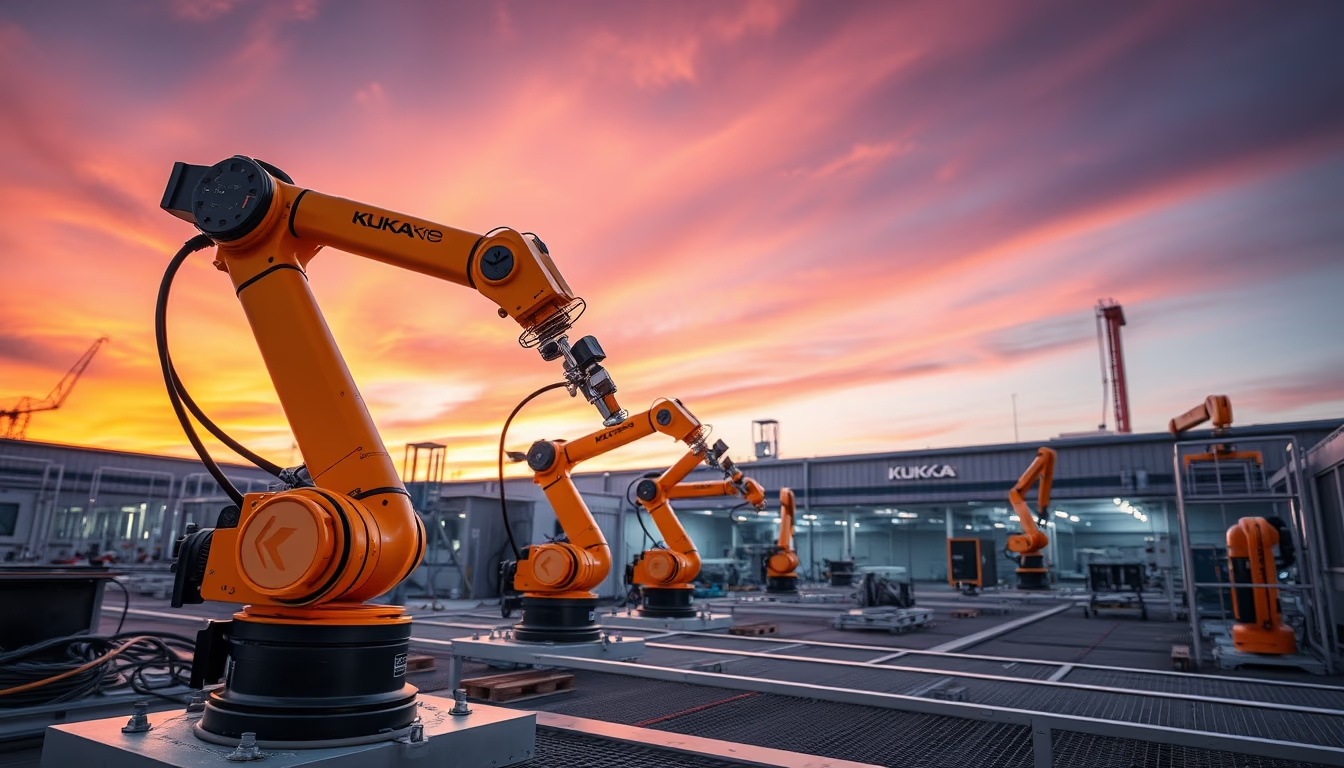
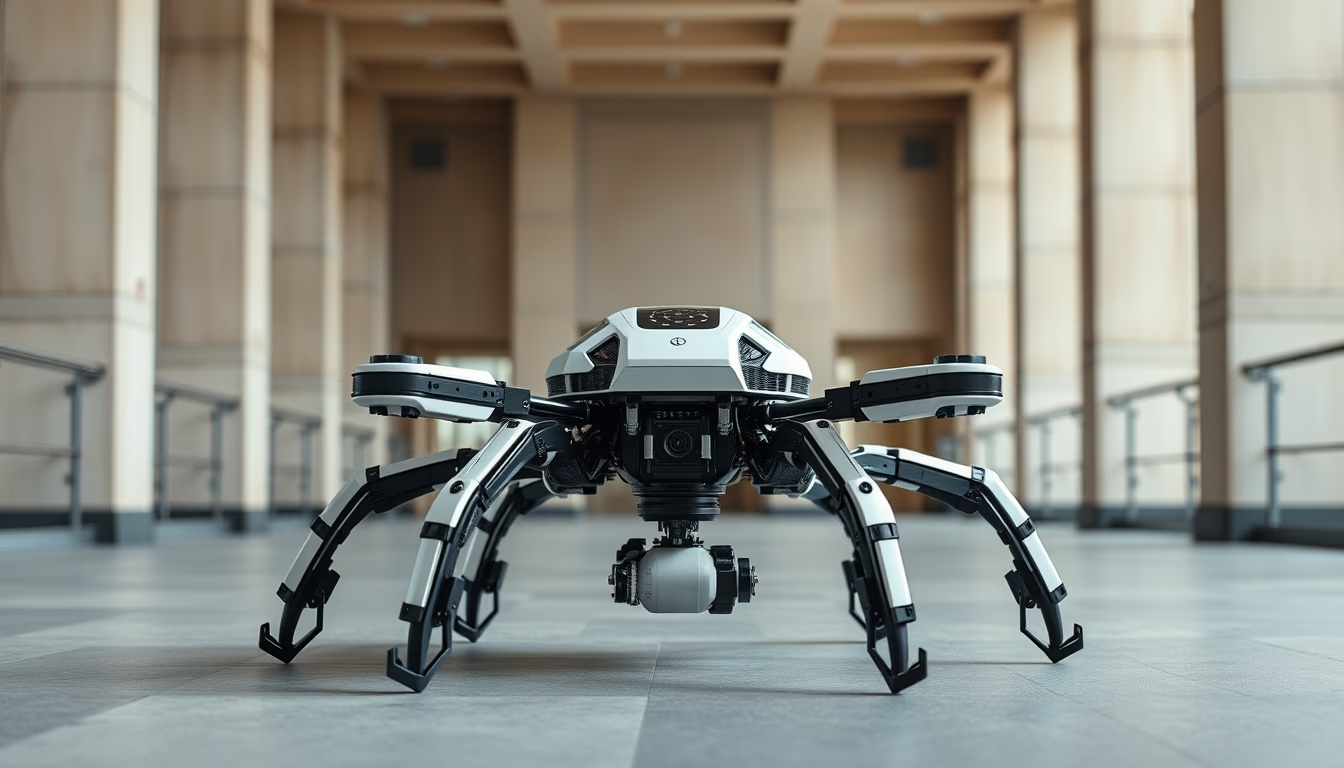
Autonomous drone military
1344×768 · AVIF · CC BY 4.0
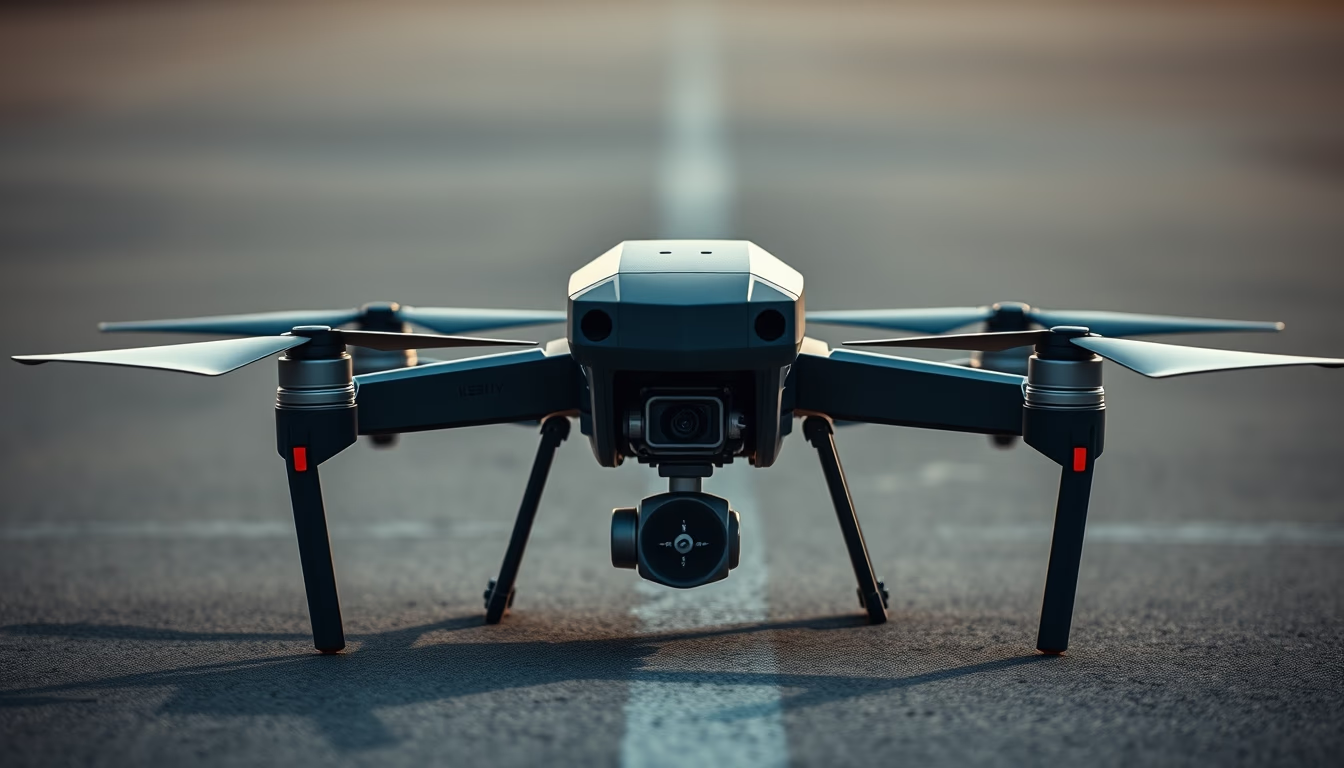
Autonomous military drones are redefining warfare tactics with onboard artificial intelligence, persistent surveillance, and remote strike capability.
About this subject
Autonomous military drones represent a significant evolution in unmanned weapon systems. Unlike remotely piloted aircraft, these platforms use artificial intelligence to independently execute missions, from surveillance and reconnaissance to coordinated attacks. Leading nations include the United States, China, Turkey, and Israel. The American MQ-9 Reaper, for example, can fly for over 27 hours with advanced sensors and Hellfire missiles, while the Turkish Bayraktar TB2 gained notoriety in recent conflicts in Libya, Syria, and Ukraine.
Autonomy levels range from assisted modes, where the drone suggests actions to the operator, to full independence in target selection and engagement. In 2020, the U.S. Air Force tested an AI-controlled drone during a simulated combat exercise, where the machine made tactical decisions in fractions of a second. However, the use of autonomous drones raises ethical debates about accountability, target discrimination, and escalation risks. The UN has discussed bans on lethal autonomous weapon systems, but no consensus has been reached.
In Brazil, the Air Force operates the Hermes RQ-450 for surveillance in the Amazon and borders, but fully autonomous systems are not yet in service. The national industry, such as AEL Sistemas, develops prototypes with autonomous flight and target recognition capabilities. The technology advances rapidly, driven by miniaturized sensors, edge computing, and deep learning algorithms. The future points to swarms of autonomous drones coordinated in real time, capable of saturating enemy defenses and executing complex missions without human intervention.
Frequently Asked Questions
What are autonomous military drones?
They are unmanned aerial vehicles that operate with onboard artificial intelligence to conduct surveillance, reconnaissance, or attack missions without direct human control. They decide routes, identify targets, and may engage based on pre-programmed algorithms or machine learning.
Which countries lead in autonomous military drone development?
The United States, China, Israel, and Turkey are at the forefront. The US operates the MQ-9 Reaper and XQ-58A Valkyrie. Turkey gained prominence with the Bayraktar TB2 in recent conflicts. China develops the CH-5 Rainbow and Dà Jiàng.
Can autonomous drones make kill decisions without humans?
Currently, most systems require human authorization for strikes, but autonomous engagement capabilities are emerging. This raises ethical and legal debates. International organizations call for bans, but no binding global regulation exists yet.
Direct URL
https://pub-c7d6a6ea828543ac903a74a341ccb2e1.r2.dev/imagens/autonomous-drone-military-magazine-editorial-p8.avifHow to credit
Include a visible link back to UtilizAí. Copy one of the snippets below:
<a href="https://xn--utiliza-eza.com/en/midia/imagens/autonomous-drone-military-magazine-editorial-p8">Autonomous drone military</a> by <a href="https://xn--utiliza-eza.com">UtilizAí</a>, licensed under <a href="https://creativecommons.org/licenses/by/4.0/">CC BY 4.0</a>.
[Autonomous drone military](https://xn--utiliza-eza.com/en/midia/imagens/autonomous-drone-military-magazine-editorial-p8) by [UtilizAí](https://xn--utiliza-eza.com), CC BY 4.0
License: CC-BY-4.0