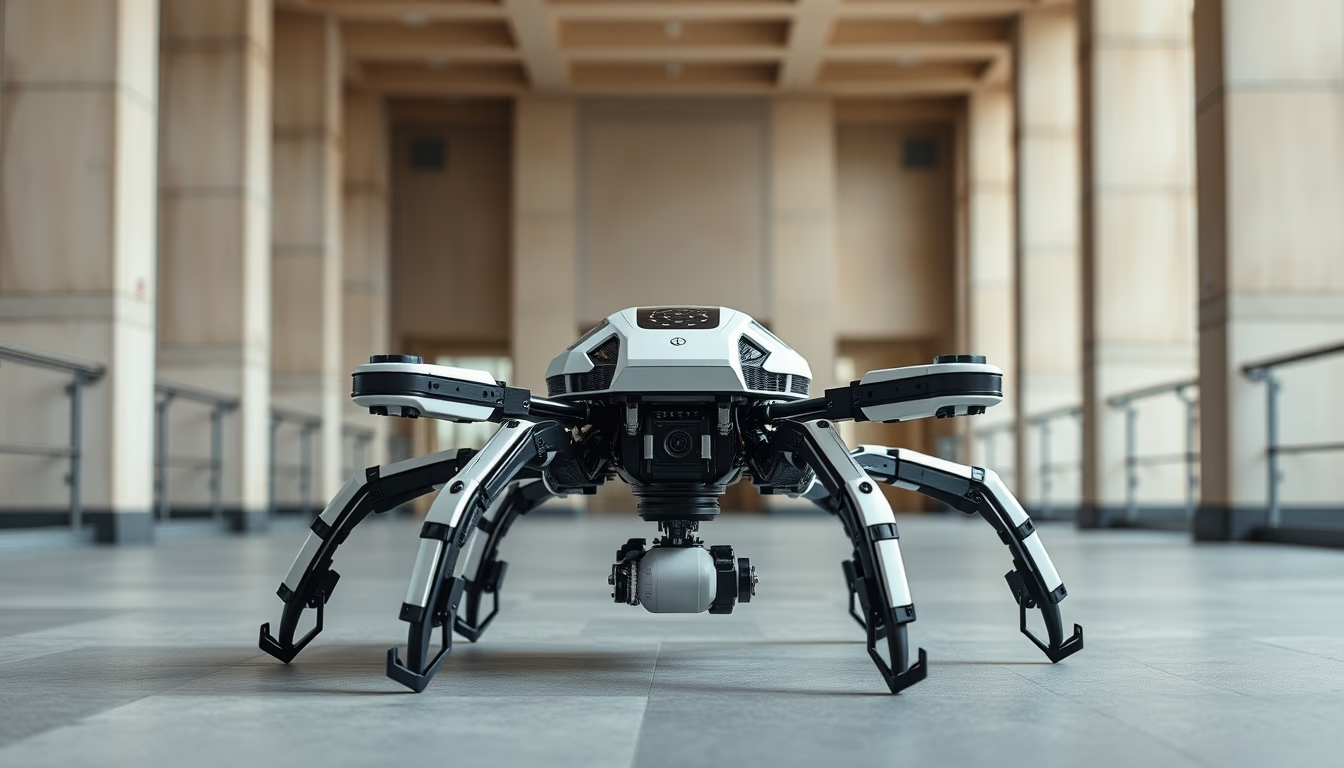
Autonomous drone military
1344×768 · AVIF · CC BY 4.0
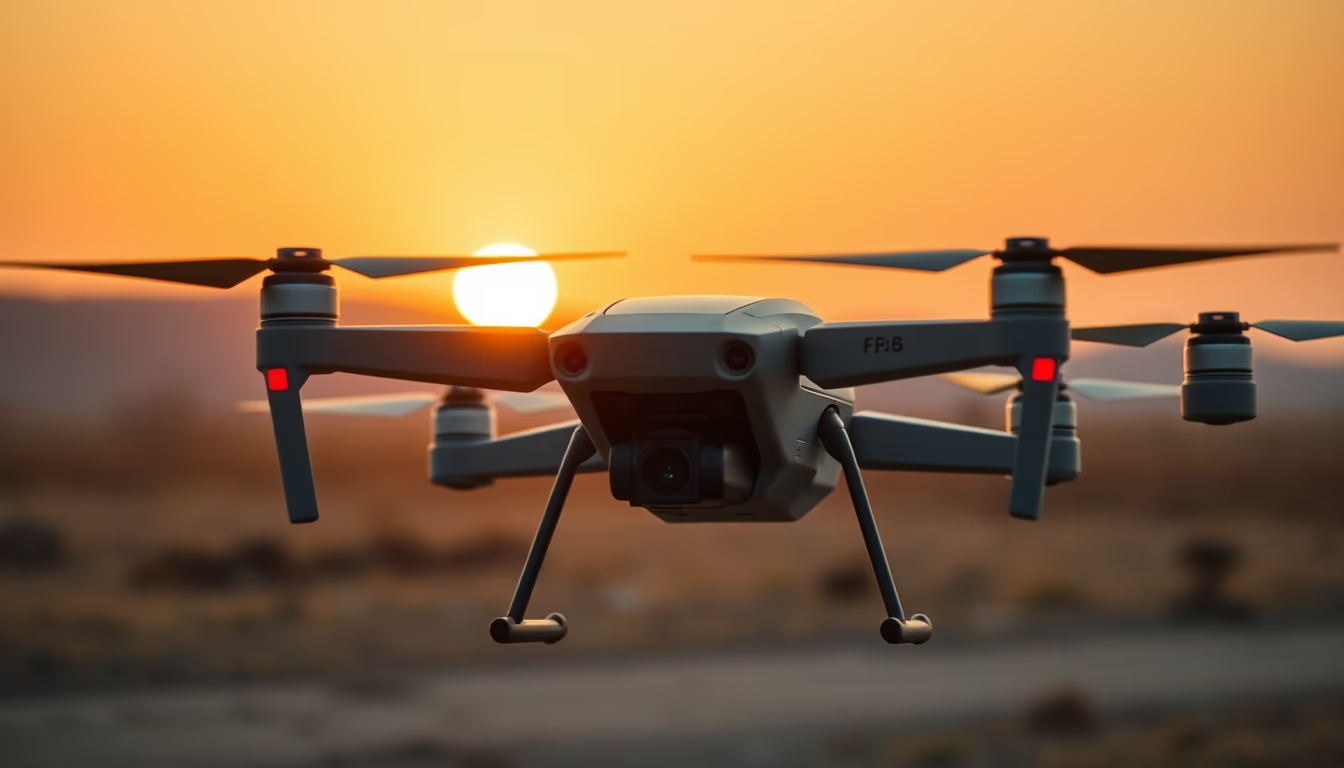
Autonomous military drones like the MQ-9 Reaper are transforming modern warfare through surveillance and precision strikes, operating without a human pilot onboard.
About this subject
Autonomous military drones represent one of the greatest military innovations of the 21st century. These unmanned aerial vehicles (UAVs) can conduct reconnaissance, surveillance, and strike missions without a pilot onboard. Models like the U.S.-made MQ-9 Reaper, developed by General Atomics, operate at altitudes above 15 kilometers and can remain airborne for over 24 hours, carrying Hellfire missiles and laser-guided bombs.
The use of autonomous drones raises ethical and strategic issues. On one hand, they reduce risks for human pilots and enable operations in hostile environments with greater precision. On the other hand, autonomy in attack decisions sparks debates about legal accountability and potential violations of international humanitarian law. Countries such as the United States, China, Israel, and Turkey lead the development of these technologies, with systems like the Turkish Bayraktar TB2 excelling in conflicts in Libya and Nagorno-Karabakh.
In Brazil, the Brazilian Air Force (FAB) operates drones like the Hermes 900 for surveillance in the Amazon and border regions, but does not yet employ fully autonomous systems with offensive capabilities. National legislation and international agreements seek to regulate the use of these devices, especially regarding the principle of distinction between combatants and civilians.
The evolution of autonomous military drones also includes the use of artificial intelligence for navigation, target recognition, and real-time decision-making. This promising technology requires strict safeguards to avoid failures that could cause collateral damage. Future generations are expected to incorporate cooperative drone swarms capable of executing complex missions with minimal human intervention.
Frequently Asked Questions
What is an autonomous military drone?
It is an unmanned aerial vehicle capable of carrying out military missions such as surveillance and attacks without a pilot onboard. It uses computerized systems and artificial intelligence for navigation and decision-making.
Which countries lead development of autonomous drones?
The United States, China, Israel, and Turkey are at the forefront. Examples include the MQ-9 Reaper (USA), CH-4 (China), Heron (Israel), and Bayraktar TB2 (Turkey).
Does Brazil use autonomous military drones?
The Brazilian Air Force operates drones like the Hermes 900 for surveillance in the Amazon, but does not yet employ fully autonomous systems with offensive capabilities. The country follows national regulations and international agreements on the use of such equipment.
Direct URL
https://pub-c7d6a6ea828543ac903a74a341ccb2e1.r2.dev/imagens/autonomous-drone-military-cinematic-wide-shot-p2.avifHow to credit
Include a visible link back to UtilizAí. Copy one of the snippets below:
<a href="https://xn--utiliza-eza.com/en/midia/imagens/autonomous-drone-military-cinematic-wide-shot-p2">Autonomous drone military</a> by <a href="https://xn--utiliza-eza.com">UtilizAí</a>, licensed under <a href="https://creativecommons.org/licenses/by/4.0/">CC BY 4.0</a>.
[Autonomous drone military](https://xn--utiliza-eza.com/en/midia/imagens/autonomous-drone-military-cinematic-wide-shot-p2) by [UtilizAí](https://xn--utiliza-eza.com), CC BY 4.0
License: CC-BY-4.0