Aurora pillar dance
1344×768 · AVIF · CC BY 4.0
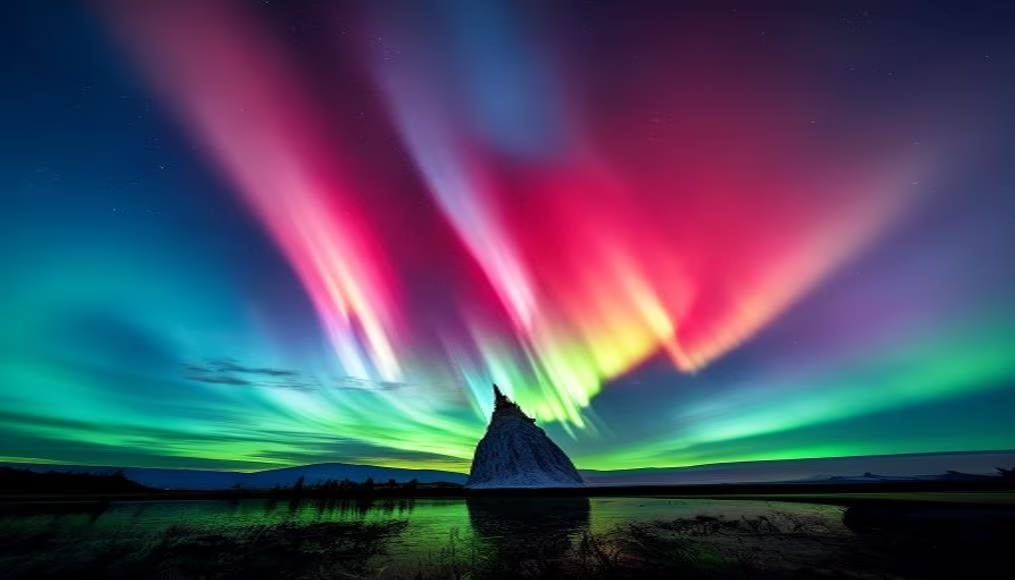
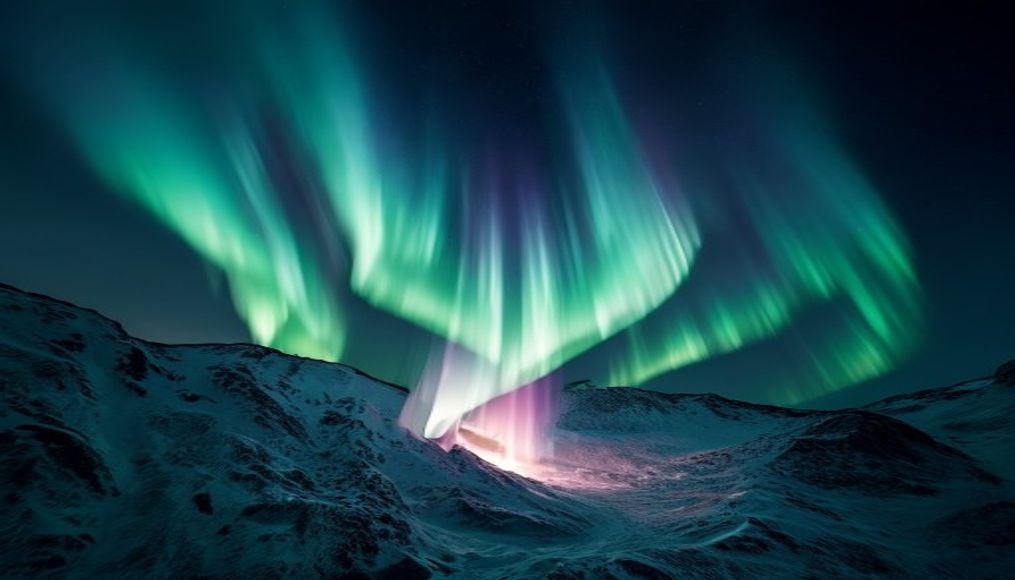
The dance of light curtains in the polar sky, captured in long exposure, reveals vertical pillars of aurora borealis dancing over the night landscape.
About this subject
The aurora borealis, also known as the northern lights, is a natural phenomenon occurring in polar regions when charged solar wind particles interact with Earth's atmosphere, exciting oxygen and nitrogen molecules. Vertical pillars, or 'aurora pillars', form when the magnetic field aligns particles into straight trajectories, creating beams of light that appear to dance across the sky. Long exposure photography is essential to capture the sharpness of these structures, as the rapid movement of auroras requires sufficient exposure time to record vibrant colors and details without excessive blurring.
In the northern hemisphere, the aurora is most frequently observed in regions like Scandinavia, Canada, Alaska, and Iceland, especially during winter months when nights are longer and darker. The intensity and color of auroras vary: green is the most common, caused by oxygen at low altitudes, while red and purple appear at higher altitudes. Pillar formations are particularly impressive during high solar activity, such as geomagnetic storms, which can be forecast using indices like the Kp index.
Culturally, the aurora borealis holds great significance for indigenous peoples, such as the Sami in Scandinavia or the Inuit in Canada, who consider it a spiritual manifestation or a warning from nature. In modern science, studying auroras helps understand the Sun-Earth relationship and provides data on the magnetosphere. Long exposure photography not only documents these luminous dances but also makes them accessible to the public, transforming ephemeral phenomena into timeless visual art.
Frequently Asked Questions
What causes the vertical pillars in the aurora borealis?
Vertical pillars, or 'aurora pillars', form when charged solar wind particles are aligned by Earth's magnetic field, exciting oxygen and nitrogen molecules along straight trajectories, creating beams of light that look like pillars.
Why is long exposure used to photograph auroras?
Long exposure captures more light and detail from rapidly moving auroras. With adequate exposure time, it is possible to record vibrant colors and sharp structures without excessive blur.
What is the best time and place to observe the aurora borealis?
The best time is during winter (September to March in the northern hemisphere) in high-latitude regions like Scandinavia, Canada, Alaska, and Iceland, away from light pollution and with clear skies.
Direct URL
https://pub-c7d6a6ea828543ac903a74a341ccb2e1.r2.dev/imagens/aurora-pillar-dance-long-exposure-p3.avifHow to credit
Include a visible link back to UtilizAí. Copy one of the snippets below:
<a href="https://xn--utiliza-eza.com/en/midia/imagens/aurora-pillar-dance-long-exposure-p3">Aurora pillar dance</a> by <a href="https://xn--utiliza-eza.com">UtilizAí</a>, licensed under <a href="https://creativecommons.org/licenses/by/4.0/">CC BY 4.0</a>.
[Aurora pillar dance](https://xn--utiliza-eza.com/en/midia/imagens/aurora-pillar-dance-long-exposure-p3) by [UtilizAí](https://xn--utiliza-eza.com), CC BY 4.0
License: CC-BY-4.0