Antique microscope brass
1344×768 · AVIF · CC BY 4.0
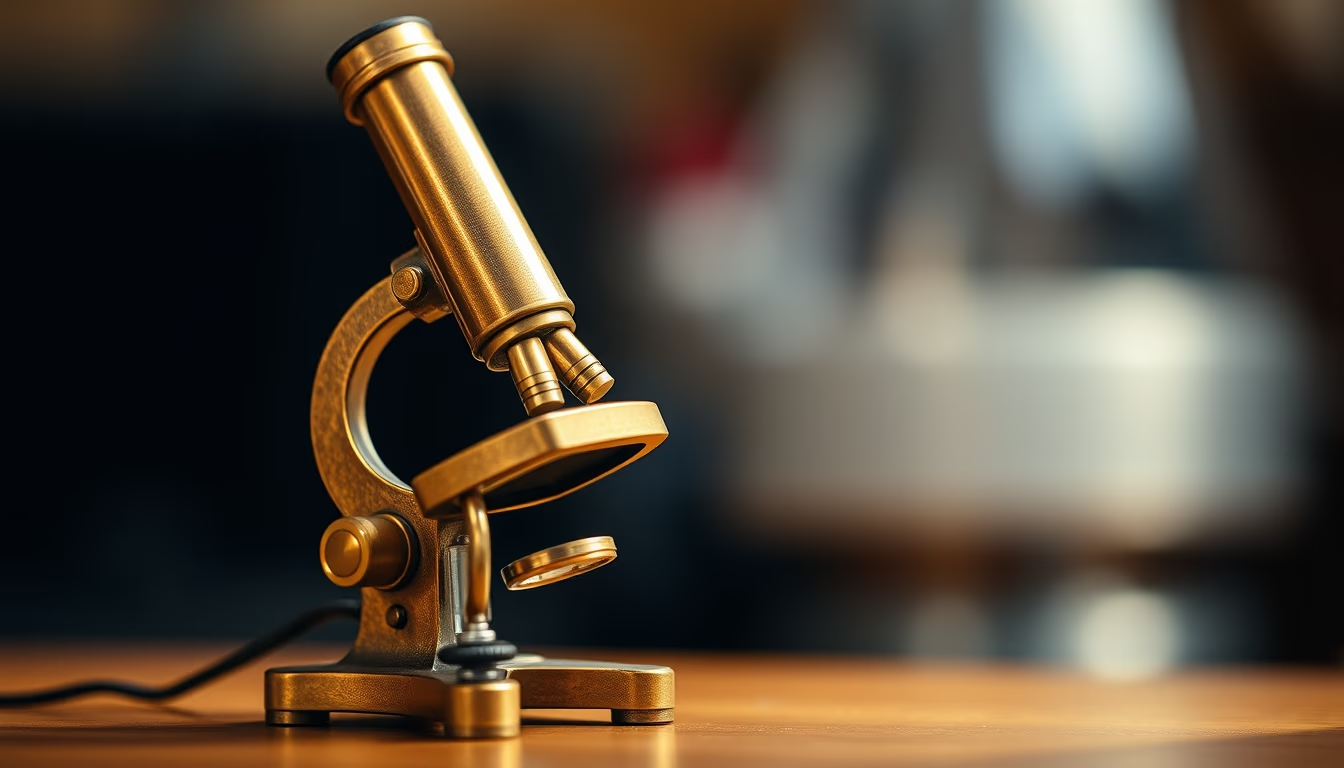
Antique brass microscopes represent the pinnacle of 19th-century scientific instrumentation, combining optical precision with refined craftsmanship.
About this subject
Antique brass microscopes are iconic pieces in the history of science, mainly produced between 1750 and 1900. Handcrafted by goldsmiths and opticians, these instruments were essential for discoveries such as cell theory and microbiology. Brass, an alloy of copper and zinc, was the preferred material for its durability and malleability, allowing decorative engravings and precise focusing mechanisms.
Typical design includes a vertical eyepiece tube, stage for the slide, and concave mirror for illumination. Models like Culpeper's compound microscope (c. 1730) or Owen's model (c. 1850) are highly valued by collectors. The tilt-shift effect, applied in contemporary photography, recreates the miniature scale of these pieces, highlighting their ornamental and mechanical details.
The historical importance of these microscopes goes beyond aesthetics. Scientists such as Robert Hooke, who published 'Micrographia' in 1665, used similar instruments to observe cells and fungi. Later, Louis Pasteur and Robert Koch employed more advanced versions to establish the germ theory of disease. Each piece tells a story of technical evolution, from Leeuwenhoek's simple lenses to achromatic systems that corrected chromatic aberrations.
Today, antique brass microscopes are rare and expensive collector's items, especially when accompanied by their original case and accessories. Antique fairs and specialized auctions, like those at Christie's or Sotheby's, often feature these instruments. Preservation requires care against oxidation and proper handling of lenses, which may still be functional.
Frequently Asked Questions
What is the difference between an antique brass microscope and modern ones?
Antique microscopes use simple or achromatic lenses with low magnification (up to 1000x), mirror illumination, and manual focusing. Modern ones have compound lenses, LED lighting, and digital capture systems.
How to identify an original 19th-century brass microscope?
Look for manufacturer marks (e.g., R. & J. Beck, Powell & Lealand), brass screws, hand engravings, and serial numbers. Uniform patina and weight are indicators of authenticity.
What is the average value of an antique brass microscope?
Prices range from $500 to $25,000, depending on condition, rarity, and provenance. Models with original case and complete accessories fetch the highest prices.
Direct URL
https://pub-c7d6a6ea828543ac903a74a341ccb2e1.r2.dev/imagens/antique-microscope-brass-tilt-shift-miniature-p9.avifHow to credit
Include a visible link back to UtilizAí. Copy one of the snippets below:
<a href="https://xn--utiliza-eza.com/en/midia/imagens/antique-microscope-brass-tilt-shift-miniature-p9">Antique microscope brass</a> by <a href="https://xn--utiliza-eza.com">UtilizAí</a>, licensed under <a href="https://creativecommons.org/licenses/by/4.0/">CC BY 4.0</a>.
[Antique microscope brass](https://xn--utiliza-eza.com/en/midia/imagens/antique-microscope-brass-tilt-shift-miniature-p9) by [UtilizAí](https://xn--utiliza-eza.com), CC BY 4.0
License: CC-BY-4.0