Agricultural robot field
1344×768 · AVIF · CC BY 4.0
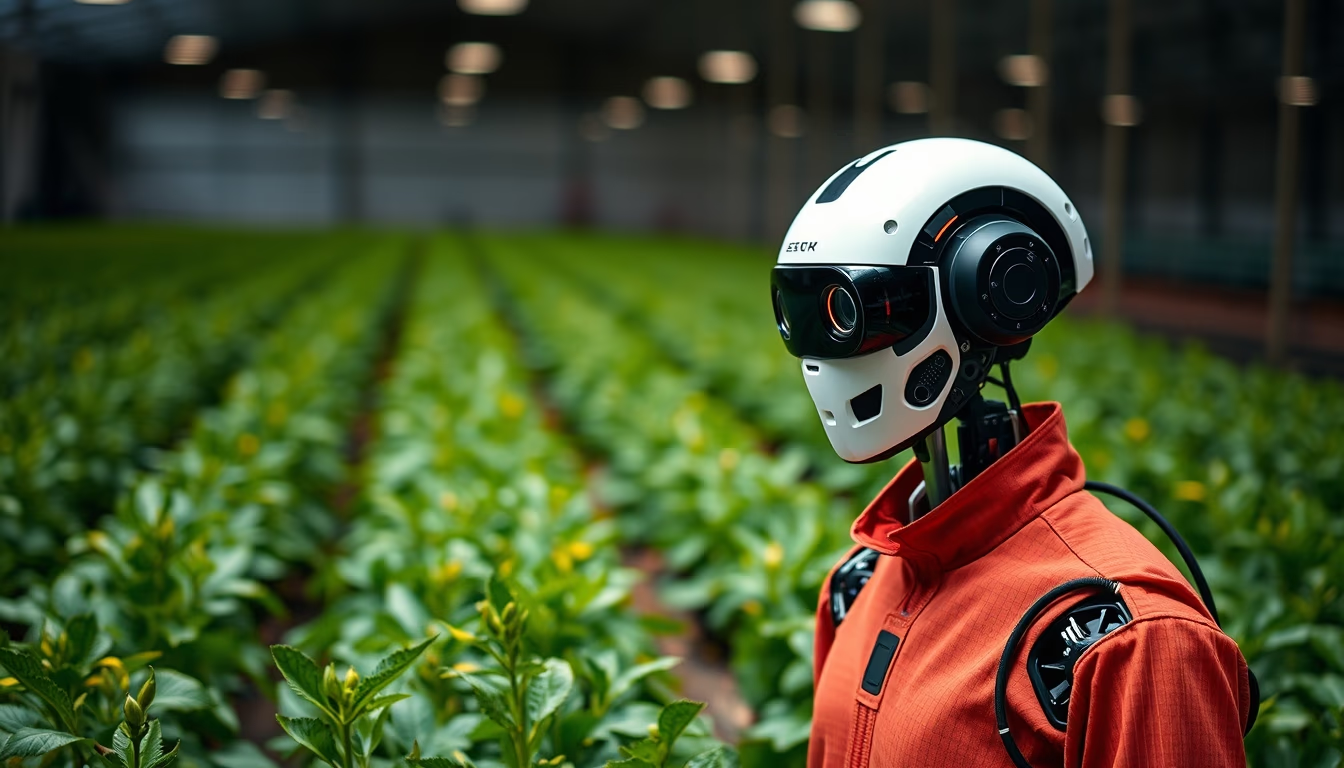
Agricultural robots are transforming farming, boosting productivity and reducing costs with precision technology.
About this subject
Agricultural robots are autonomous or semi-autonomous machines designed to perform tasks in the field, such as planting, harvesting, spraying, and crop monitoring. They range from autonomous tractors and drones to specialized fruit pickers like the strawberry harvester. The global agricultural robot market was valued at around $5 billion in 2020 and is expected to exceed $20 billion by 2025, according to MarketsandMarkets. Companies like John Deere, AGCO, and startups such as Aigen lead the innovation.
Key benefits include reduced input waste, increased operational efficiency, and the ability to practice precision agriculture. For example, sensors on robots can detect pests and apply pesticides only where needed, decreasing chemical usage. Harvesting robots, like the Strawberry Picker by Harvest CROO, can pick fruits without damaging them, operating 24/7. However, challenges include high upfront costs, the need for reliable connectivity in rural areas, and regulations regarding safety and liability.
In Brazil, the adoption of agricultural robots is growing rapidly, especially in crops like soybeans, corn, and sugarcane. Drones are used for mapping and monitoring vast fields, while autonomous tractors perform planting and fertilizer application with centimeter accuracy. Embrapa has been testing robots for coffee and fruit harvesting. The future points to Agriculture 4.0, integrating artificial intelligence, IoT, and robotics for real-time decision-making.
A historical curiosity: the first commercial agricultural robot was the RoboTractor, launched in the 1990s, capable of plowing fields without a driver. Since then, technology has evolved quickly, and today there are robots that identify weeds and remove them mechanically, reducing herbicide use. The trend is for smaller, cheaper robots to make automation accessible to small farmers as well.
Frequently Asked Questions
What are the main types of agricultural robots?
The main types include autonomous tractors, drones for monitoring, fruit and vegetable harvesting robots, and selective spraying robots. They can be classified by function, such as planting, irrigation, or soil analysis.
How do agricultural robots improve productivity?
They enable continuous operation (24 hours), precision in input application, reduced harvest losses, and optimized resource use. This results in higher yield per hectare and lower operational costs.
What are the challenges for adopting robots in farming?
The main challenges are high initial costs, the need for connectivity infrastructure (like 4G/5G), operator training, and regulation regarding safety and liability.
Direct URL
https://pub-c7d6a6ea828543ac903a74a341ccb2e1.r2.dev/imagens/agricultural-robot-field-studio-editorial-portrait-p8.avifHow to credit
Include a visible link back to UtilizAí. Copy one of the snippets below:
<a href="https://xn--utiliza-eza.com/en/midia/imagens/agricultural-robot-field-studio-editorial-portrait-p8">Agricultural robot field</a> by <a href="https://xn--utiliza-eza.com">UtilizAí</a>, licensed under <a href="https://creativecommons.org/licenses/by/4.0/">CC BY 4.0</a>.
[Agricultural robot field](https://xn--utiliza-eza.com/en/midia/imagens/agricultural-robot-field-studio-editorial-portrait-p8) by [UtilizAí](https://xn--utiliza-eza.com), CC BY 4.0
License: CC-BY-4.0