Vintage typewriter detail
1344×768 · AVIF · CC BY 4.0
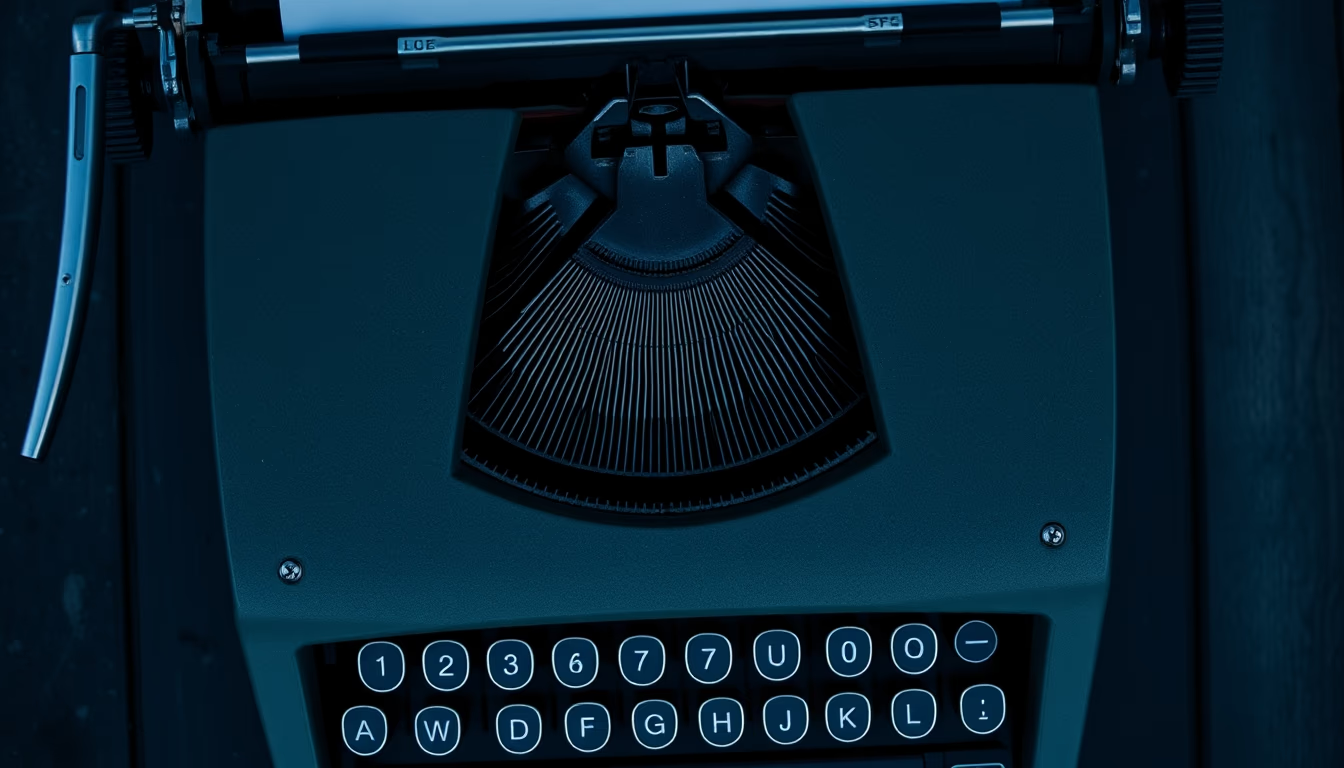
Details of a vintage typewriter reveal the mechanical engineering that revolutionized written communication in the 20th century.
About this subject
Vintage typewriters represent a milestone in the history of information technology. Invented in the late 19th century, they mechanized the act of writing, replacing manual calligraphy and speeding up document production. Iconic models like the Remington No. 1 (1874) and Underwood 5 (1900) established the QWERTY layout, still used on modern keyboards. Each component, from the metal keys to the sliding carriage, was designed for precision and durability. The line advance lever, rubber platen, and ink ribbon are examples of innovations that enabled legible and consistent printing.
Mass production of typewriters began in the early 20th century, driven by office and journalist demand. Companies such as Olivetti, Royal, and Smith Corona popularized designs that combined functionality and aesthetics. Portable models like the Olivetti Lettera 22 became symbols of efficiency and mobility. By 1960, it is estimated that about 80% of texts produced in the Western world went through a typewriter. Maintenance required specialized knowledge, with technicians cleaning gears and lubricating mechanisms.
The decline of typewriters started with the rise of word processors and personal computers in the 1980s. Today, they are valued as collectibles and design objects. The sound of keys, the impact of type bars on paper, and the tactile feel of the lever are nostalgic elements that attract writers and artists. Technology museums worldwide, such as the Computer Museum in São Paulo, preserve rare specimens. Pop culture has also immortalized them in films and series, like the typewriter used by Jack Torrance in "The Shining".
Interestingly, the QWERTY layout was designed to prevent type bars from jamming, a mechanical limitation that no longer exists in digital keyboards. Some vintage models have glass or wooden keys, indicating the variety of materials used back then. The typewriter was also a tool for free expression, used by marginal writers and activists in repressive contexts. Its legacy remains not only as an object but as a symbol of an era where the written word gained new speed and reach.
Frequently Asked Questions
What was the first commercially successful typewriter?
The Remington No. 1, launched in 1874, is considered the first commercially successful typewriter. It was manufactured by the firearms company E. Remington & Sons and used the QWERTY layout.
Why was the QWERTY layout created?
The QWERTY layout was designed to prevent type bars from jamming during fast typing. Frequently used letters were placed far apart on the mechanical arms.
Are vintage typewriters still used today?
Yes, they are used by enthusiasts, artists, and writers who appreciate the tactile experience and design. They are also collectibles and decorative items in retro settings.
Direct URL
https://pub-c7d6a6ea828543ac903a74a341ccb2e1.r2.dev/imagens/vintage-typewriter-detail-aerial-drone-shot-p1.avifHow to credit
Include a visible link back to UtilizAí. Copy one of the snippets below:
<a href="https://xn--utiliza-eza.com/en/midia/imagens/vintage-typewriter-detail-aerial-drone-shot-p1">Vintage typewriter detail</a> by <a href="https://xn--utiliza-eza.com">UtilizAí</a>, licensed under <a href="https://creativecommons.org/licenses/by/4.0/">CC BY 4.0</a>.
[Vintage typewriter detail](https://xn--utiliza-eza.com/en/midia/imagens/vintage-typewriter-detail-aerial-drone-shot-p1) by [UtilizAí](https://xn--utiliza-eza.com), CC BY 4.0
License: CC-BY-4.0