Seaweed farm asian
1344×768 · AVIF · CC BY 4.0
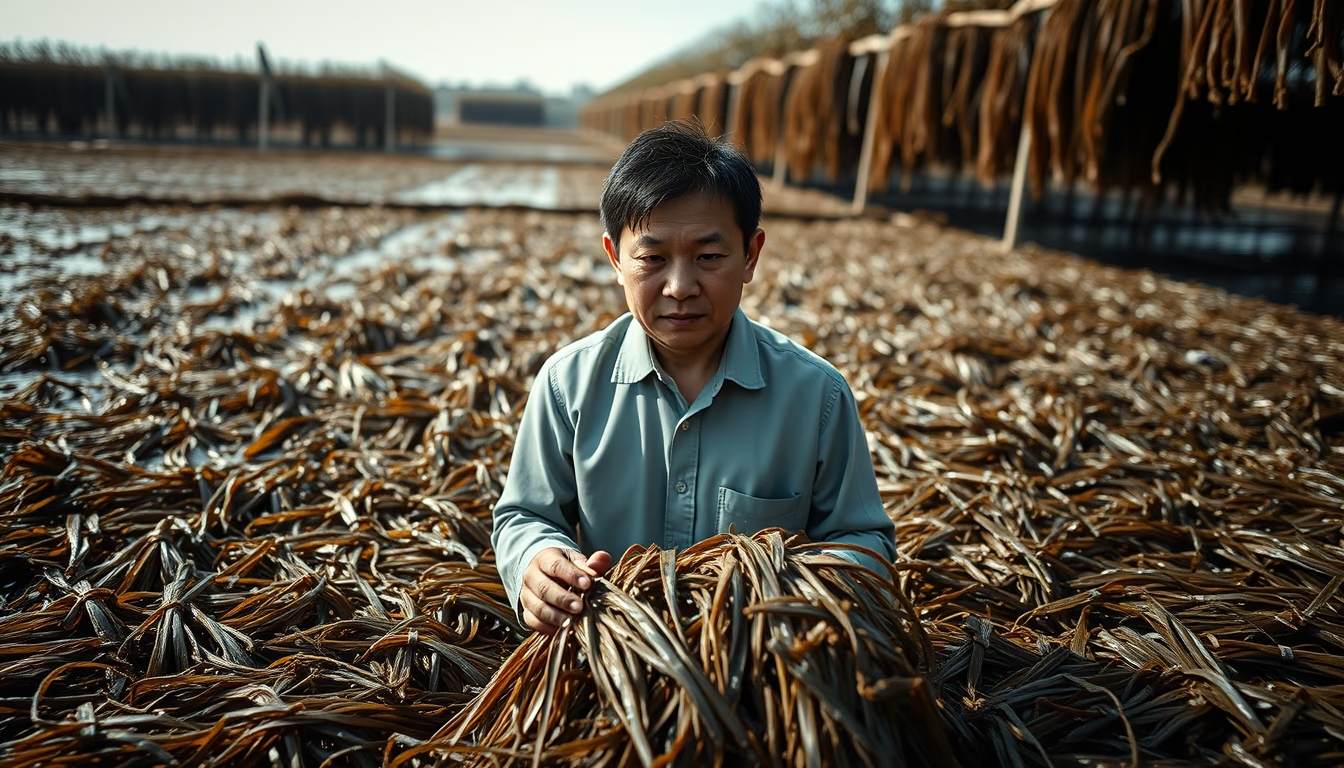
Seaweed farming in Asia is an ancient practice that provides food, income, and environmental benefits.
About this subject
Seaweed farming is a major aquaculture activity across Asia, particularly in countries like China, Indonesia, the Philippines, South Korea, and Japan. These nations account for over 90% of global seaweed production. Seaweed is cultivated for food (nori, kombu, wakame), for hydrocolloids (agar, carrageenan, alginate) used in food and cosmetics, and increasingly as a sustainable biofuel source. Asian seaweed farms are often located in coastal areas with shallow, nutrient-rich waters.
The farming process involves attaching young seaweed seedlings to ropes or nets suspended in the water, allowing them to grow for several weeks before harvest. This practice provides livelihoods for millions of coastal residents, especially women, who participate in planting and harvesting. Seaweed farming also offers environmental benefits: it absorbs carbon dioxide and excess nutrients, helping to mitigate ocean acidification and eutrophication.
In recent years, innovations such as integrated multi-trophic aquaculture (IMTA) have combined seaweed cultivation with fish or shellfish farming to create more sustainable systems. The minimalist composition of many photographs of Asian seaweed farms highlights the geometric patterns of floating ropes and nets against the ocean surface, reflecting both traditional knowledge and modern aquaculture techniques.
Frequently Asked Questions
What are the main types of seaweed farmed in Asia?
Nori (Porphyra), kombu (Saccharina japonica), and wakame (Undaria pinnatifida) are the most common food seaweeds. For hydrocolloids, species like Gracilaria, Gelidium, and Eucheuma are cultivated.
Why is seaweed farming considered environmentally beneficial?
Seaweed absorbs CO2 and excess nutrients, reducing ocean acidification and eutrophication. It also provides habitat for marine life and can be grown without freshwater or fertilizer.
How do Asian seaweed farms contribute to local economies?
They provide income for millions of coastal families, especially in rural areas. Seaweed products are exported globally, earning billions of dollars annually, and the industry supports processing and trade jobs.
Direct URL
https://pub-c7d6a6ea828543ac903a74a341ccb2e1.r2.dev/imagens/seaweed-farm-asian-minimalist-composition-fresh18.avifHow to credit
Include a visible link back to UtilizAí. Copy one of the snippets below:
<a href="https://xn--utiliza-eza.com/en/midia/imagens/seaweed-farm-asian-minimalist-composition-fresh18">Seaweed farm asian</a> by <a href="https://xn--utiliza-eza.com">UtilizAí</a>, licensed under <a href="https://creativecommons.org/licenses/by/4.0/">CC BY 4.0</a>.
[Seaweed farm asian](https://xn--utiliza-eza.com/en/midia/imagens/seaweed-farm-asian-minimalist-composition-fresh18) by [UtilizAí](https://xn--utiliza-eza.com), CC BY 4.0
License: CC-BY-4.0