Northeast wind farm turbines against scrubland vegetation
1344×768 · AVIF · CC BY 4.0
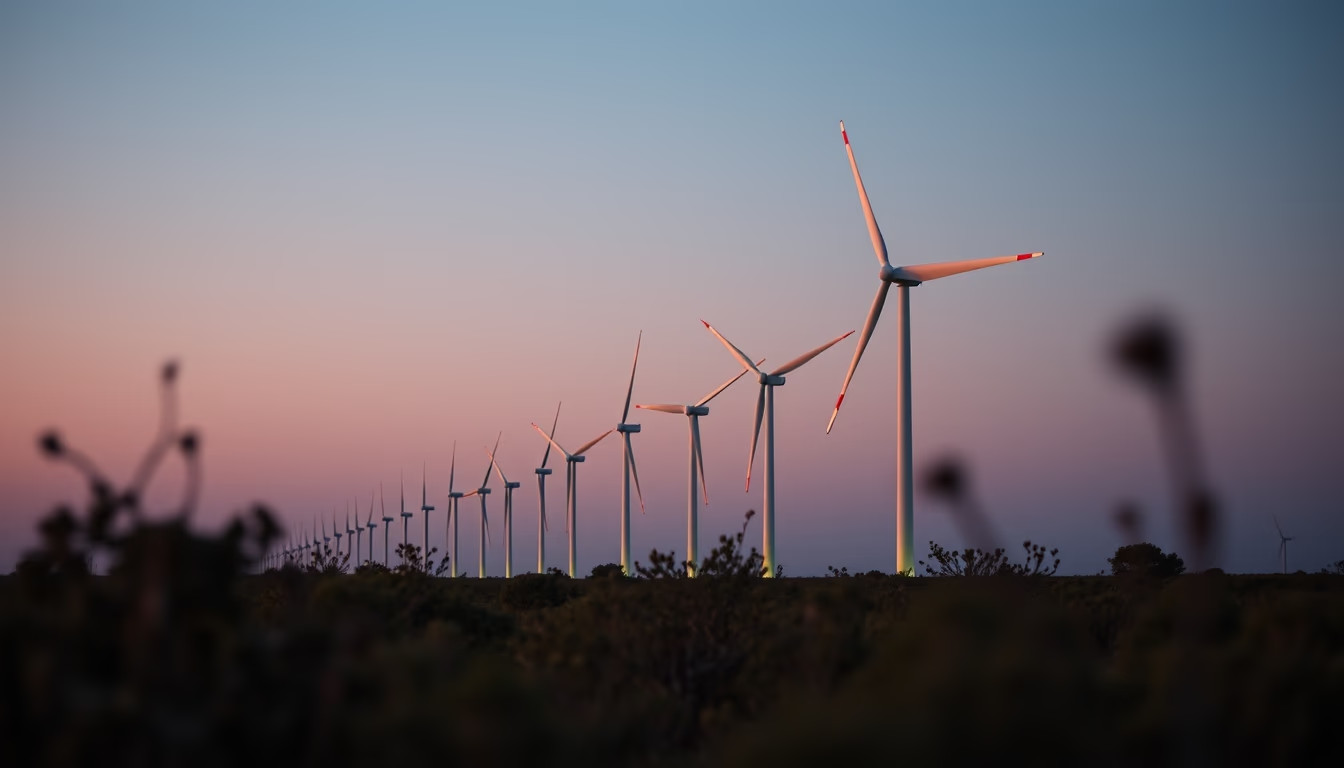
In the Brazilian sertão, wind turbines slice the orange twilight sky amidst the resilient Caatinga vegetation.
About this subject
The image shows a wind farm in Northeast Brazil during twilight, with turbines standing out against the orange sky and the typical Caatinga vegetation. Brazil is a global leader in wind energy, with the Northeast region accounting for about 80% of the country's installed capacity. States like Rio Grande do Norte, Bahia, Ceará, and Piauí host the largest parks, benefiting from constant and strong winds, especially during winter.
The Caatinga, an exclusively Brazilian biome, covers approximately 10% of the national territory. Its drought-adapted vegetation includes cacti, thorny shrubs, and small trees such as jurema and umbuzeiro. Installing wind farms in this region sparks debates about environmental impacts, such as habitat fragmentation and bird mortality, but also brings economic development to historically impoverished areas.
Interestingly, Northeast Brazil has one of the highest wind potentials in the world, with capacity factors exceeding 40% in some locations. Modern turbines, like those in the image, have towers up to 100 meters tall and blades over 50 meters long, capable of generating up to 2 MW each. Twilight is particularly favorable for generation, as winds often intensify with surface cooling.
Wind energy already accounts for over 10% of Brazil's electricity matrix, and expansion continues with new projects in the interior of the Northeast. The coexistence of turbines and Caatinga requires careful planning to minimize impacts on local flora and fauna, including endangered endemic species. The image captures this encounter between technology and nature, symbolizing the country's energy transition.
Frequently Asked Questions
What is the Caatinga?
The Caatinga is an exclusively Brazilian biome, characterized by drought-adapted vegetation such as cacti and thorny shrubs. It covers about 10% of the national territory, mainly in the Northeast.
Why is Northeast Brazil ideal for wind energy?
The region has constant and strong winds, especially in winter, with capacity factors exceeding 40%. This is due to a combination of topography, atmospheric pressure, and proximity to the ocean.
What are the environmental impacts of wind farms in the Caatinga?
Main impacts include habitat fragmentation, bird and bat mortality, and landscape alteration. However, measures such as impact studies and monitoring help mitigate these effects.
Direct URL
https://pub-c7d6a6ea828543ac903a74a341ccb2e1.r2.dev/imagens/northeast-wind-farm-turbines-against-caatinga-vegetation-closeup-twilight-3.avifHow to credit
Include a visible link back to UtilizAí. Copy one of the snippets below:
<a href="https://xn--utiliza-eza.com/en/midia/imagens/northeast-wind-farm-turbines-against-caatinga-vegetation-closeup-twilight-3">Northeast wind farm turbines against scrubland vegetation</a> by <a href="https://xn--utiliza-eza.com">UtilizAí</a>, licensed under <a href="https://creativecommons.org/licenses/by/4.0/">CC BY 4.0</a>.
[Northeast wind farm turbines against scrubland vegetation](https://xn--utiliza-eza.com/en/midia/imagens/northeast-wind-farm-turbines-against-caatinga-vegetation-closeup-twilight-3) by [UtilizAí](https://xn--utiliza-eza.com), CC BY 4.0
License: CC-BY-4.0