Wind turbine farm offshore
1344×768 · AVIF · CC BY 4.0
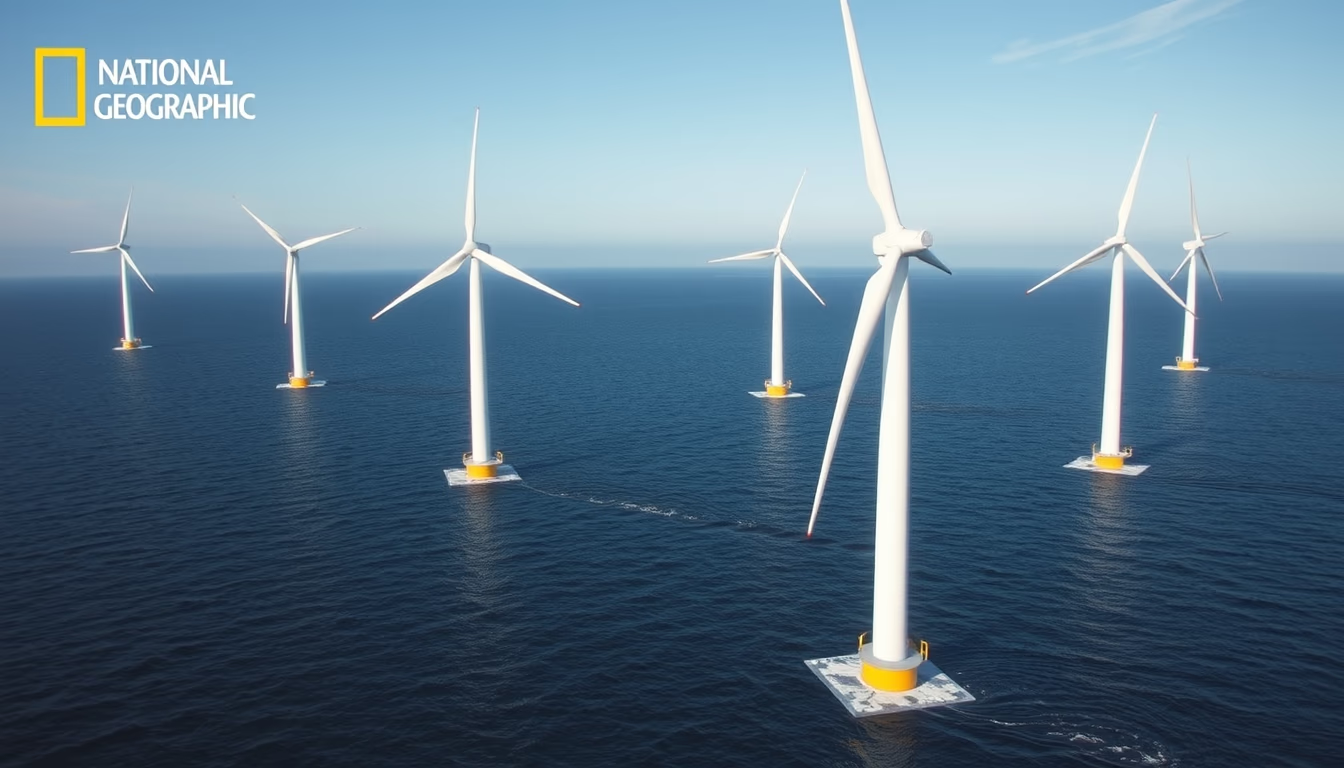
Offshore wind farms are transforming renewable energy generation worldwide, with turbines up to 15 MW installed at sea.
About this subject
Offshore wind farms are arrays of wind turbines installed at sea, typically on fixed or floating platforms, to harness stronger and more consistent ocean winds. The first offshore wind farm was installed in Denmark in 1991, with 11 turbines of 450 kW each. Since then, technology has advanced rapidly: modern turbines like the Vestas V236-15.0 MW have a 236-meter rotor diameter and can generate enough electricity to power about 20,000 European homes per year.
Global installed offshore wind capacity surpassed 70 GW in 2023, led by China (over 30 GW), the United Kingdom (about 14 GW), and Germany (8 GW). Brazil, despite having an enormous offshore wind potential estimated at 700 GW (in waters up to 50 meters deep), still has no commercial farms in operation, but several projects are under environmental licensing, such as the Caucaia complex (CE) and Rio Grande (RS). Installing turbines at sea involves logistical and engineering challenges: steel or concrete foundations support structures over 200 meters high, high-voltage submarine cables, and maintenance under harsh weather conditions.
Offshore wind is considered strategic for the energy transition as it complements solar and onshore wind generation, especially in regions where winds are stronger at night and in winter. Studies indicate that offshore wind could reduce CO2 emissions by up to 1.5 gigatons per year by 2050. Additionally, offshore wind farms create artificial habitats for marine life, with reefs on foundations attracting fish and corals. However, impacts on migratory birds and marine mammals must be mitigated through measures such as temporary turbine shutdowns during migration routes.
Frequently Asked Questions
What is the difference between offshore and onshore wind?
Offshore wind is installed at sea, usually in shallow (fixed) or deep (floating) waters, while onshore is on land. Offshore harnesses stronger and more consistent winds but has higher installation and maintenance costs.
Does Brazil have offshore wind farms?
Not yet in commercial operation, but several projects are under environmental licensing, such as in Ceará and Rio Grande do Sul. Brazil's potential is estimated at 700 GW, one of the largest in the world.
How much can an offshore wind turbine generate?
Modern turbines like the Vestas V236-15.0 MW can generate up to 80 GWh per year, enough to power about 20,000 homes. Output depends on local wind conditions and turbine model.
Direct URL
https://pub-c7d6a6ea828543ac903a74a341ccb2e1.r2.dev/imagens/wind-turbine-farm-offshore-national-geographic-style.avifHow to credit
Include a visible link back to UtilizAí. Copy one of the snippets below:
<a href="https://xn--utiliza-eza.com/en/midia/imagens/wind-turbine-farm-offshore-national-geographic-style">Wind turbine farm offshore</a> by <a href="https://xn--utiliza-eza.com">UtilizAí</a>, licensed under <a href="https://creativecommons.org/licenses/by/4.0/">CC BY 4.0</a>.
[Wind turbine farm offshore](https://xn--utiliza-eza.com/en/midia/imagens/wind-turbine-farm-offshore-national-geographic-style) by [UtilizAí](https://xn--utiliza-eza.com), CC BY 4.0
License: CC-BY-4.0