Wax seal stamp
1344×768 · AVIF · CC BY 4.0
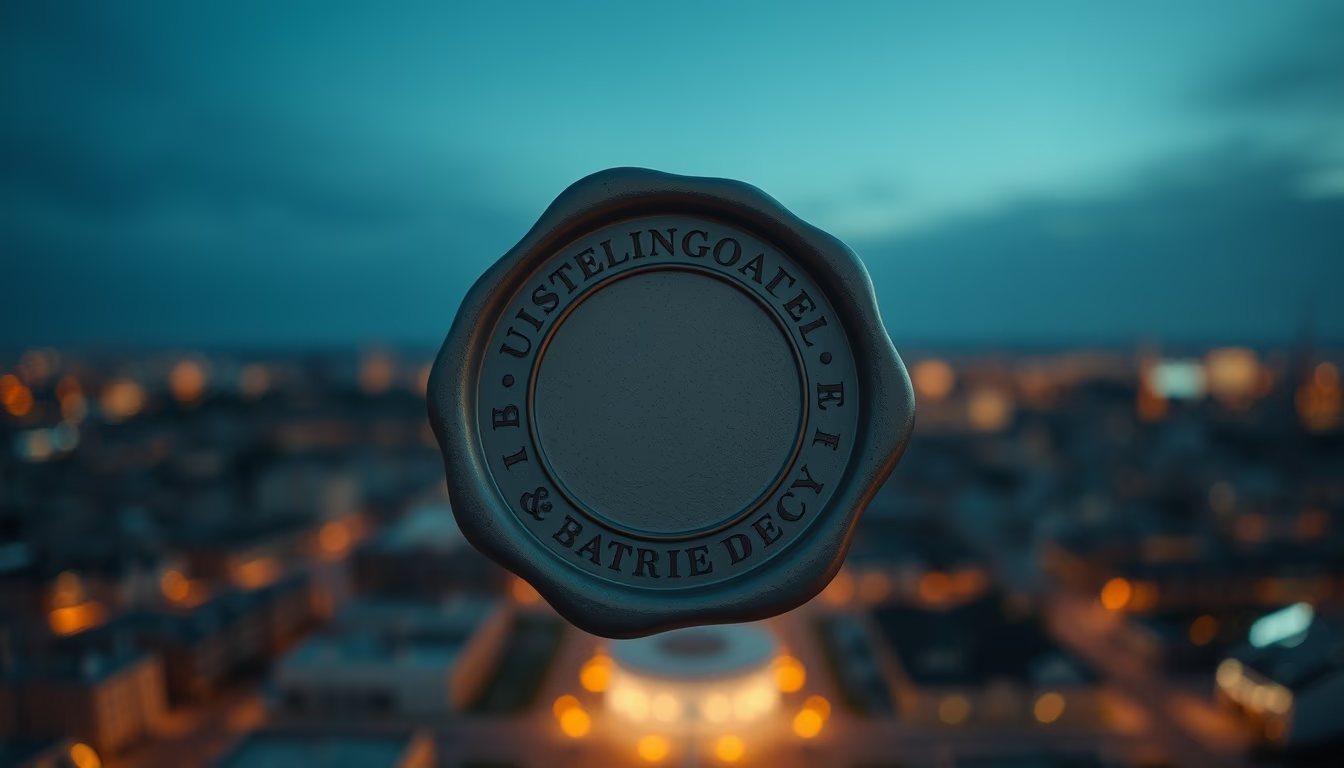
Wax seal stamps have been used for centuries as a guarantee of authenticity and secrecy in official documents and personal letters.
About this subject
The wax seal stamp is a historical artifact dating back to antiquity, used to seal documents and correspondence. Originating in Mesopotamia around 3500 BCE, the practice spread across Egypt, Greece, and Rome, where seals with inscriptions and symbols indicated the sender's identity and guaranteed the inviolability of the message. During the Middle Ages, the practice peaked in Europe, with nobles and ecclesiastical institutions using signet rings or metal stamps to imprint coats of arms and monograms on melted wax.
The wax was typically made from a mixture of beeswax, resin, and pigments, resulting in colors such as red, black, and green. The seal not only closed the paper but also served as proof of authenticity: if broken, it indicated tampering. With the advancement of postal systems and the invention of the sealed envelope, the use of wax seals declined but never fully disappeared. Today, they are used in formal ceremonies, diplomas, wedding invitations, and by enthusiasts of lettering and calligraphy.
Interestingly, the technique of wax sealing has even influenced digital security: ancient physical seals are conceptual predecessors of digital signatures and authenticity certificates. In Brazil, the use of wax seals was common in imperial documents and official letters during the colonial and imperial periods, with specimens found in museums such as the Museu Histórico Nacional in Rio de Janeiro. The art of creating personalized seals with custom designs continues among artisans and historians, who value the symbolism and aesthetics of this object.
Frequently Asked Questions
What is the origin of the wax seal stamp?
The wax seal stamp originated in Mesopotamia around 3500 BCE and was later adopted by Egyptians, Greeks, and Romans for sealing documents and ensuring authenticity.
How was wax seal historically prepared?
The wax was a mixture of beeswax, resin, and pigments, melted and applied to paper. After cooling, a metal stamp or signet ring was pressed into it to create the impression.
Is the wax seal still used today?
Yes, it is used in formal occasions such as diplomas, wedding invitations, and certificates, and is also appreciated by calligraphy and lettering enthusiasts as a decorative and symbolic element.
Direct URL
https://pub-c7d6a6ea828543ac903a74a341ccb2e1.r2.dev/imagens/wax-seal-stamp-aerial-drone-shot-p8.avifHow to credit
Include a visible link back to UtilizAí. Copy one of the snippets below:
<a href="https://xn--utiliza-eza.com/en/midia/imagens/wax-seal-stamp-aerial-drone-shot-p8">Wax seal stamp</a> by <a href="https://xn--utiliza-eza.com">UtilizAí</a>, licensed under <a href="https://creativecommons.org/licenses/by/4.0/">CC BY 4.0</a>.
[Wax seal stamp](https://xn--utiliza-eza.com/en/midia/imagens/wax-seal-stamp-aerial-drone-shot-p8) by [UtilizAí](https://xn--utiliza-eza.com), CC BY 4.0
License: CC-BY-4.0