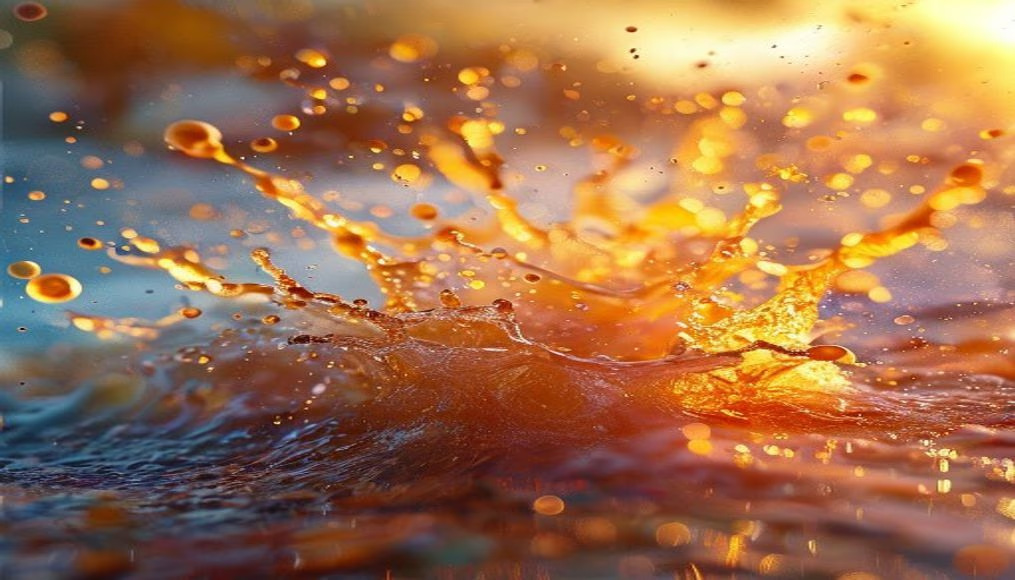
Watercolor splash
1344×768 · AVIF · CC BY 4.0
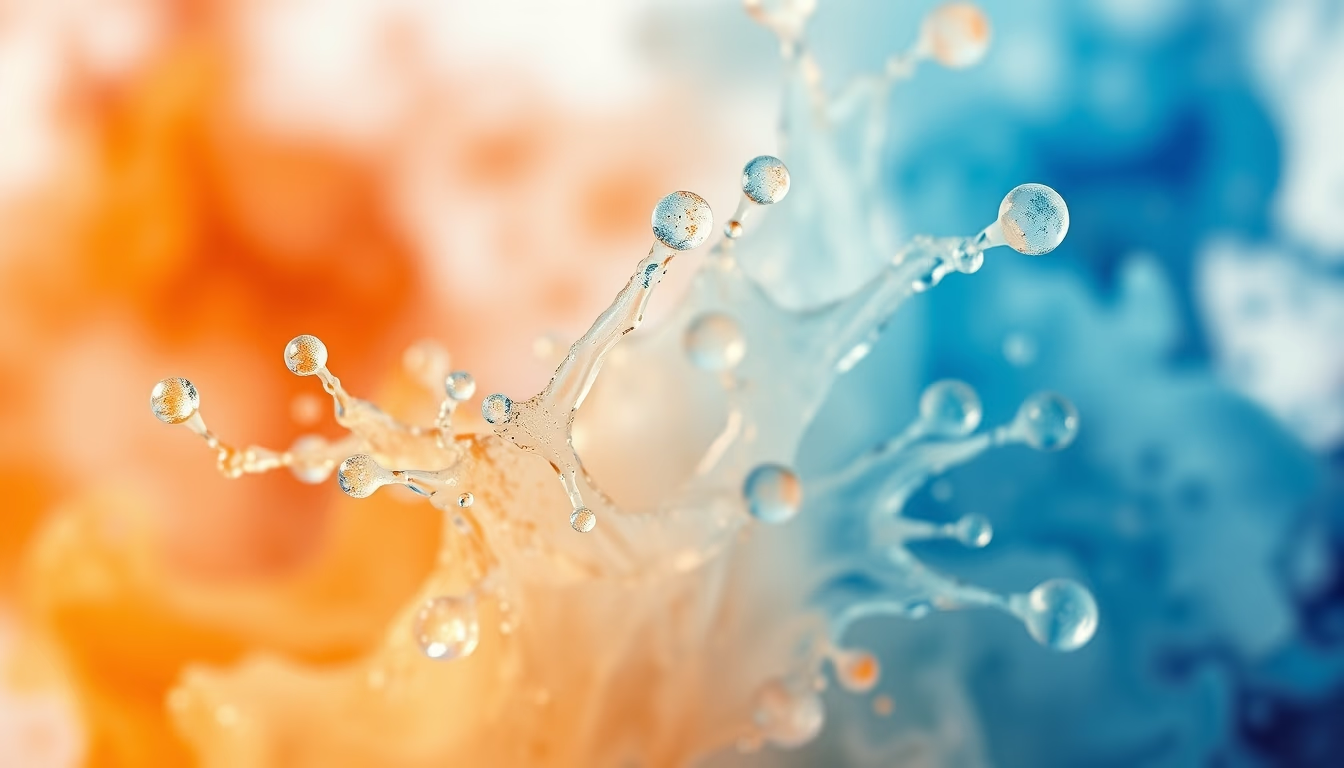
Macro close-up of an acrylic ink splash, revealing intricate textures and the dynamic interplay of colors in abstract art.
About this subject
The watercolor splatter technique, though traditionally associated with water-diluted pigments, also inspires modern abstract works like the "Watercolor Splash". Here, acrylic inks (with properties similar to sprays or varnishes) create organic patterns that explore gravity and surface tension. Abstract art emerges from the balance between the artist's control and the unpredictable behavior of materials, with nuances varying according to the absorbent surface (paper, fabric, or even rocks).
In contemporary art contexts, the "splatter" (or "splash art") gained popularity in the 1960s, influenced by Jackson Pollock and other expressionist movements. The visible texture at the edges of the spray and the overlapping layers' effects are key to perceiving three-dimensionality. Interestingly, the physics behind this technique is being studied in space art projects, such as simulating droplets in microgravity at the European Space Research Laboratory.
Colorimetry (the science measuring color perception) reveals that combinations like blue-violet with yellow ochre create depth illusions, common in urban art and interior design. The technique is also used in art therapy to facilitate nonverbal expression, with studies from Oxford University highlighting a 23% stress reduction in patients who experimented with such abstract forms.
Frequently Asked Questions
How is watercolor texture captured in abstract art?
The texture is emphasized through layering and selective absorption by the support. Papers with a grammage above 300g/cm² better preserve the organic effects of the ink.
Why is macro photography ideal for this type of art?
Macro photography reveals the physical components of the ink, such as suspended pigment particles and microbubbles, which interact uniquely with light, allowing visualization of the chemical dynamics of the technique.
Can this technique be digitized for virtual artworks?
Yes. Projects like NASA's "Digital Watercolor Project" adapt the technique for virtual reality, preserving the original chemical randomness while enabling digital interactivity.
Direct URL
https://pub-c7d6a6ea828543ac903a74a341ccb2e1.r2.dev/imagens/watercolor-splash-macro-closeup-v5.avifHow to credit
Include a visible link back to UtilizAí. Copy one of the snippets below:
<a href="https://xn--utiliza-eza.com/en/midia/imagens/watercolor-splash-macro-closeup-v5">Watercolor splash</a> by <a href="https://xn--utiliza-eza.com">UtilizAí</a>, licensed under <a href="https://creativecommons.org/licenses/by/4.0/">CC BY 4.0</a>.
[Watercolor splash](https://xn--utiliza-eza.com/en/midia/imagens/watercolor-splash-macro-closeup-v5) by [UtilizAí](https://xn--utiliza-eza.com), CC BY 4.0
License: CC-BY-4.0