Water droplet on leaf
1344×768 · AVIF · CC BY 4.0
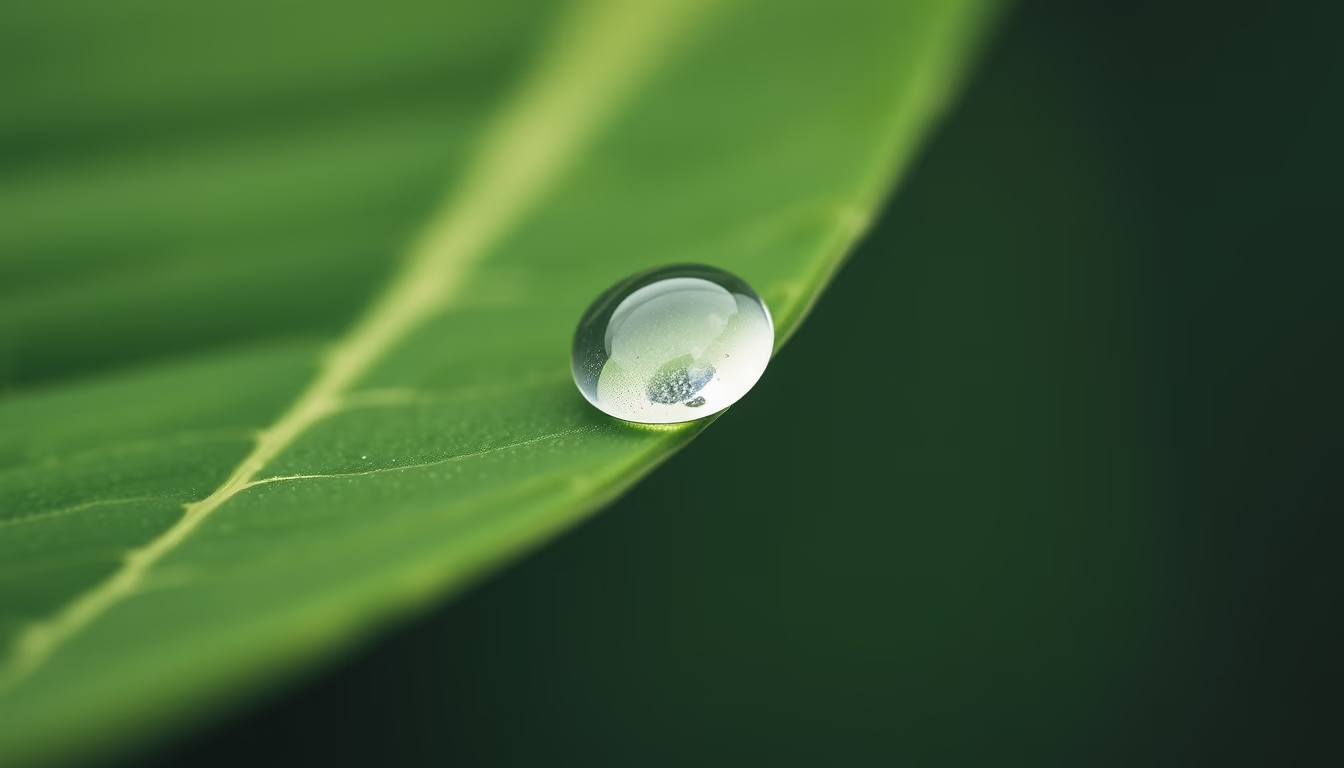
A water droplet on a leaf exemplifies the phenomenon of superhydrophobicity and fluid dynamics in nature.
About this subject
When a water droplet rests on a leaf, it forms a nearly spherical shape due to surface tension, which minimizes contact area with air. The leaf surface, often covered by a waxy cuticle, is hydrophobic, meaning it repels water. This property is measured by the contact angle between the droplet and the surface; angles above 90 degrees indicate hydrophobicity, and above 150 degrees, superhydrophobicity. The most famous example is the lotus leaf (Nelumbo nucifera), whose microstructures create an extremely water-repellent surface, causing droplets to roll off and carry away dirt particles, the so-called lotus effect, an important self-cleaning mechanism in plants.
This behavior is not just aesthetic but functional. Repelling water prevents bacteria and fungi from settling on the leaf surface, reducing diseases. Additionally, rapid drainage prevents water accumulation, which could damage the leaf or block photosynthesis. In some species, droplets can act as lenses, focusing sunlight and heating specific spots, though this may also cause burns if the droplet is too large.
The droplet's shape is determined by the balance between water molecule cohesion (surface tension) and adhesion to the surface. On highly hydrophobic leaves, the droplet forms a high contact angle and barely wets the surface, remaining as a sphere that can easily roll off. This phenomenon has inspired biomimetic technologies such as waterproof fabrics and self-cleaning surfaces. In Brazilian culture, a water droplet on a leaf is a symbol of purity and renewal, often depicted in poetry and visual arts.
Frequently Asked Questions
Why do water droplets form spheres on leaves?
Droplets form spheres due to water surface tension, which minimizes surface area. On hydrophobic leaves, low adhesion keeps the droplet spherical to reduce contact with the surface.
What is the lotus effect?
The lotus effect is the ability of certain leaves, like lotus, to repel water and dirt. Microstructures create an air layer that makes droplets roll off, cleaning the leaf.
Do all leaves repel water?
No, hydrophobicity varies. Leaves with a waxy cuticle and microstructures are more repellent. Some leaves are hydrophilic, allowing water to spread and be absorbed.
Direct URL
https://pub-c7d6a6ea828543ac903a74a341ccb2e1.r2.dev/imagens/water-droplet-on-leaf-macro-closeup-p0.avifHow to credit
Include a visible link back to UtilizAí. Copy one of the snippets below:
<a href="https://xn--utiliza-eza.com/en/midia/imagens/water-droplet-on-leaf-macro-closeup-p0">Water droplet on leaf</a> by <a href="https://xn--utiliza-eza.com">UtilizAí</a>, licensed under <a href="https://creativecommons.org/licenses/by/4.0/">CC BY 4.0</a>.
[Water droplet on leaf](https://xn--utiliza-eza.com/en/midia/imagens/water-droplet-on-leaf-macro-closeup-p0) by [UtilizAí](https://xn--utiliza-eza.com), CC BY 4.0
License: CC-BY-4.0