Water droplet on leaf
1344×768 · AVIF · CC BY 4.0
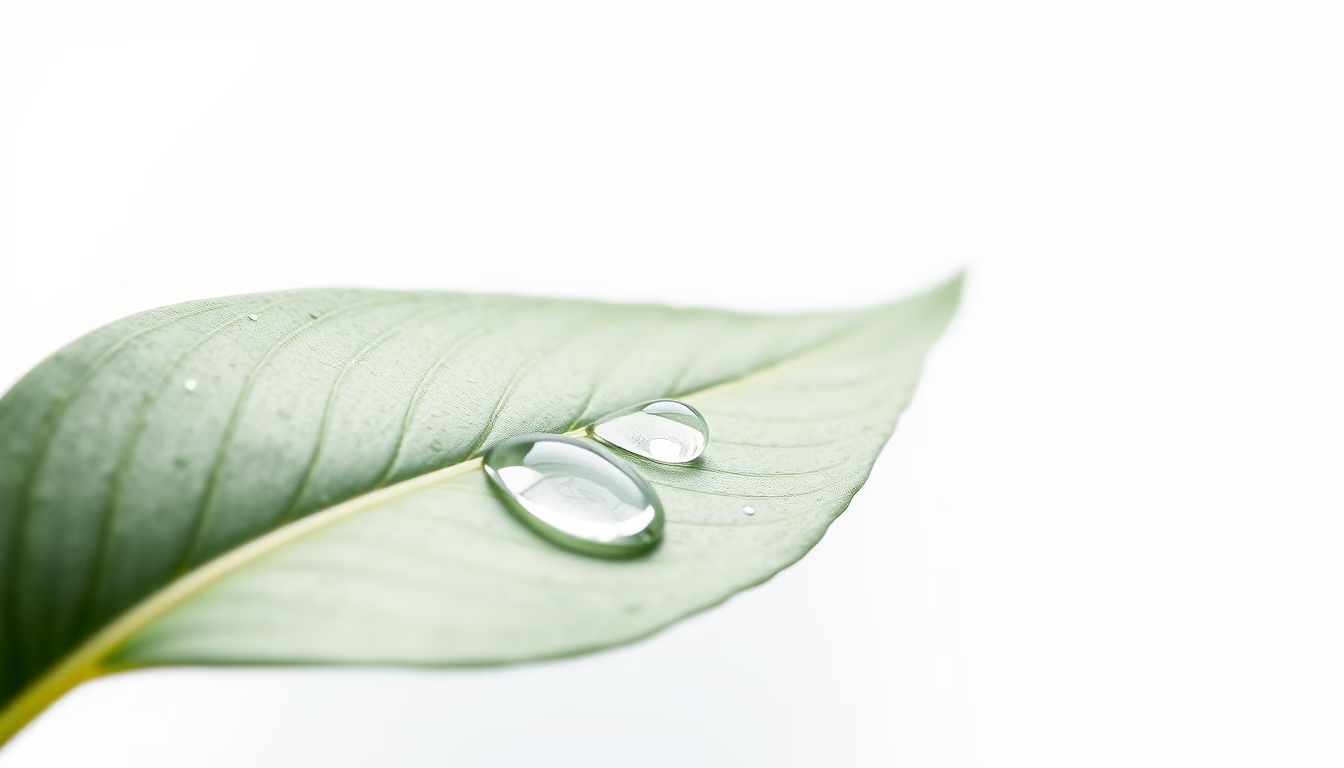
Water droplets on leaves form through condensation or rain, revealing surface tension and hydrophobicity phenomena.
About this subject
Water droplets on leaves are a common natural spectacle, especially after rain or during morning dew. They form through condensation of water vapor or from precipitation remaining on the leaf surface, but their characteristic spherical shape results from water's surface tension, which makes it cohere to itself rather than spread. This behavior is influenced by leaf wettability: hydrophobic surfaces, such as those of lotus and many tropical species, repel water, causing droplets to roll off easily, carrying dust and dirt, a phenomenon known as the lotus effect, a form of natural self-cleaning.
The interaction between droplet and leaf is not merely aesthetic; it has important ecological implications. Droplets can act as lenses, focusing sunlight and potentially damaging leaf tissues if they remain too long, or conversely, help in absorbing dissolved nutrients. In epiphytic plants like bromeliads, accumulated droplets form reservoirs that support small ecosystems. For macro photography, water droplets are a classic subject, allowing exploration of minute details, reflections, and distortions, creating abstract and vibrant compositions.
By 2026, trends in macro droplet-on-leaf imagery include commercial use in advertisements for cleaning products, cosmetics, and biomimetic technology. Modern cameras and post-processing enable capturing every reflection and texture, making such photographs popular in stock imagery. The study of leaf surfaces also inspires innovations in hydrophobic and self-cleaning materials, such as paints and fabrics. Thus, a simple water droplet on a leaf condenses science, art, and technology.
Frequently Asked Questions
Why do water droplets become round on leaves?
The spherical shape is due to water's surface tension, which minimizes contact with air. If the leaf is hydrophobic, water forms droplets instead of spreading.
What is the lotus effect?
It's the ability of highly hydrophobic surfaces, like lotus leaves, to cause water to roll off in droplets, carrying dirt away, resulting in self-cleaning.
How to photograph water droplets on leaves?
Use a macro lens, manual focus, and side or backlighting. A small aperture (f/8 to f/16) increases depth of field. Droplets with a colored background create interesting refraction effects.
Direct URL
https://pub-c7d6a6ea828543ac903a74a341ccb2e1.r2.dev/imagens/water-droplet-on-leaf-commercial-product-photography-p4.avifHow to credit
Include a visible link back to UtilizAí. Copy one of the snippets below:
<a href="https://xn--utiliza-eza.com/en/midia/imagens/water-droplet-on-leaf-commercial-product-photography-p4">Water droplet on leaf</a> by <a href="https://xn--utiliza-eza.com">UtilizAí</a>, licensed under <a href="https://creativecommons.org/licenses/by/4.0/">CC BY 4.0</a>.
[Water droplet on leaf](https://xn--utiliza-eza.com/en/midia/imagens/water-droplet-on-leaf-commercial-product-photography-p4) by [UtilizAí](https://xn--utiliza-eza.com), CC BY 4.0
License: CC-BY-4.0