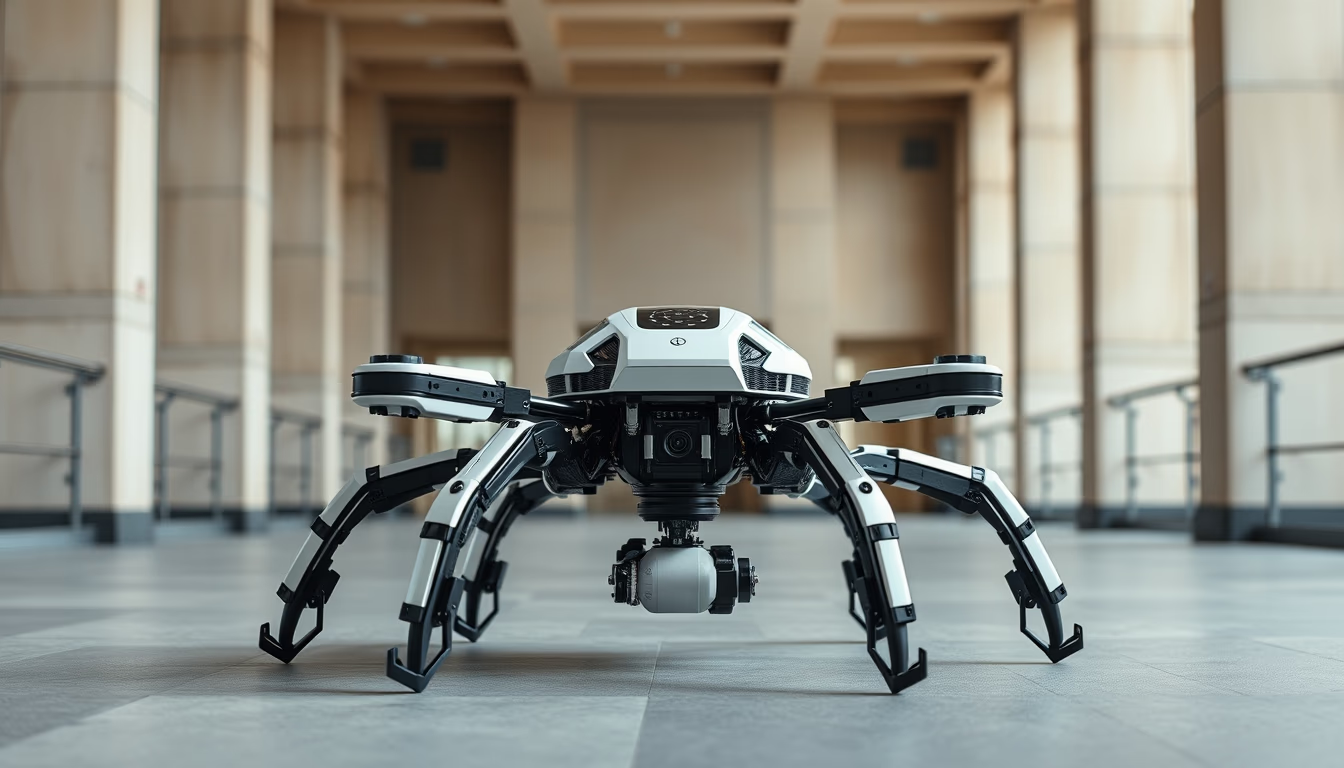
Warehouse robot agv
1344×768 · AVIF · CC BY 4.0

AGVs (Automated Guided Vehicles) revolutionize warehouse logistics, autonomously transporting loads and boosting operational efficiency.
About this subject
Automated Guided Vehicles (AGVs) are mobile robots used in warehouses and factories to transport materials without human intervention. They follow predefined paths using technologies such as magnetic wires embedded in the floor, reflective tape, laser navigation, or computer vision. The first commercial AGV application emerged in the 1950s, but they gained widespread adoption with the automation of large distribution centers like Amazon's.
Unlike fixed conveyor belts, AGVs offer flexibility: they can be reprogrammed for new routes as warehouse needs change. They can transport entire pallets or individual boxes, with load capacities ranging from hundreds to thousands of kilograms. Safety sensors, including laser scanners and emergency stop buttons, ensure safe operation alongside human workers.
The use of AGVs reduces operational costs by up to 30% in some cases, while minimizing inventory errors and product damage. Companies like Toyota and Swisslog develop specialized models for industries such as automotive, pharmaceutical, and food. The global AGV market is projected to grow at a compound annual rate of 10% through 2030, driven by e-commerce and Industry 4.0.
Interestingly, AGVs have evolved to include automatic battery charging systems and integration with Warehouse Management Software (WMS). In high-turnover warehouses, they operate 24/7, stopping only for recharging. Preventive maintenance is crucial to avoid failures, and many modern models offer remote diagnostics. Although they still rely on specialized infrastructure for navigation, newer versions use SLAM (Simultaneous Localization and Mapping) to operate in dynamic environments without floor markings.
Frequently Asked Questions
What is the difference between an AGV and an AMR?
AGVs follow fixed routes, usually marked on the floor, while AMRs (Autonomous Mobile Robots) navigate intelligently, avoiding obstacles without needing tracks or tapes.
How much does a warehouse AGV cost?
Prices range from $10,000 to $100,000 depending on payload, navigation technology, and customization. Complete systems with multiple robots can exceed $500,000.
Can AGVs operate alongside humans?
Yes, as long as they are equipped with safety sensors and comply with standards like ISO 3691-4. In many warehouses, they share space with workers, but in high-speed zones they may be separated.
Direct URL
https://pub-c7d6a6ea828543ac903a74a341ccb2e1.r2.dev/imagens/warehouse-robot-agv-long-exposure-p1.avifHow to credit
Include a visible link back to UtilizAí. Copy one of the snippets below:
<a href="https://xn--utiliza-eza.com/en/midia/imagens/warehouse-robot-agv-long-exposure-p1">Warehouse robot agv</a> by <a href="https://xn--utiliza-eza.com">UtilizAí</a>, licensed under <a href="https://creativecommons.org/licenses/by/4.0/">CC BY 4.0</a>.
[Warehouse robot agv](https://xn--utiliza-eza.com/en/midia/imagens/warehouse-robot-agv-long-exposure-p1) by [UtilizAí](https://xn--utiliza-eza.com), CC BY 4.0
License: CC-BY-4.0