Volcanic lightning ash
1344×768 · AVIF · CC BY 4.0
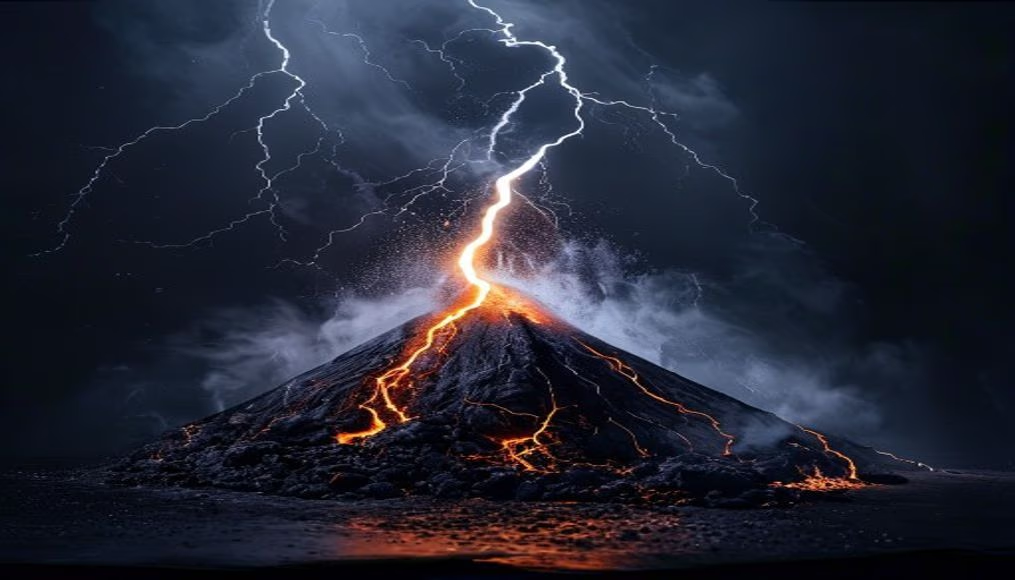
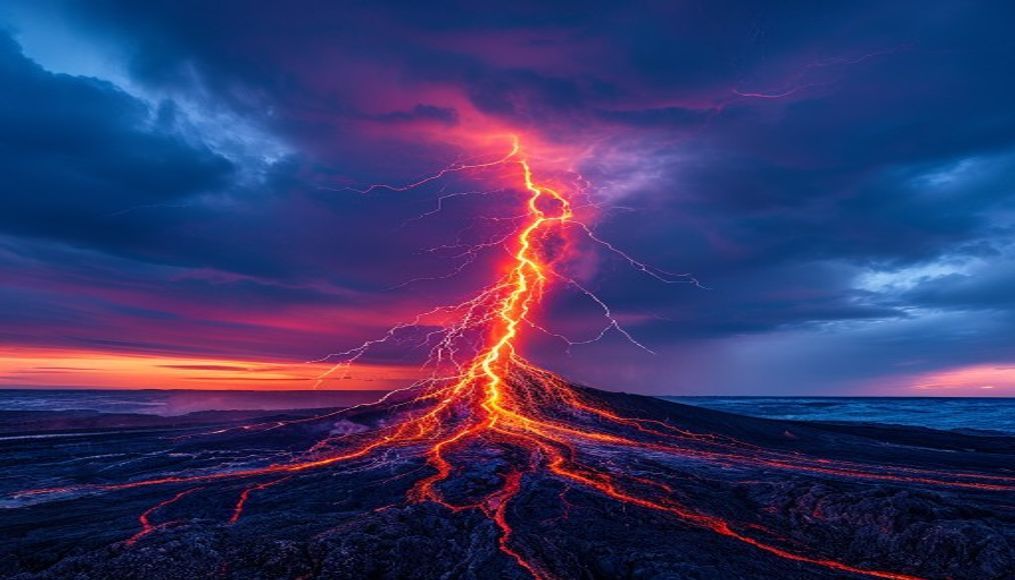
Volcanic lightning occurs when ash, rock fragments, and ice particles collide in an eruption plume, generating static electricity and spectacular lightning bolts.
About this subject
Volcanic lightning, also known as a dirty thunderstorm, is an electrical phenomenon that occurs during explosive volcanic eruptions. When a column of ash, rock fragments, and ice particles is ejected into the atmosphere, collisions among these materials generate positive and negative electrical charges. The separation of these charges within the pyroclastic cloud creates an intense electric field, resulting in electrical discharges, lightning. Unlike ordinary lightning, these flashes occur close to the crater and may strike the ground or other parts of the plume.
This phenomenon has been observed in historic eruptions such as Mount Vesuvius in 79 AD, described by Pliny the Younger. More recently, eruptions at Eyjafjallajökull (Iceland, 2010), Mount Redoubt (Alaska, 2009), and Mount Merapi (Indonesia, 2010) produced spectacular volcanic lightning. Scientists use electrical sensors and high-speed cameras to study eruption dynamics, as the frequency of lightning can indicate the intensity of volcanic activity.
The composition of the plume influences electrical generation. Plumes rich in fine ash and high water vapor content favor ice formation, which increases collisions and charge separation. Studies show that most volcanic lightning occurs at altitudes between 2 and 5 km within the plume, where temperatures are low enough for ice to form. This knowledge helps forecast eruptions and understand the internal mechanisms of volcanoes.
Frequently Asked Questions
What causes volcanic lightning?
Volcanic lightning is caused by collisions of ash, rock fragments, and ice particles within the eruption plume. These collisions generate electric charges that separate, creating an electric field that discharges as lightning.
Is volcanic lightning dangerous?
Yes, it is dangerous due to the risk of wildfires, damage to nearby infrastructure, and interference with electrical systems. Additionally, the eruption itself is hazardous, and lightning can strike observers or equipment.
At which volcanoes has volcanic lightning been recorded?
It has been recorded at many volcanoes: Mount Vesuvius (Italy), Eyjafjallajökull (Iceland), Mount Redoubt (Alaska), Mount Merapi (Indonesia), Sakurajima (Japan), and Mount St. Helens (USA), among others.
Direct URL
https://pub-c7d6a6ea828543ac903a74a341ccb2e1.r2.dev/imagens/volcanic-lightning-ash-studio-still-life-p3.avifHow to credit
Include a visible link back to UtilizAí. Copy one of the snippets below:
<a href="https://xn--utiliza-eza.com/en/midia/imagens/volcanic-lightning-ash-studio-still-life-p3">Volcanic lightning ash</a> by <a href="https://xn--utiliza-eza.com">UtilizAí</a>, licensed under <a href="https://creativecommons.org/licenses/by/4.0/">CC BY 4.0</a>.
[Volcanic lightning ash](https://xn--utiliza-eza.com/en/midia/imagens/volcanic-lightning-ash-studio-still-life-p3) by [UtilizAí](https://xn--utiliza-eza.com), CC BY 4.0
License: CC-BY-4.0