Underwater robot submersible
1344×768 · AVIF · CC BY 4.0
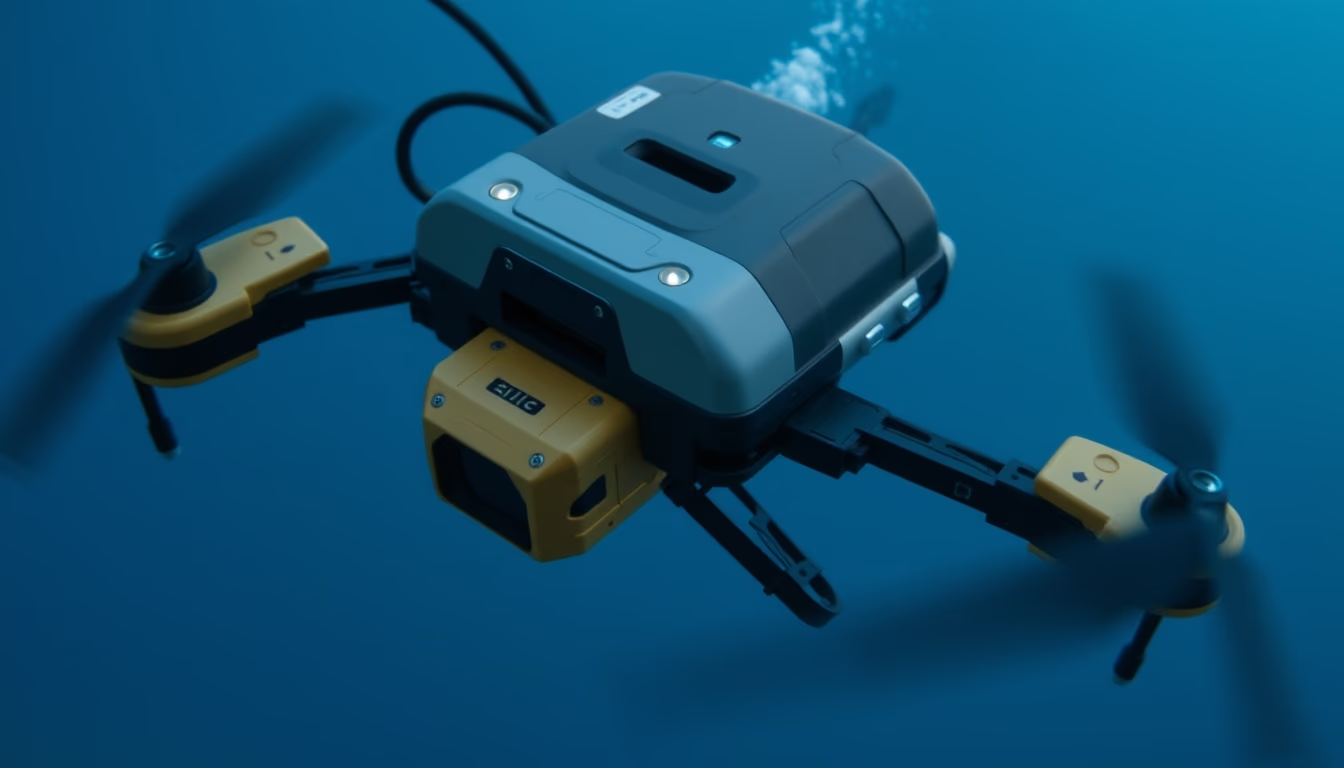
Submersible robots, such as ROVs and AUVs, are unmanned vehicles used for deep-sea exploration, underwater infrastructure maintenance, and scientific research.
About this subject
Submersible robots, also known as remotely operated vehicles (ROVs) or autonomous underwater vehicles (AUVs), are essential tools for exploring and intervening in deep ocean environments where human presence is impractical or dangerous. Unlike manned submarines, these robots are controlled via cables or programmed for specific missions, capable of operating thousands of meters below the surface.
These devices are widely used in the offshore oil and gas industry for inspecting and maintaining pipelines, platforms, and subsea equipment. In marine science, robotic submersibles help map the seafloor, collect biological and geological samples, and study extreme ecosystems such as hydrothermal vents and abyssal trenches. Notable examples include the ROV Jason, operated by the Woods Hole Oceanographic Institution, and the AUV Sentry, which conducts detailed surveys of ocean floor topography.
The technology of submersible robots has advanced significantly in recent decades. Modern models feature articulated robotic arms, high-definition cameras, side-scan sonars, and sensors for measuring physical and chemical water parameters. Furthermore, innovations in artificial intelligence enable some AUVs to make autonomous decisions during a mission, such as avoiding obstacles or adjusting data collection routes. The ongoing development of these robots is crucial for the sustainable exploration of marine resources and understanding the impacts of climate change on the oceans.
Frequently Asked Questions
What is a submersible robot?
A submersible robot is an unmanned vehicle designed to operate underwater, often at great depths. The two main types are ROVs (remotely operated via a cable) and AUVs (autonomous, following a pre-programmed mission).
What are the main applications of submersible robots?
They are used in the oil and gas industry for pipeline and platform inspection, in oceanographic research for data and sample collection, in underwater search and rescue operations, and in the installation and maintenance of submarine cables and telecommunications infrastructure.
How do submersible robots differ from manned submarines?
Manned submarines carry people and have limitations in duration and depth due to human safety. Submersible robots can operate for much longer periods, reach extreme depths (such as the Mariana Trench), and perform precise tasks without risk to life.
Direct URL
https://pub-c7d6a6ea828543ac903a74a341ccb2e1.r2.dev/imagens/underwater-robot-submersible-aerial-drone-shot-p7.avifHow to credit
Include a visible link back to UtilizAí. Copy one of the snippets below:
<a href="https://xn--utiliza-eza.com/en/midia/imagens/underwater-robot-submersible-aerial-drone-shot-p7">Underwater robot submersible</a> by <a href="https://xn--utiliza-eza.com">UtilizAí</a>, licensed under <a href="https://creativecommons.org/licenses/by/4.0/">CC BY 4.0</a>.
[Underwater robot submersible](https://xn--utiliza-eza.com/en/midia/imagens/underwater-robot-submersible-aerial-drone-shot-p7) by [UtilizAí](https://xn--utiliza-eza.com), CC BY 4.0
License: CC-BY-4.0