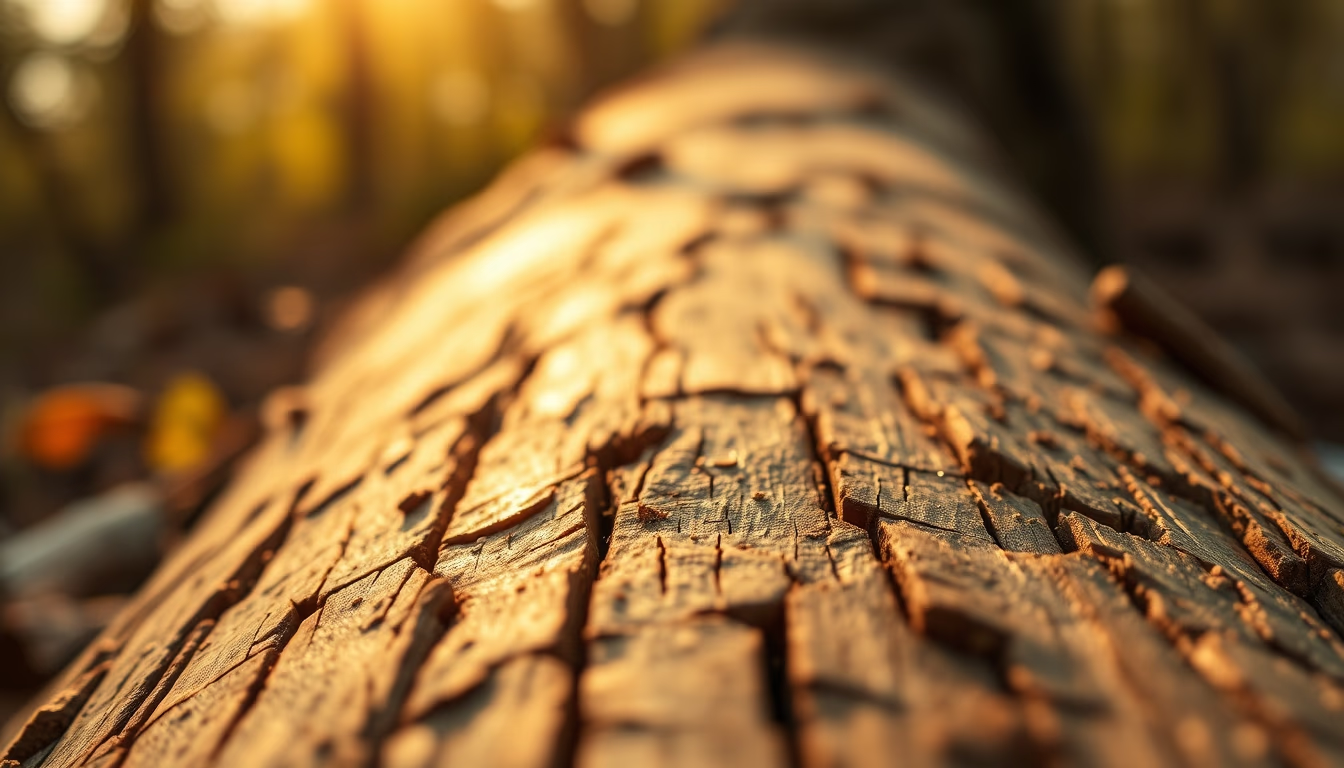
Tree bark texture
1344×768 · AVIF · CC BY 4.0
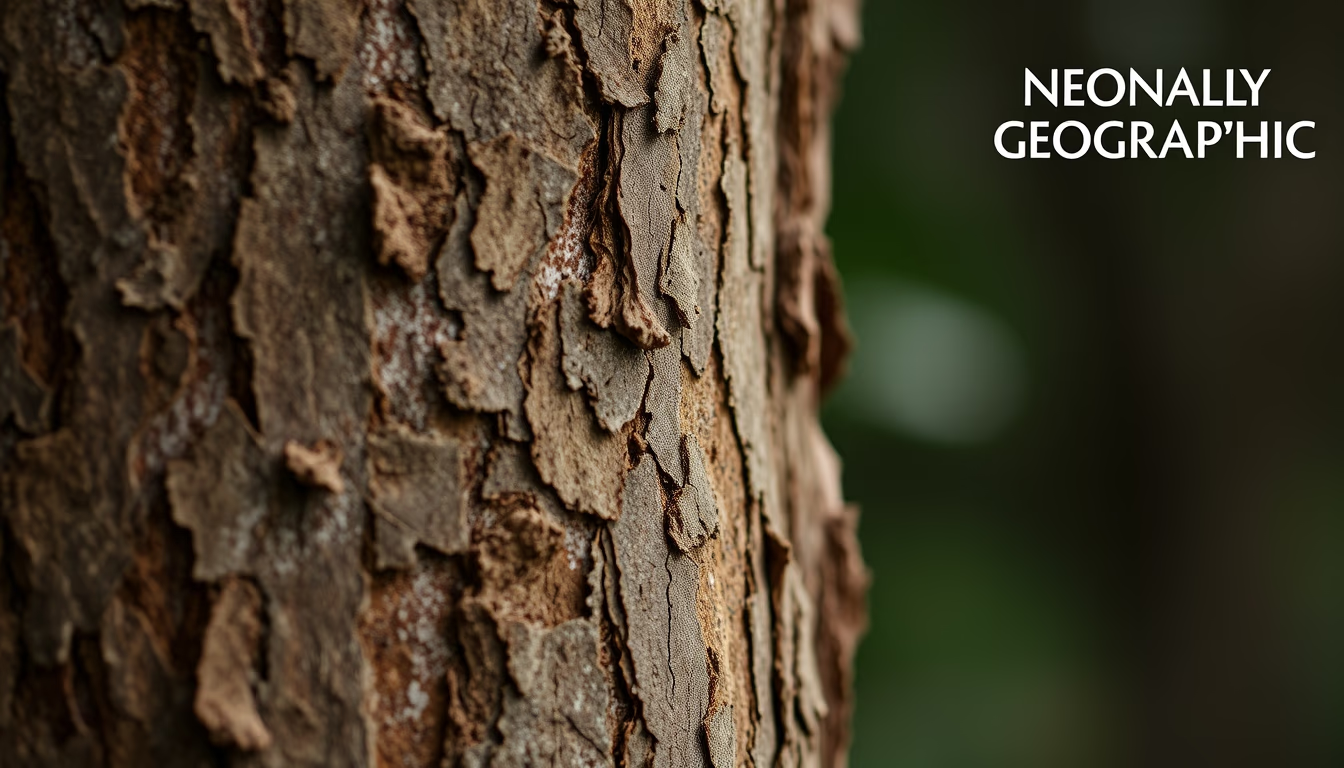
Tree bark is a complex tissue that protects against external threats and reveals surprising evolutionary adaptations.
About this subject
Tree bark consists of the outermost layers of stems and roots, primarily composed of dead cork cells and phloem. Its main role is to shield the tree from extreme weather, pathogens, fire, and herbivores. The texture, thickness, and color vary enormously among species, reflecting evolutionary adaptations to different environments.
Some trees have smooth, thin bark that peels off in strips, like the eucalyptus. Others, such as oak, develop thick, deeply furrowed bark that insulates against fire. Birch is famous for its white, papery bark, while pines have scaly, resinous bark. These traits are not random; they are fine-tuned responses to local conditions: fire-prone areas favor thick bark, while humid forests often have thin, photosynthetic bark.
Ecologically, bark provides microhabitats for insects, mosses, lichens, and fungi. Many birds and mammals rely on bark-dwelling insects for food, and some animals eat the bark itself during lean seasons. Bark also contains chemical compounds that deter herbivores or fight microbial infections, contributing to the tree's immune system.
Humans have long exploited bark. Cork comes from the cork oak and is used for bottle stoppers and insulation. Tannins from oak bark are used in leather tanning and winemaking. Willow bark yields salicylic acid, the basis of aspirin. The giant sequoia's bark can be up to 60 cm thick, making it exceptionally fire-resistant and allowing the trees to live for millennia. In short, tree bark is a dynamic, multifunctional tissue that tells the story of a tree's struggle and adaptation.
Frequently Asked Questions
Why do tree barks have different textures?
Bark texture varies by species and environment. Trees in fire-prone areas often develop thick, furrowed bark, while those in humid forests tend to have smooth, thin bark. Growth patterns, accumulation of dead cells, and resin content also influence texture.
What is the function of bark on a tree?
Bark protects the tree from mechanical damage, pathogens, herbivores, fire, and extreme weather such as frost and drought. It also helps regulate trunk temperature and stores defensive compounds.
Can tree bark regenerate after damage?
Yes, many trees can regenerate damaged bark through the activity of the vascular cambium. However, deep wounds or girdling may disrupt sap flow and lead to death. Regeneration capacity varies among species.
Direct URL
https://pub-c7d6a6ea828543ac903a74a341ccb2e1.r2.dev/imagens/tree-bark-texture-national-geographic-style-p5.avifHow to credit
Include a visible link back to UtilizAí. Copy one of the snippets below:
<a href="https://xn--utiliza-eza.com/en/midia/imagens/tree-bark-texture-national-geographic-style-p5">Tree bark texture</a> by <a href="https://xn--utiliza-eza.com">UtilizAí</a>, licensed under <a href="https://creativecommons.org/licenses/by/4.0/">CC BY 4.0</a>.
[Tree bark texture](https://xn--utiliza-eza.com/en/midia/imagens/tree-bark-texture-national-geographic-style-p5) by [UtilizAí](https://xn--utiliza-eza.com), CC BY 4.0
License: CC-BY-4.0