Telescope vintage brass
1344×768 · AVIF · CC BY 4.0
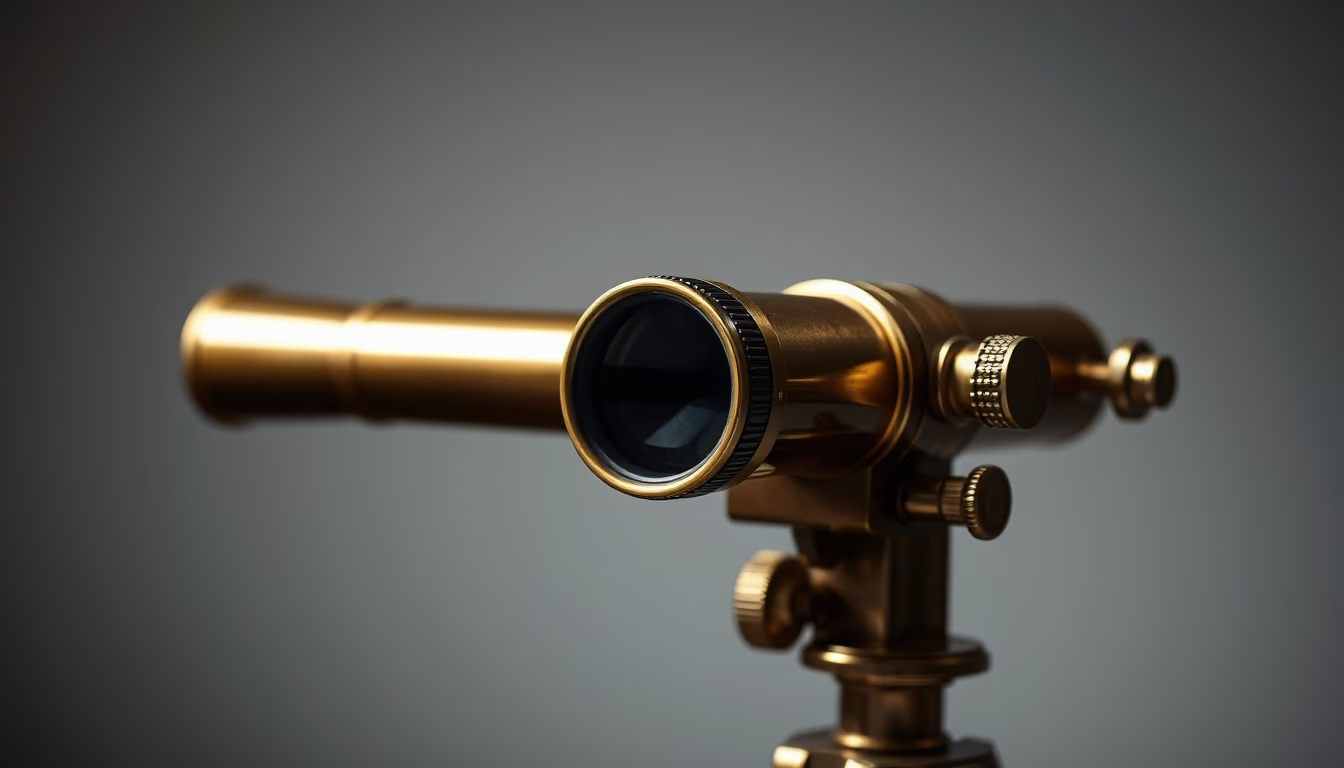
A vintage brass telescope, a collector's item dating back to early 19th-century refractors, combines craftsmanship and science.
About this subject
Brass telescopes from the 19th century represent a milestone in the history of optics and navigation. Handcrafted, often by skilled metalworkers and renowned scientists, these instruments were used by amateur astronomers and sailors for celestial and terrestrial observations. Brass, the predominant material, provided durability and corrosion resistance, essential for maritime use.
A classic example is the hand-held spyglass or pocket telescope, popular in the Victorian era. These instruments featured polished glass lenses mounted in brass tubes with leather or wood accents. Magnification ranged from 10x to 30x, sufficient to identify lunar details or spot ships on the horizon. Many pieces were produced by British manufacturers such as Dollond, Ramsden, and Troughton & Simms, whose precision was globally recognized.
With the advent of more modern telescopes in the 20th century, brass telescopes became collector's items and decorative objects. Their elegant design and the patina acquired over time attract antique enthusiasts. Well-preserved pieces can be worth hundreds of dollars, depending on the manufacturer, rarity, and condition. Furthermore, studying these instruments helps understand the evolution of astronomy and optics.
Interestingly, brass telescopes also appear in literary and cinematic works as symbols of exploration and discovery. They evoke a romantic era of science, when observing the sky was a solitary and contemplative activity. Today, specialized restorers keep the manufacturing techniques alive, ensuring these pieces continue to function and enchant.
Frequently Asked Questions
How to identify an antique brass telescope?
Check for manufacturer marks, serial numbers, lens type (coated or not), and details like leather or mother-of-pearl.
What is the average value of a vintage brass telescope?
Common pieces range from $50 to $200; rarities can exceed $1,000.
Do brass telescopes still work for observation?
Yes, if lenses are clean and unblemished. Image quality is inferior to modern telescopes, but the Moon and planets are still observable.
Direct URL
https://pub-c7d6a6ea828543ac903a74a341ccb2e1.r2.dev/imagens/telescope-vintage-brass-studio-still-life-p2.avifHow to credit
Include a visible link back to UtilizAí. Copy one of the snippets below:
<a href="https://xn--utiliza-eza.com/en/midia/imagens/telescope-vintage-brass-studio-still-life-p2">Telescope vintage brass</a> by <a href="https://xn--utiliza-eza.com">UtilizAí</a>, licensed under <a href="https://creativecommons.org/licenses/by/4.0/">CC BY 4.0</a>.
[Telescope vintage brass](https://xn--utiliza-eza.com/en/midia/imagens/telescope-vintage-brass-studio-still-life-p2) by [UtilizAí](https://xn--utiliza-eza.com), CC BY 4.0
License: CC-BY-4.0