Surgical robot da vinci
1344×768 · AVIF · CC BY 4.0

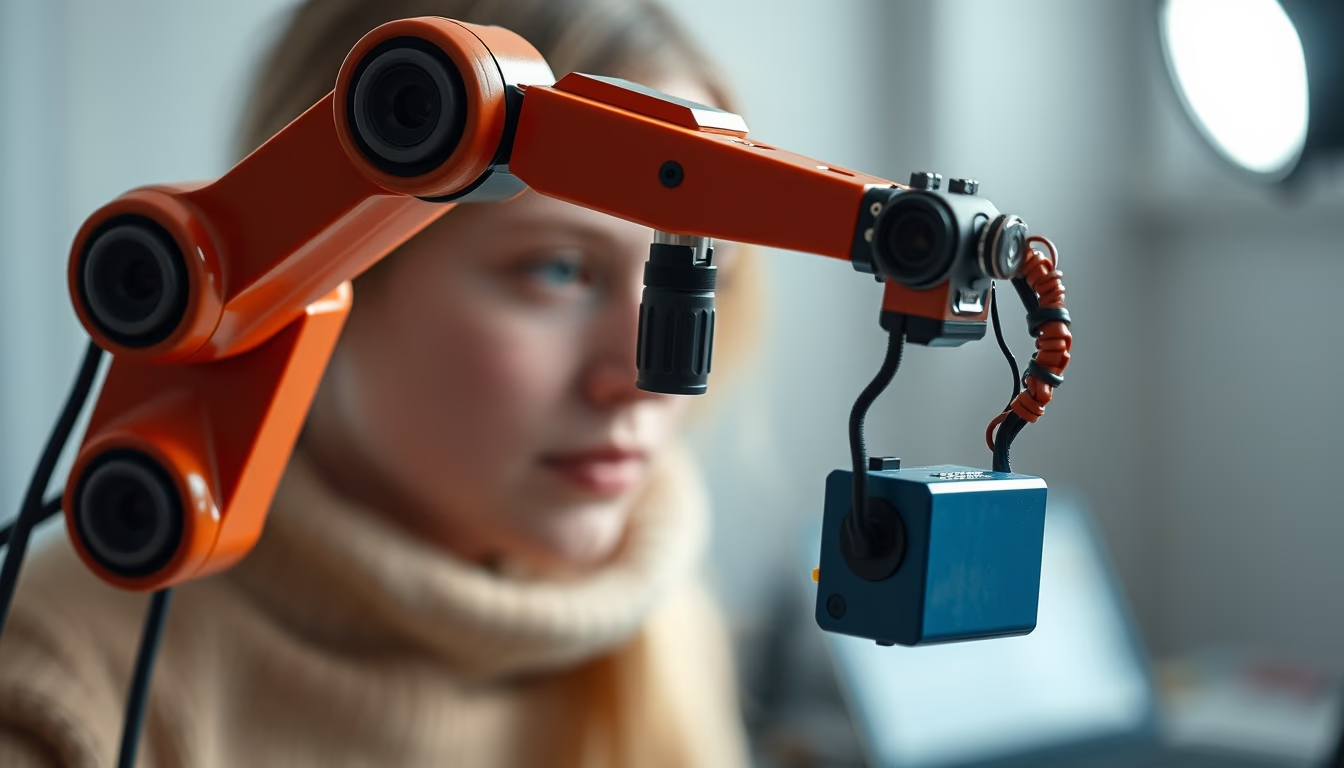
The da Vinci surgical robot is an advanced robotic system used in minimally invasive procedures, offering superior precision and control to the surgeon.
About this subject
The da Vinci surgical system, developed by the American company Intuitive Surgical, was approved by the FDA in 2000 and quickly became a benchmark in robotic surgery. It consists of a console where the surgeon sits, a tower with robotic arms, and a high-definition 3D vision unit, allowing precise tremor-filtered movements that enhance the surgeon's capabilities.
Its applications span various medical specialties: urology (prostatectomies and nephrectomies), gynecology (hysterectomies and myomectomies), cardiac surgery (myocardial revascularization), and general surgery (cholecystectomies and hernia repairs). Key benefits include shorter hospital stays, reduced blood loss, less postoperative pain, and faster return to daily activities.
The system has evolved through four main generations: Standard, S, Si, Xi, and the latest SP (Single Port), which operates with a single arm for even less invasive access. As of 2023, over 10 million procedures have been performed worldwide with da Vinci. In Brazil, top hospitals such as Sírio-Libanês (SP), Albert Einstein (SP), and Moinhos de Vento (RS) have the equipment, though its high cost (around US$ 2 million per unit) limits widespread adoption.
Compared to conventional laparoscopic surgery, da Vinci offers three-dimensional vision and articulated instruments, but requires intensive training and longer setup time. The future trend points to telesurgery, where doctors can operate remotely, expanding access to complex procedures.
Frequently Asked Questions
What is the da Vinci surgical robot?
It is a robotic system developed by Intuitive Surgical for minimally invasive surgery. It allows the surgeon to operate with precision using robotic arms controlled from a console.
What are the benefits of robotic surgery with da Vinci?
Shorter recovery time, less postoperative pain, reduced blood loss, smaller scars, and lower risk of infection.
Is the da Vinci robot used in Brazil?
Yes. Several Brazilian hospitals, such as Hospital Sírio-Libanês and Hospital Albert Einstein, use the system for procedures in urology, gynecology, and general surgery.
Direct URL
https://pub-c7d6a6ea828543ac903a74a341ccb2e1.r2.dev/imagens/surgical-robot-da-vinci-studio-still-life-p5.avifHow to credit
Include a visible link back to UtilizAí. Copy one of the snippets below:
<a href="https://xn--utiliza-eza.com/en/midia/imagens/surgical-robot-da-vinci-studio-still-life-p5">Surgical robot da vinci</a> by <a href="https://xn--utiliza-eza.com">UtilizAí</a>, licensed under <a href="https://creativecommons.org/licenses/by/4.0/">CC BY 4.0</a>.
[Surgical robot da vinci](https://xn--utiliza-eza.com/en/midia/imagens/surgical-robot-da-vinci-studio-still-life-p5) by [UtilizAí](https://xn--utiliza-eza.com), CC BY 4.0
License: CC-BY-4.0