Surgical robot da vinci
1344×768 · AVIF · CC BY 4.0

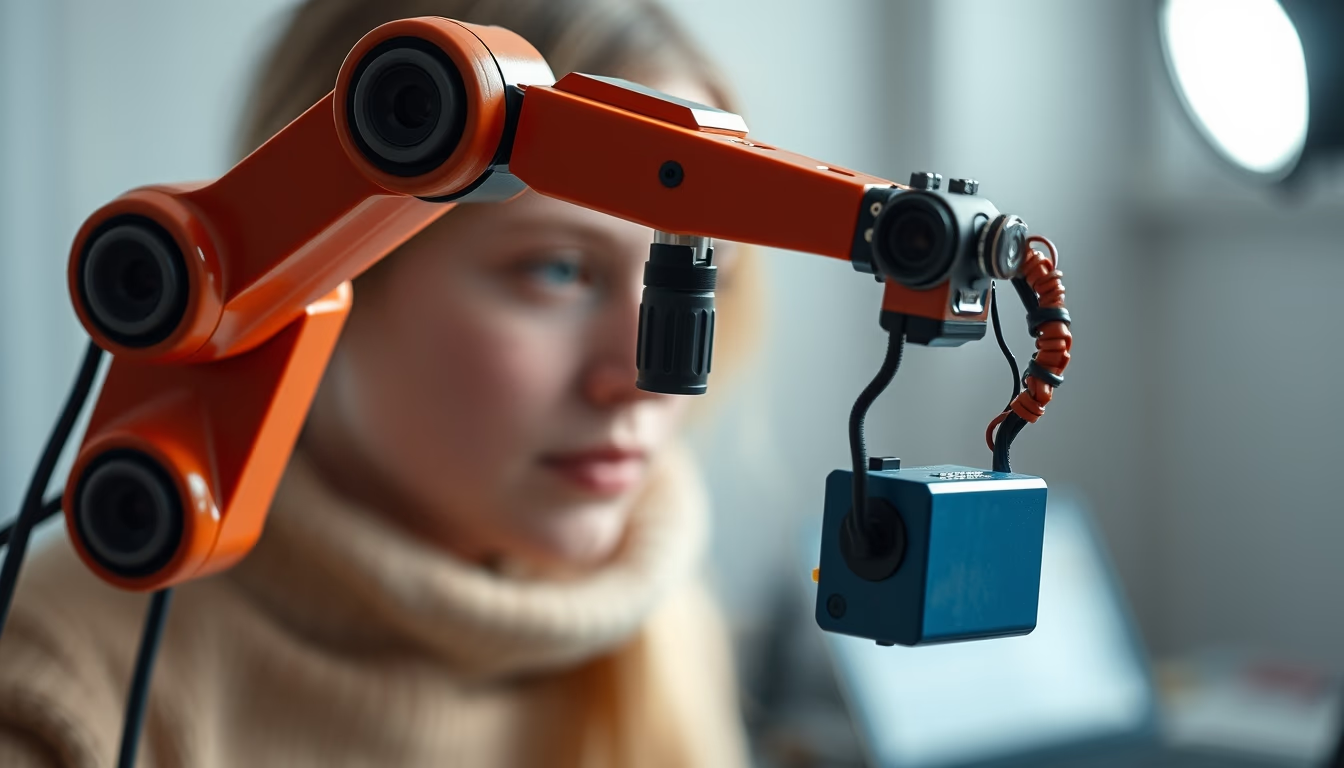
The Da Vinci surgical robot revolutionized minimally invasive surgery by enabling precise movements and high-definition 3D vision.
About this subject
The Da Vinci surgical system is a robotic platform developed by Intuitive Surgical, approved by the FDA in 2000 for minimally invasive surgery. It consists of three main components: a surgeon console where the doctor sits and controls the instruments, a patient cart with four robotic arms that replicate the surgeon's movements, and a vision tower that displays magnified 3D images of the operative field. As of 2023, over 10 million procedures have been performed worldwide using the Da Vinci system, covering specialties such as urology, gynecology, cardiac surgery, and head and neck surgery.
One key advantage is the precision of movements. The articulated instruments have joints that mimic human wrist motion but with greater range and dexterity, while eliminating natural tremors. Stereoscopic vision with up to 10x zoom allows surgeons to see details invisible to the naked eye. The system also provides superior ergonomics, reducing fatigue during long operations. Studies show that Da Vinci use results in less blood loss, less postoperative pain, and shorter hospital stays compared to open surgery.
Brazil is one of the leading adopters of this technology in Latin America. Hospitals such as Sírio-Libanês and Albert Einstein in São Paulo have multiple units. The first robotic surgery in the country was performed in 2008, and since then the number of procedures has grown exponentially. However, the high cost of the equipment (about US$2 million) and disposable instruments limits access, being more common in private and teaching hospitals. Intuitive Surgical continues to innovate with smaller versions and artificial intelligence assistance, such as the Da Vinci SP (Single Port) system for single-incision surgery.
Interestingly, the name Da Vinci was inspired by Leonardo da Vinci, who designed the first humanoid robot in the 15th century. The company logo features the Vitruvian Man, symbolizing the union of art and science. Despite advances, the robot does not operate autonomously: it is a tool that translates the surgeon's movements into precise micromovements. Safety is ensured by multiple verification systems, such as emergency stops and collision sensors.
Frequently Asked Questions
What are the main advantages of the Da Vinci surgical robot over traditional laparoscopic surgery?
Da Vinci offers high-definition 3D vision, articulated instruments with greater dexterity, tremor elimination, and ergonomic comfort for the surgeon. Studies show less bleeding, less pain, and faster recovery for patients.
Is the Da Vinci robot controlled by artificial intelligence or does it operate on its own?
No, the system is not autonomous. It is a remotely controlled device that translates the surgeon's hand movements into precise actions of the robotic arms.
How many Da Vinci robot surgeries have been performed in Brazil?
The exact number is not publicly disclosed, but it is estimated that tens of thousands of procedures have been performed in Brazil by 2023, with significant annual growth.
Direct URL
https://pub-c7d6a6ea828543ac903a74a341ccb2e1.r2.dev/imagens/surgical-robot-da-vinci-long-exposure-p6.avifHow to credit
Include a visible link back to UtilizAí. Copy one of the snippets below:
<a href="https://xn--utiliza-eza.com/en/midia/imagens/surgical-robot-da-vinci-long-exposure-p6">Surgical robot da vinci</a> by <a href="https://xn--utiliza-eza.com">UtilizAí</a>, licensed under <a href="https://creativecommons.org/licenses/by/4.0/">CC BY 4.0</a>.
[Surgical robot da vinci](https://xn--utiliza-eza.com/en/midia/imagens/surgical-robot-da-vinci-long-exposure-p6) by [UtilizAí](https://xn--utiliza-eza.com), CC BY 4.0
License: CC-BY-4.0