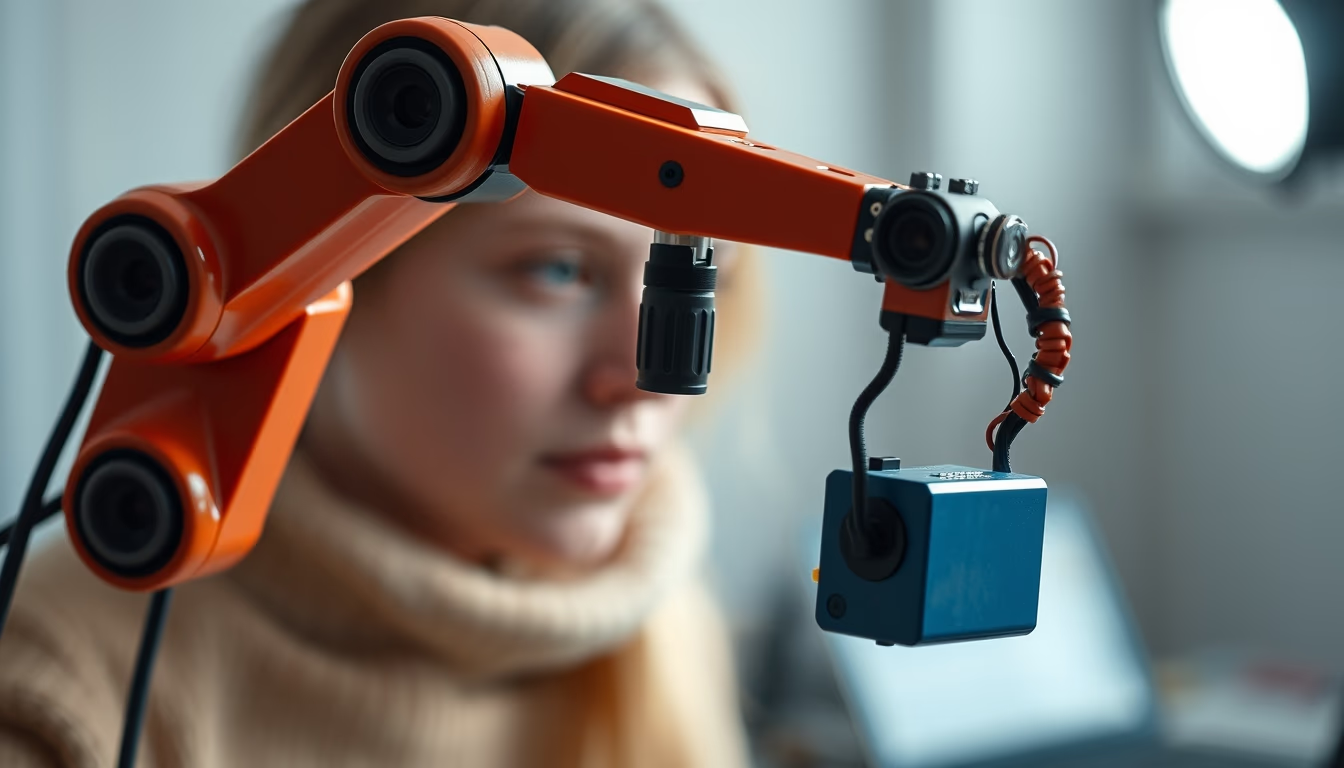
Surgical robot da vinci
1344×768 · AVIF · CC BY 4.0
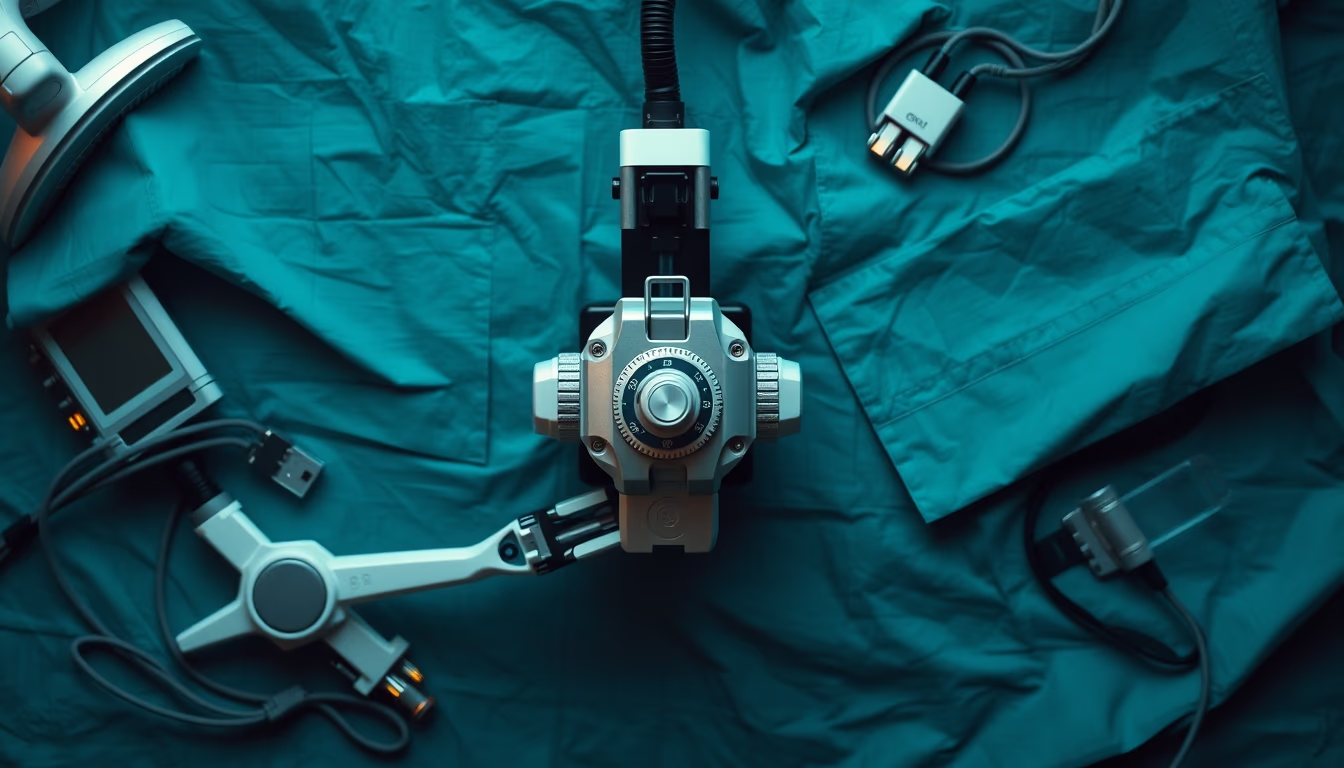
The da Vinci surgical system is an assistive robot enabling minimally invasive surgery with enhanced precision, controlled by a surgeon from a console.
About this subject
The da Vinci surgical system, developed by the American company Intuitive Surgical, received FDA approval in 2000 and has since revolutionized minimally invasive surgery. It consists of a surgeon console, a cart with four robotic arms, and a high-definition 3D vision system, allowing precise movements while filtering natural hand tremors. The articulated instruments mimic the human wrist but with greater range and stability.
The technology originated from SRI International research for military telesurgery, later licensed by Intuitive. The name da Vinci honors Leonardo da Vinci, who studied anatomy and designed the first humanoid robot. Since launch, over 8 million procedures have been performed worldwide, with common areas including urology (prostatectomies), gynecology (hysterectomies), and cardiothoracic surgery. Studies show reduced blood loss, less postoperative pain, and shorter hospital stays compared to open surgery.
Despite the benefits, the high cost (around $2-2.5 million per unit) limits widespread adoption, especially in Brazil, where the system is found in private hospitals in major cities. Surgeon training is extensive and requires certification. Competitors such as Medtronic's Hugo system aim to offer more affordable alternatives. The da Vinci continues to evolve, with models like the Xi and SP (single-port) expanding surgical possibilities and further reducing patient trauma.
Frequently Asked Questions
What is the da Vinci surgical system?
It is an assistive robot used in minimally invasive surgery, consisting of a surgeon console, robotic arms with articulated instruments, and a 3D camera. It translates the surgeon's hand movements into precise robotic motions.
What are the advantages of robotic surgery with da Vinci?
Smaller incisions, less blood loss, reduced postoperative pain, faster recovery, and shorter hospital stays. The system also provides magnified 3D visualization and eliminates natural hand tremors.
Where is the da Vinci robot used in Brazil?
It is available in private hospitals in major cities like São Paulo, Rio de Janeiro, and Brasília, primarily in urology, gynecology, and general surgery. Access is still limited due to the high cost of the equipment and procedure.
Direct URL
https://pub-c7d6a6ea828543ac903a74a341ccb2e1.r2.dev/imagens/surgical-robot-da-vinci-isometric-flat-lay-p7.avifHow to credit
Include a visible link back to UtilizAí. Copy one of the snippets below:
<a href="https://xn--utiliza-eza.com/en/midia/imagens/surgical-robot-da-vinci-isometric-flat-lay-p7">Surgical robot da vinci</a> by <a href="https://xn--utiliza-eza.com">UtilizAí</a>, licensed under <a href="https://creativecommons.org/licenses/by/4.0/">CC BY 4.0</a>.
[Surgical robot da vinci](https://xn--utiliza-eza.com/en/midia/imagens/surgical-robot-da-vinci-isometric-flat-lay-p7) by [UtilizAí](https://xn--utiliza-eza.com), CC BY 4.0
License: CC-BY-4.0