Sugar crystals macro
1344×768 · AVIF · CC BY 4.0
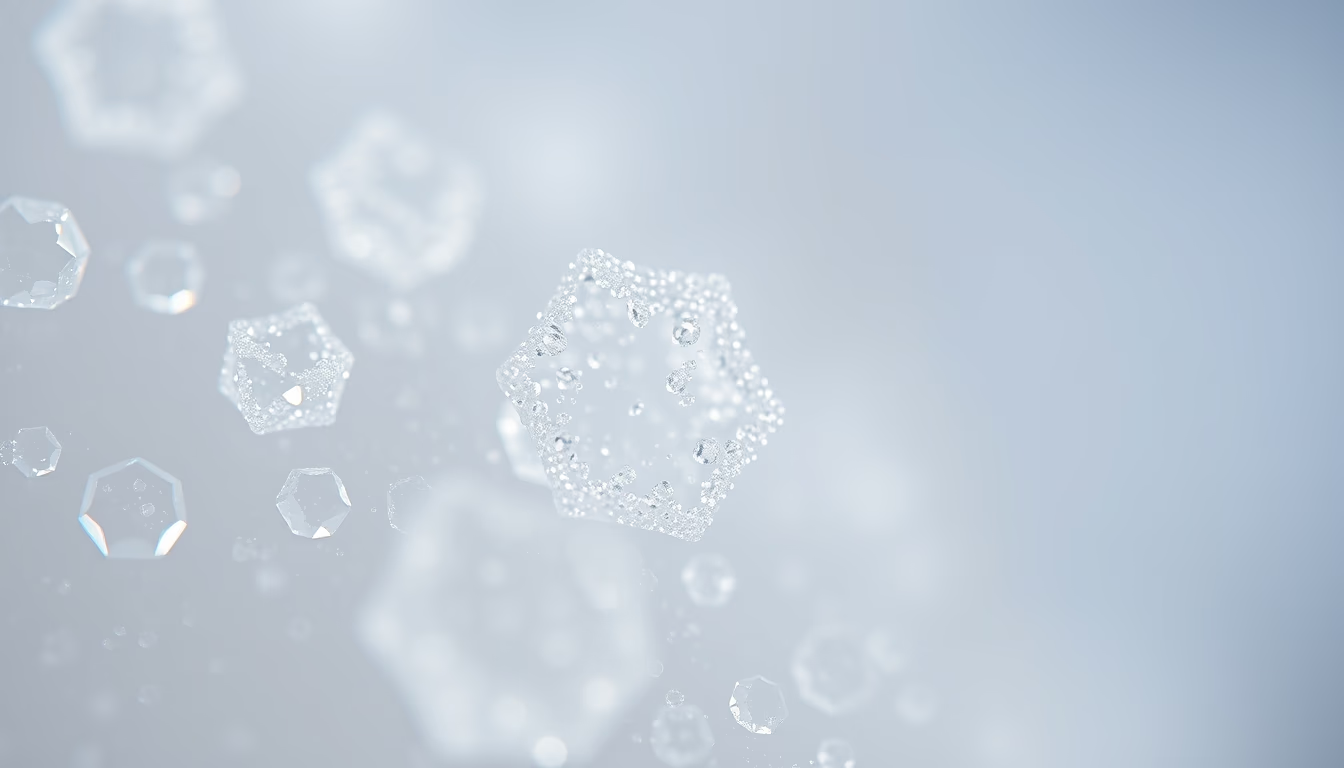
Macro view of sugar crystals reveals their geometric structure and the science behind the formation of the world's most used sweetener.
About this subject
Sugar crystals, composed of sucrose, have a monoclinic structure that can be observed in detail through macro photography. Each crystal is a regular arrangement of sucrose molecules, which organize into a crystalline network when the solution reaches supersaturation. This process occurs naturally during sugar production from sugarcane or sugar beet, where the juice is evaporated until crystals begin to form.
In everyday life, we encounter different types of sugar crystals: granulated sugar with medium crystals; powdered sugar, ground into a fine dust; and crystal sugar, with larger, more irregular crystals. The color of sugar depends on the degree of refining: brown sugar retains molasses, giving it a characteristic color and flavor, while white sugar undergoes clarification processes that remove impurities.
Sugar production holds great economic and historical importance. Brazil is the world's largest producer of sugarcane, and the state of São Paulo accounts for about 60% of the national production. Besides sweetening foods, sugar crystals are used in preserves, fermentation for ethanol production, and even as an excipient in pharmaceuticals.
A curiosity: the shape of sugar crystals can vary depending on crystallization conditions. Impurities or additives like glucose syrup can inhibit crystallization, resulting in different textures such as caramel or fondant. Macro photography allows us to appreciate the geometric beauty of these small solids that are part of our daily lives.
Frequently Asked Questions
Why does sugar form crystals?
Sugar forms crystals because sucrose molecules arrange into an ordered structure when the solution becomes supersaturated. This regular arrangement is energetically favorable and results in solid crystals.
What is the difference between brown sugar and white sugar?
Brown sugar retains molasses, giving it a brown color, moisture, and a more intense flavor. White sugar undergoes refining processes that remove molasses and impurities, resulting in purer, neutral-tasting crystals.
How are sugar crystals produced?
Sugar crystals are produced from sugarcane or beet juice. The juice is evaporated to concentrate the sucrose, which then crystallizes. The crystals are separated by centrifugation and may be dried and refined depending on the desired type.
Direct URL
https://pub-c7d6a6ea828543ac903a74a341ccb2e1.r2.dev/imagens/sugar-crystals-macro-lo-fi-disposable-camera-p0.avifHow to credit
Include a visible link back to UtilizAí. Copy one of the snippets below:
<a href="https://xn--utiliza-eza.com/en/midia/imagens/sugar-crystals-macro-lo-fi-disposable-camera-p0">Sugar crystals macro</a> by <a href="https://xn--utiliza-eza.com">UtilizAí</a>, licensed under <a href="https://creativecommons.org/licenses/by/4.0/">CC BY 4.0</a>.
[Sugar crystals macro](https://xn--utiliza-eza.com/en/midia/imagens/sugar-crystals-macro-lo-fi-disposable-camera-p0) by [UtilizAí](https://xn--utiliza-eza.com), CC BY 4.0
License: CC-BY-4.0