Solar panel farm in dry Brazilian landscape
1344×768 · AVIF · CC BY 4.0
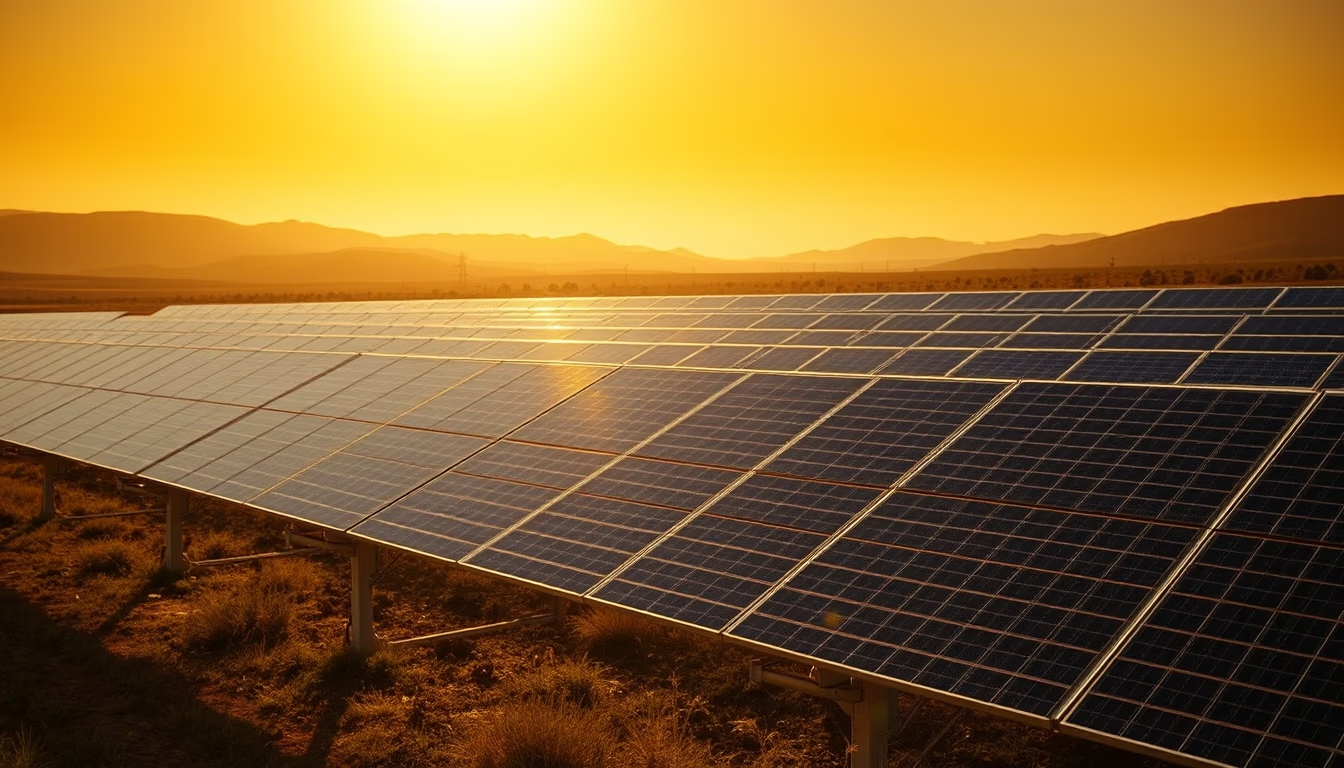
Solar photovoltaic farm in Brazil's semi-arid northeast generates clean energy by harnessing the high irradiation of the Caatinga biome.
About this subject
The Brazilian sertão, a semi-arid region covering much of the Northeast, is one of the world's best places for solar energy generation. With an average of 2,800 hours of sunshine per year and global horizontal irradiation above 5.5 kWh/m²/day, the Caatinga biome provides ideal conditions for photovoltaic plants. In recent years, large solar farms have been installed in states like Bahia, Pernambuco, and Piauí, transforming the dry landscape into a source of renewable electricity.
These farms occupy vast tracts of land, often previously used for low-productivity cattle ranching. Panels are mounted on metal structures that track the sun's movement (trackers), increasing efficiency by up to 25% compared to fixed systems. The generated energy is fed into the National Interconnected System (SIN), helping to diversify Brazil's electricity matrix, which historically relied on hydroelectric dams.
Beyond energy generation, solar farms bring socioeconomic benefits to the sertão: they create jobs during construction and operation, require local labor for cleaning and maintenance, and generate revenue for municipalities through financial compensation. However, there are also environmental challenges, such as the need to clear native vegetation and impacts on local fauna, especially birds and reptiles.
Interestingly, dust and sand typical of the sertão can reduce panel efficiency by up to 30% without periodic cleaning. Therefore, farms use robotic or manual washing systems, often drawing water from artesian wells. The image captures the contrast between modern technology and the arid landscape, with the setting sun highlighting the rows of panels.
Frequently Asked Questions
Why is the Brazilian sertão ideal for solar energy?
The sertão receives high solar irradiation year-round, averaging over 5.5 kWh/m²/day, with low cloud cover, making photovoltaic generation very efficient.
What are the environmental impacts of a solar farm in the sertão?
Installation may require clearing Caatinga vegetation and affect local fauna. However, after operation, the soil can be restored with native plants between panels.
How does dust affect solar panels in the semi-arid region?
Dust reduces light transmission and can decrease efficiency by up to 30%, requiring periodic cleaning with water or robotic systems.
Direct URL
https://pub-c7d6a6ea828543ac903a74a341ccb2e1.r2.dev/imagens/solar-panel-farm-in-brazilian-sertao-landscape-wide-late-afternoon-3.avifHow to credit
Include a visible link back to UtilizAí. Copy one of the snippets below:
<a href="https://xn--utiliza-eza.com/en/midia/imagens/solar-panel-farm-in-brazilian-sertao-landscape-wide-late-afternoon-3">Solar panel farm in dry Brazilian landscape</a> by <a href="https://xn--utiliza-eza.com">UtilizAí</a>, licensed under <a href="https://creativecommons.org/licenses/by/4.0/">CC BY 4.0</a>.
[Solar panel farm in dry Brazilian landscape](https://xn--utiliza-eza.com/en/midia/imagens/solar-panel-farm-in-brazilian-sertao-landscape-wide-late-afternoon-3) by [UtilizAí](https://xn--utiliza-eza.com), CC BY 4.0
License: CC-BY-4.0