Solar panel farm in dry Brazilian landscape
1344×768 · AVIF · CC BY 4.0
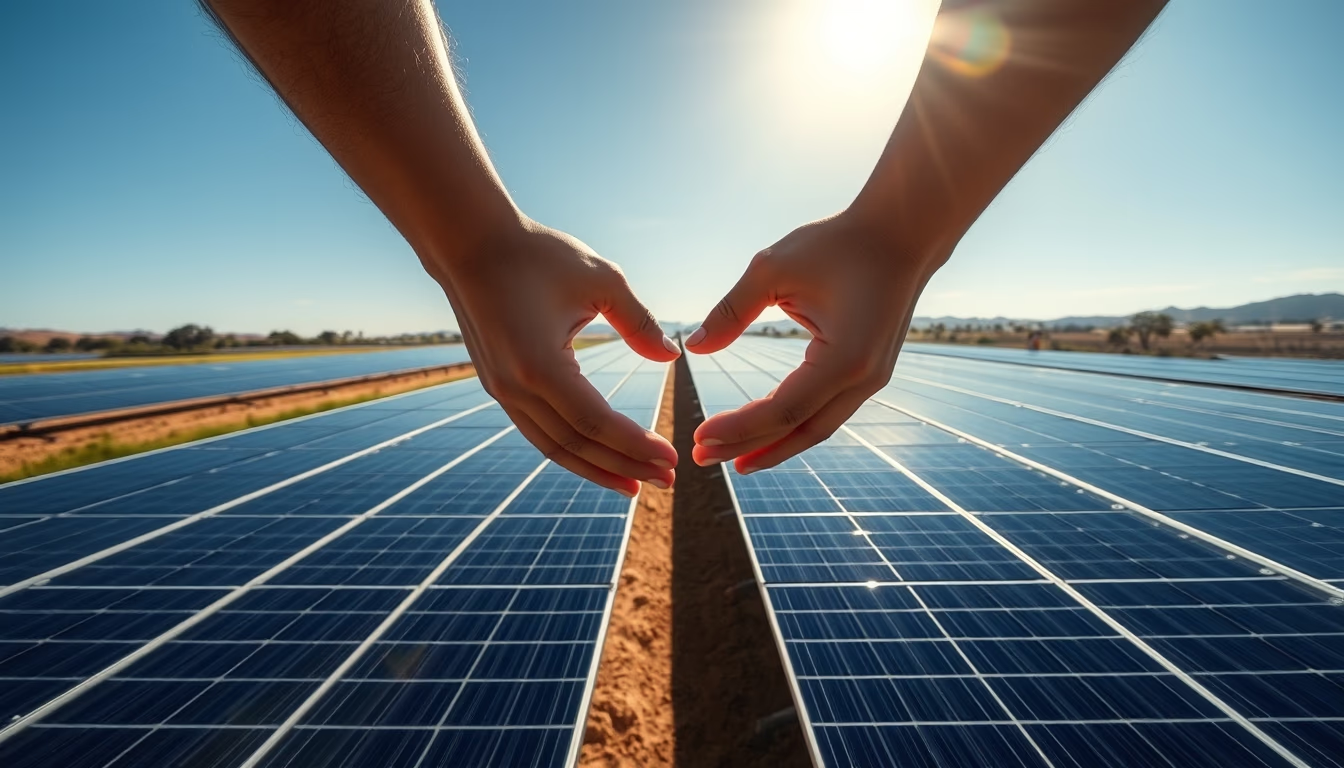
Solar photovoltaic farm in the Brazilian semiarid region harnesses high irradiation for renewable energy.
About this subject
The Brazilian sertão, characterized by its semiarid climate and high solar incidence, has become a strategic hub for photovoltaic solar energy generation. With average annual irradiation exceeding 2,000 kWh/m², the region offers ideal conditions for large-scale solar farms. Brazil, which already has a predominantly renewable energy matrix, has been expanding its solar capacity, surpassing 30 GW in 2023, with emphasis on states like Bahia, Pernambuco, and Piauí.
These projects, such as the Juazeiro solar complex (BA) or the São Gonçalo park (PI), occupy vast areas of preserved or degraded caatinga, generating environmental and social impacts that require careful planning. Installing photovoltaic panels in the sertão contributes to energy decentralization, bringing development to municipalities historically lacking infrastructure. Additionally, solar generation complements hydropower, especially during prolonged droughts.
The technology used in sertão solar parks includes monocrystalline or polycrystalline silicon panels, with efficiency between 18% and 22%, and solar tracking systems that increase energy capture by up to 30%. Maintenance is challenging due to dust and extreme heat, but local labor has been trained to operate and maintain the equipment. Federal and state governments offer tax incentives, such as ICMS exemption for solar energy, boosting new investments.
Interestingly, the sertão was once seen as an unproductive region, but today it is consolidating as a frontier of innovation in clean energy. Projects like the "Lapa Solar Complex" in Bahia combine energy generation with caatinga preservation, demonstrating that it is possible to reconcile sustainable development with the region's natural vocation. The generated energy supplies not only the Northeast but also other regions of the country through the National Interconnected System (SIN).
Frequently Asked Questions
Why is the Brazilian sertão ideal for solar energy?
The sertão has high annual solar irradiation (above 2,000 kWh/m²), low cloud cover, and large flat areas, which maximize photovoltaic panel efficiency.
What are the main challenges for solar farms in the sertão?
Challenges include dust and sand reducing panel efficiency, high temperatures affecting performance, water scarcity for cleaning, and environmental impacts on the caatinga biome.
Does solar energy in the sertão benefit the local population?
Yes, it creates direct and indirect jobs, promotes technical training, attracts investments to rural municipalities, and contributes to regional energy security by reducing dependence on hydropower.
Direct URL
https://pub-c7d6a6ea828543ac903a74a341ccb2e1.r2.dev/imagens/solar-panel-farm-in-brazilian-sertao-landscape-symmetric-bright-midday-6.avifHow to credit
Include a visible link back to UtilizAí. Copy one of the snippets below:
<a href="https://xn--utiliza-eza.com/en/midia/imagens/solar-panel-farm-in-brazilian-sertao-landscape-symmetric-bright-midday-6">Solar panel farm in dry Brazilian landscape</a> by <a href="https://xn--utiliza-eza.com">UtilizAí</a>, licensed under <a href="https://creativecommons.org/licenses/by/4.0/">CC BY 4.0</a>.
[Solar panel farm in dry Brazilian landscape](https://xn--utiliza-eza.com/en/midia/imagens/solar-panel-farm-in-brazilian-sertao-landscape-symmetric-bright-midday-6) by [UtilizAí](https://xn--utiliza-eza.com), CC BY 4.0
License: CC-BY-4.0