Solar panel farm in dry Brazilian landscape
1344×768 · AVIF · CC BY 4.0
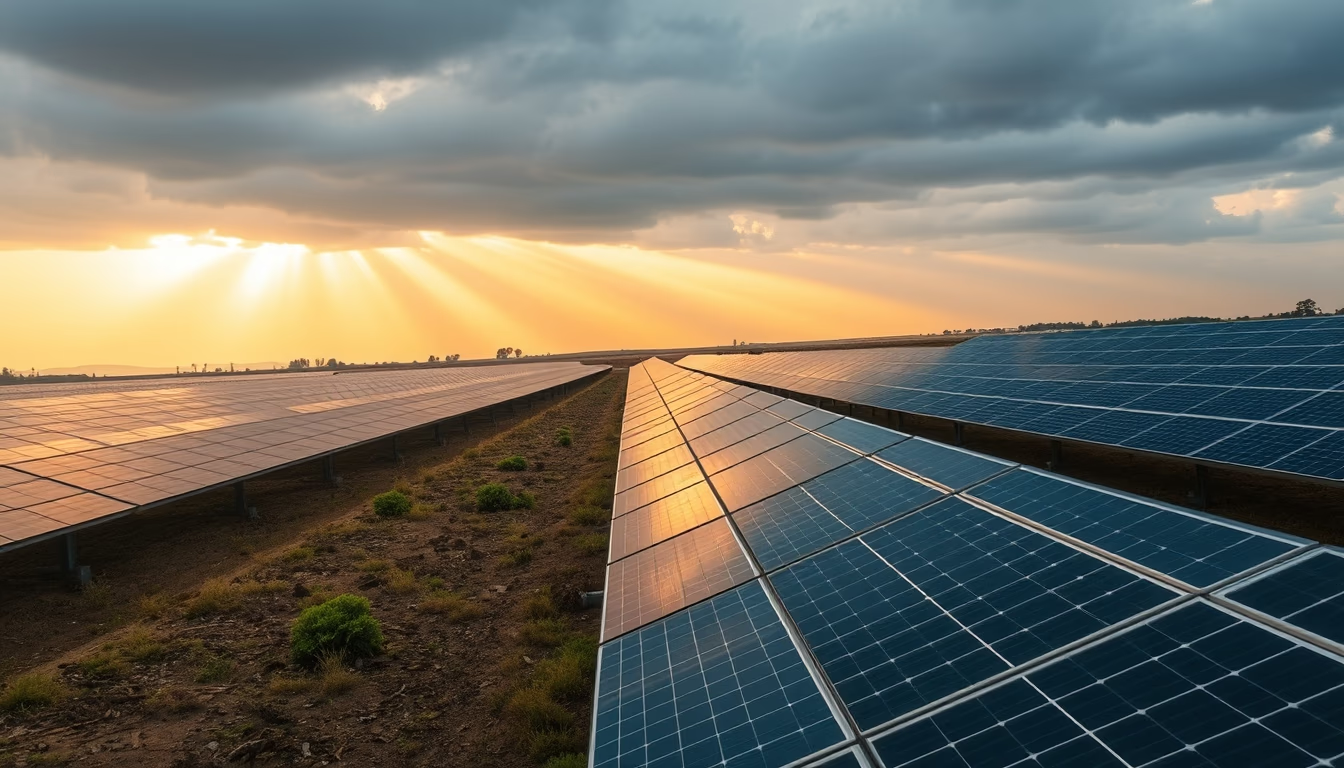
Solar panel farm in the Brazilian hinterland, with overcast sky and dry caatinga vegetation.
About this subject
The Brazilian hinterland, a semi-arid region covering much of the Northeast, has become a strategic hub for solar power generation. Solar panel farms like the one depicted harness one of the country's highest solar irradiation levels to produce renewable electricity. The dry landscape, with sparse caatinga vegetation and arid soil, contrasts with rows of photovoltaic modules that now occupy vast areas previously used for grazing or subsistence farming.
Solar energy in Brazil has grown exponentially over the past decade. By 2023, the country surpassed 30 gigawatts of installed capacity, with about 70% from distributed generation (rooftops and small plots) and the rest from large plants. The hinterland, with its low population density and high solar potential, attracts large-scale projects such as the Janaúba Solar Complex (MG) and the São Gonçalo Solar Park (PI), the latter with over 1.5 GW capacity.
Beyond clean energy generation, these plants bring socioeconomic benefits to the region: temporary jobs in construction and maintenance, tax revenues, and reduced reliance on hydropower, which suffers from droughts. However, environmental challenges include land use and transmission line needs. Agrivoltaics, integrating solar panels with agriculture, is an emerging trend, allowing native plants to grow beneath the panels.
The image was taken on an overcast day, reducing power output but common in the hinterland during winter. Despite cloud cover, diffuse radiation still enables electricity generation, albeit at lower levels. The typical hinterland landscape, with twisted trees and parched soil, underscores the resilience of the caatinga, a unique Brazilian biome adapted to drought.
Frequently Asked Questions
What is the Brazilian sertão?
The sertão is a semi-arid region in northeastern Brazil, characterized by caatinga vegetation, hot dry climate, and irregular rainfall. It covers states such as Bahia, Pernambuco, Ceará, and Piauí.
What is Brazil's solar energy capacity?
By 2023, Brazil surpassed 30 GW of installed solar capacity, ranking among global leaders. Most comes from distributed generation, but large-scale plants in the sertão contribute significantly.
What are the benefits of solar farms in the sertão?
They create jobs, increase tax revenue, reduce reliance on hydropower, and leverage the region's high solar potential. They also support the energy transition to renewable sources.
Direct URL
https://pub-c7d6a6ea828543ac903a74a341ccb2e1.r2.dev/imagens/solar-panel-farm-in-brazilian-sertao-landscape-editorial-overcast-daytime.avifHow to credit
Include a visible link back to UtilizAí. Copy one of the snippets below:
<a href="https://xn--utiliza-eza.com/en/midia/imagens/solar-panel-farm-in-brazilian-sertao-landscape-editorial-overcast-daytime">Solar panel farm in dry Brazilian landscape</a> by <a href="https://xn--utiliza-eza.com">UtilizAí</a>, licensed under <a href="https://creativecommons.org/licenses/by/4.0/">CC BY 4.0</a>.
[Solar panel farm in dry Brazilian landscape](https://xn--utiliza-eza.com/en/midia/imagens/solar-panel-farm-in-brazilian-sertao-landscape-editorial-overcast-daytime) by [UtilizAí](https://xn--utiliza-eza.com), CC BY 4.0
License: CC-BY-4.0