Solar panel farm in dry Brazilian landscape
1344×768 · AVIF · CC BY 4.0
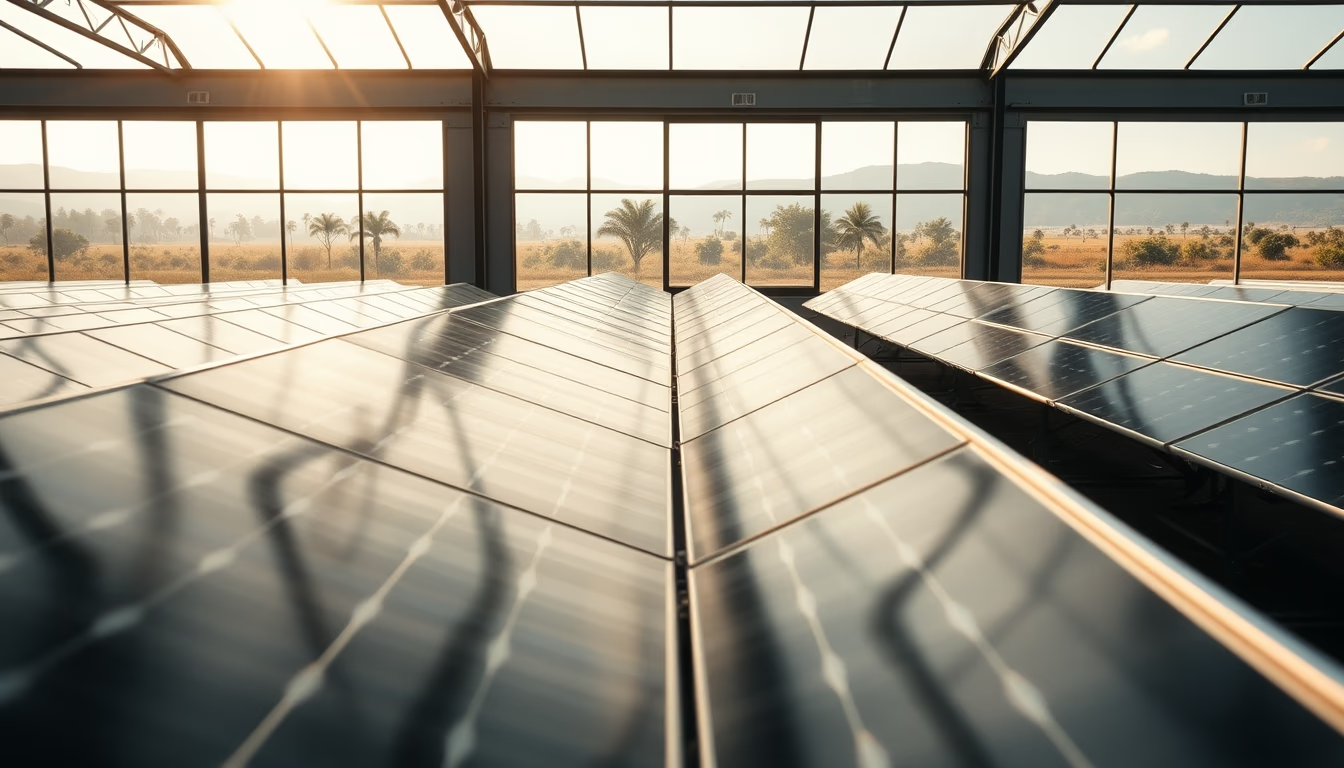
A large-scale solar photovoltaic farm in the Brazilian semi-arid region transforms the Sertão landscape with clean energy and regional development.
About this subject
The Brazilian Sertão, a semi-arid region dominated by Caatinga vegetation, has become a strategic hub for solar energy generation. The area receives one of the highest solar irradiation levels in the country, averaging over 2,000 kWh/m² per year, making it ideal for large-scale photovoltaic farms. Projects such as the Pirapora Solar Complex (MG) and the Ituverava Solar Park (BA) already operate with capacities exceeding 200 MW each, contributing significantly to Brazil's energy matrix.
Beyond harnessing abundant natural resources, solar farms in the Sertão bring socioeconomic benefits. Thousands of local jobs are created during construction, and communities receive royalties and infrastructure investments during operation. For instance, the municipality of Bom Jesus da Lapa (BA), home to one of Latin America's largest solar parks, saw a substantial increase in tax revenue.
Technically, these plants use monocrystalline or polycrystalline silicon photovoltaic panels mounted on fixed structures or solar trackers to maximize capture. The generated electricity is fed into the National Interconnected System (SIN), supplying distant consumption centers. Brazil's installed solar capacity exceeded 30 GW in 2023, with projections to double by 2030, according to the Brazilian Photovoltaic Solar Energy Association (ABSOLAR).
The Sertão landscape, with its vast flat terrains and low population density, provides favorable logistics for large solar projects. Challenges such as dust accumulation on panels are addressed through automated cleaning systems and local labor. Agrivoltaic systems, combining solar panels with livestock or crops, are also being explored to optimize land use.
Frequently Asked Questions
Why is the Brazilian Sertão ideal for solar farms?
The region receives high solar irradiation (over 2,000 kWh/m² per year), has flat terrain and low population density, reducing costs and improving energy efficiency.
What are the environmental impacts of solar farms in the semi-arid region?
Installation requires clearing native vegetation, but operation emits no pollutants. Environmental compensation measures and agrivoltaic systems help mitigate impacts.
How does solar energy contribute to local development?
It creates direct and indirect jobs, increases municipal tax revenue, and attracts infrastructure investments such as roads and transmission lines.
Direct URL
https://pub-c7d6a6ea828543ac903a74a341ccb2e1.r2.dev/imagens/solar-panel-farm-in-brazilian-sertao-landscape-documentary-morning-6.avifHow to credit
Include a visible link back to UtilizAí. Copy one of the snippets below:
<a href="https://xn--utiliza-eza.com/en/midia/imagens/solar-panel-farm-in-brazilian-sertao-landscape-documentary-morning-6">Solar panel farm in dry Brazilian landscape</a> by <a href="https://xn--utiliza-eza.com">UtilizAí</a>, licensed under <a href="https://creativecommons.org/licenses/by/4.0/">CC BY 4.0</a>.
[Solar panel farm in dry Brazilian landscape](https://xn--utiliza-eza.com/en/midia/imagens/solar-panel-farm-in-brazilian-sertao-landscape-documentary-morning-6) by [UtilizAí](https://xn--utiliza-eza.com), CC BY 4.0
License: CC-BY-4.0