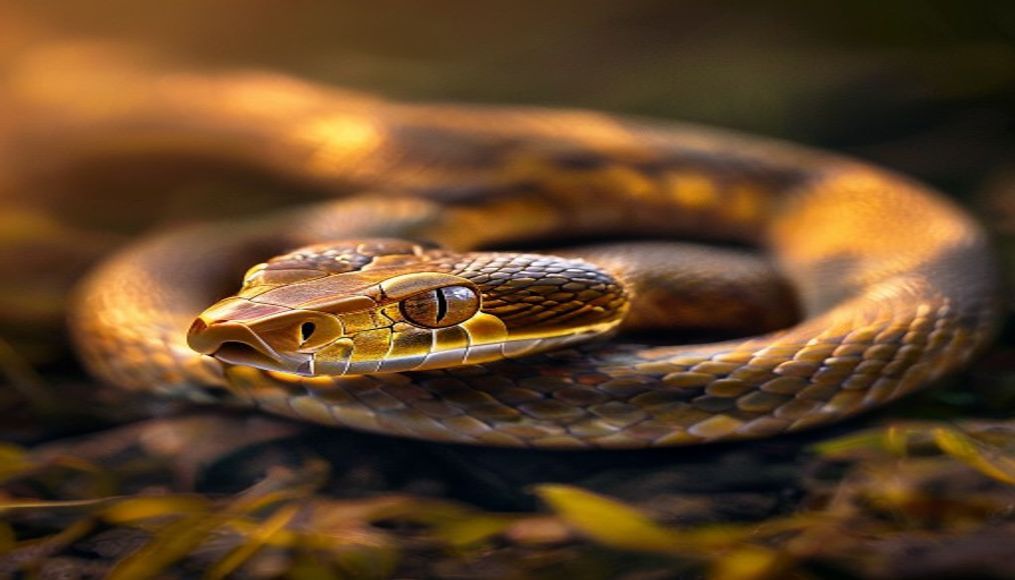
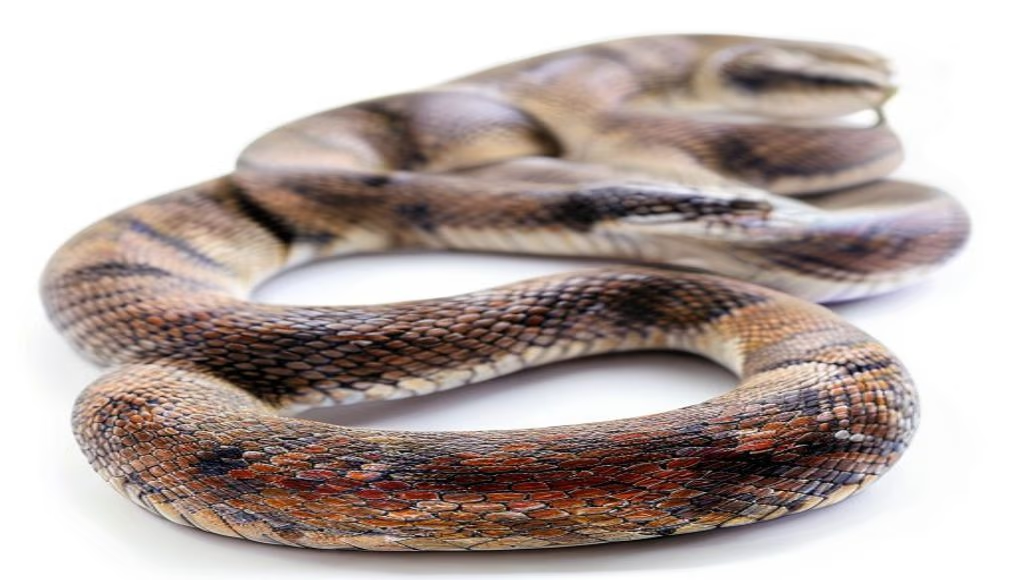
Snake python coiled
1344×768 · AVIF · CC BY 4.0
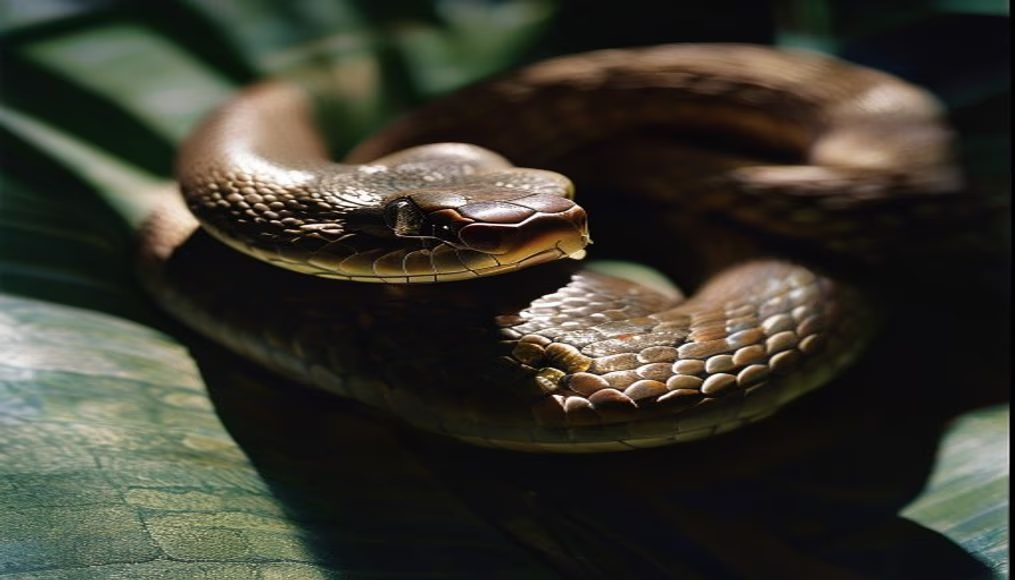
The python, a non-venomous constrictor snake, is known for its coiling technique to immobilize prey and its remarkable adaptability to diverse habitats.
About this subject
Pythons are non-venomous snakes belonging to the family Pythonidae, native to Africa, Asia, and Australia. Unlike venomous snakes, they kill by constriction: coiling around prey and tightening with each exhale, cutting off blood circulation and causing cardiac arrest. This method is highly efficient, enabling them to subdue animals much larger than their own body diameter, such as antelopes or caimans.
The coiling posture of a python serves both hunting and defense. When threatened, they form a tight ball with the head at the center, shielding it from attacks. Some species, like the reticulated python (Malayopython reticulatus), can exceed 7 meters in length, making them among the longest snakes in the world. The ball python (Python regius) is smaller and popular in the pet trade due to its docile temperament.
Culturally, pythons hold a dual status: in parts of Asia they are revered as protectors and symbols of fertility, while elsewhere they are hunted for their skin and meat. In the wild, they play a key role in controlling rodent and small mammal populations. Despite their fearsome reputation, attacks on humans are rare and usually occur when the snake feels cornered or mistakes a person for prey.
Biologically, pythons possess specialized heat-sensing pits along their lips (labial pits) that detect infrared radiation from warm-blooded animals, allowing them to hunt in complete darkness. They are oviparous: females coil around their eggs to incubate them, generating heat through muscle contractions, a rare parental care behavior among reptiles.
Frequently Asked Questions
Are pythons venomous?
No, pythons are non-venomous constrictors. They kill by coiling around prey and tightening until blood circulation stops, causing cardiac arrest.
What is the largest python species?
The reticulated python (Malayopython reticulatus) is the longest, reaching over 7 meters. The green tree python (Morelia viridis) is among the smallest, at about 1.5 meters.
Do pythons attack humans?
Attacks are extremely rare and usually defensive or mistaken identity. Humans are not natural prey, but very large pythons have been known to attack and kill people in exceptional circumstances.
Direct URL
https://pub-c7d6a6ea828543ac903a74a341ccb2e1.r2.dev/imagens/snake-python-coiled-magazine-editorial-p1.avifHow to credit
Include a visible link back to UtilizAí. Copy one of the snippets below:
<a href="https://xn--utiliza-eza.com/en/midia/imagens/snake-python-coiled-magazine-editorial-p1">Snake python coiled</a> by <a href="https://xn--utiliza-eza.com">UtilizAí</a>, licensed under <a href="https://creativecommons.org/licenses/by/4.0/">CC BY 4.0</a>.
[Snake python coiled](https://xn--utiliza-eza.com/en/midia/imagens/snake-python-coiled-magazine-editorial-p1) by [UtilizAí](https://xn--utiliza-eza.com), CC BY 4.0
License: CC-BY-4.0