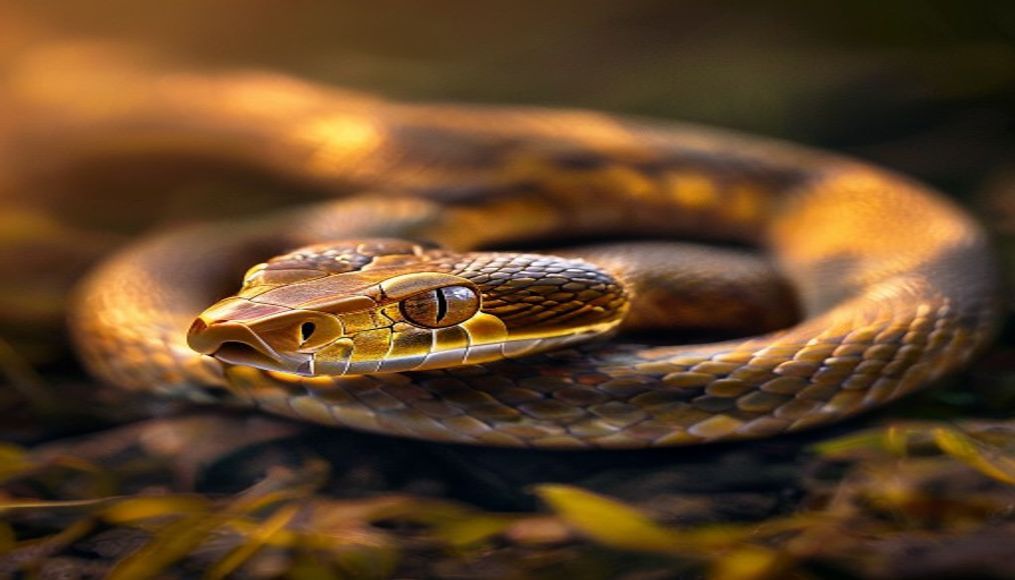
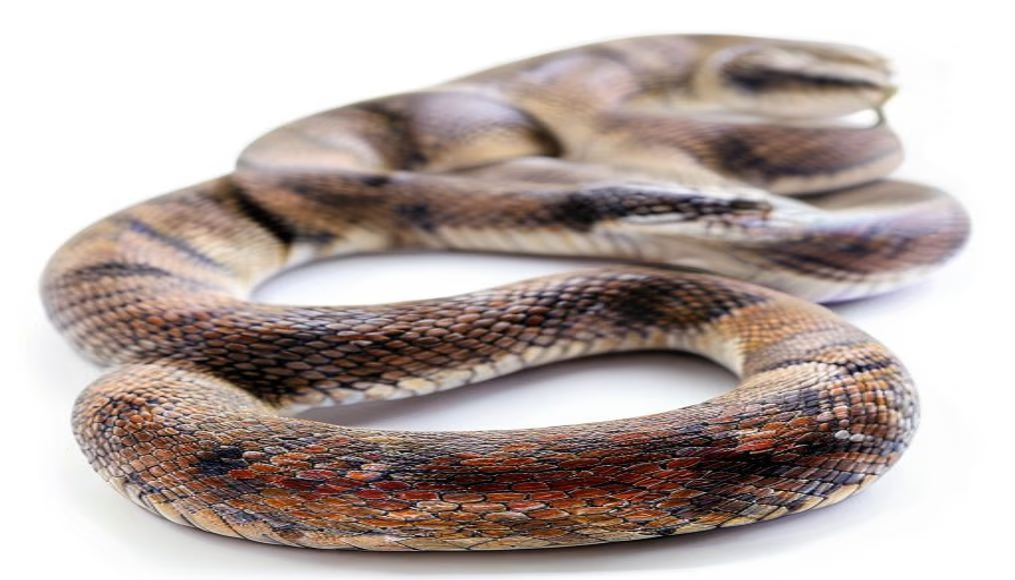
Snake python coiled
1344×768 · AVIF · CC BY 4.0
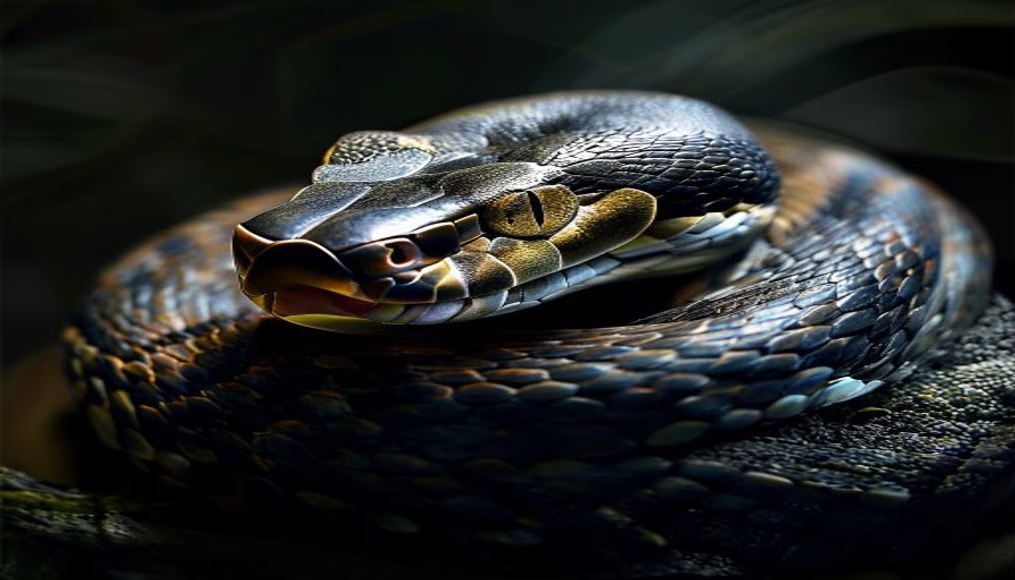
The python is a non-venomous constrictor snake known for its coiled striking posture, found in tropical forests and savannas.
About this subject
The python, one of the most well-known constrictor snakes, belongs to the family Pythonidae. Unlike venomous snakes, pythons subdue their prey by coiling around it and tightening each time the prey exhales, causing cardiac arrest. Species like the ball python (Python regius) and the reticulated python (Python reticulatus) vary in size from 1.5 to over 7 meters. Native to Africa, Asia, and Australia, pythons have been introduced to ecosystems such as the Florida Everglades, where they pose a severe threat to native wildlife.
These snakes have a unique hunting strategy: they sense prey through heat-sensing pits along their jaws and strike with remarkable speed. After constriction, they swallow the prey whole, a process that can take hours or days depending on size. In captivity, pythons are popular exotic pets due to their docile nature, but they require specialized enclosures with precise temperature gradients and humidity levels.
Culturally, the python holds diverse symbolism. In Greek mythology, Python was a serpent guarding the Delphic oracle, slain by Apollo. In African traditions, the python represents fertility and power. In Brazil, though no native pythons exist (the anaconda fills a similar role), introduced species in urban areas raise ecological concerns. Pythons are oviparous; some species like the African rock python coil around their eggs to incubate them through shivering thermogenesis.
A fine art photograph of a coiled python emphasizes the elegant geometry of its body, intricate scale patterns, and the poised tension of rest. This subject is common in nature photography and zoo studio shoots, where controlled lighting enhances the texture and depth of the snake's skin. The image captures a moment of stillness that belies the python's power and evolutionary refinement.
Frequently Asked Questions
What is the difference between a boa constrictor and a python?
Boas (Boa constrictor) and pythons (Pythonidae) are both constrictors but belong to different families: boas are Boinae (Americas), pythons are Pythonidae (Africa, Asia, Australia). Key difference: pythons lay eggs, boas give live birth. Also, pythons have supraciliary bones allowing even wider jaw opening.
Are pythons dangerous to humans?
Attacks on humans are rare, but large pythons (e.g., reticulated python) can pose risk to children or small adults. Most incidents occur in captivity due to improper handling. In the wild, they avoid humans. Bites are non-venomous but can cause severe wounds.
How to photograph a coiled python?
Use side lighting to highlight scales and spiral shape. Macro lens or short telephoto (70-200mm). Keep safe distance; for wild animals, respect space. In studio, soft contrast enhances skin patterns. Always supervised by a trained professional.
Direct URL
https://pub-c7d6a6ea828543ac903a74a341ccb2e1.r2.dev/imagens/snake-python-coiled-fine-art-photography-p0.avifHow to credit
Include a visible link back to UtilizAí. Copy one of the snippets below:
<a href="https://xn--utiliza-eza.com/en/midia/imagens/snake-python-coiled-fine-art-photography-p0">Snake python coiled</a> by <a href="https://xn--utiliza-eza.com">UtilizAí</a>, licensed under <a href="https://creativecommons.org/licenses/by/4.0/">CC BY 4.0</a>.
[Snake python coiled](https://xn--utiliza-eza.com/en/midia/imagens/snake-python-coiled-fine-art-photography-p0) by [UtilizAí](https://xn--utiliza-eza.com), CC BY 4.0
License: CC-BY-4.0