Shoji screen wooden
1344×768 · AVIF · CC BY 4.0

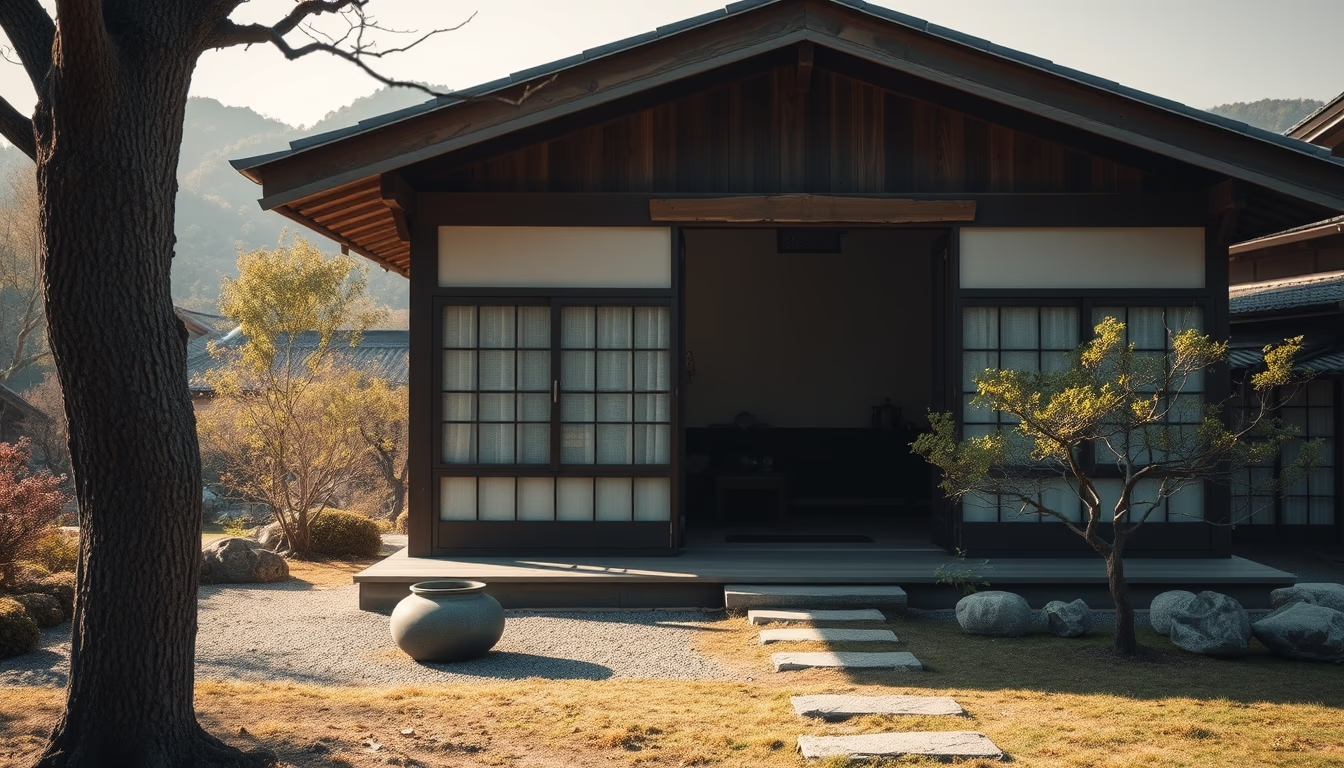
Wooden shoji screen, a traditional Japanese sliding door blending minimalist aesthetics and functionality, found in Zen temples and homes.
About this subject
The shoji is a type of sliding door or partition typical of Japanese architecture, made with a light wooden frame and translucent washi paper. Its origins date back to the Heian period (794-1185), when it began to be used in noble residences to flexibly separate spaces. Unlike fixed walls, the shoji allows the space to be modulated, creating open or closed areas as needed. The wood used in the frame is often cedar or Japanese cypress (hinoki), chosen for its durability and subtle fragrance.
In Zen culture, the shoji plays an important role in creating an atmosphere of simplicity and contemplation. Natural light filtered through the washi paper softens contrasts, promoting a sense of calm. During the Muromachi period (1336-1573), the shoji was incorporated into tea rooms and temples, where the wabi-sabi aesthetic values imperfection and transience. Maintaining a shoji requires care: the washi paper is replaced periodically, and the wood is treated with natural oils to preserve its beauty.
Interestingly, the shoji also influenced modern Western architecture, especially through architect Frank Lloyd Wright, who was inspired by its lightness and integration with nature. In traditional Japanese homes, the shoji is combined with fusuma (opaque panels) to control privacy. Today, contemporary versions use glass or synthetic materials, but the classic wooden and paper model is still revered for its harmony and timeless functionality.
Frequently Asked Questions
What is the difference between shoji and fusuma?
Shoji uses translucent washi paper and a light wooden frame, allowing diffused light to pass through. Fusuma is an opaque panel, often decorated, used for complete privacy. Both are sliding doors, but with distinct functions.
Which wood is traditionally used for the shoji frame?
The most common woods are Japanese cedar (sugi) and Japanese cypress (hinoki). Both are lightweight, resistant to moisture, and have a pleasant aroma. The choice varies by region and budget.
Are shoji screens only used in traditional Japanese homes?
No. Despite their traditional origin, shoji screens are used in contemporary architecture, both in Japan and the West, for their minimalist aesthetic appeal and ability to integrate interior and exterior spaces.
Direct URL
https://pub-c7d6a6ea828543ac903a74a341ccb2e1.r2.dev/imagens/shoji-screen-wooden-cinematic-wide-shot-fresh9.avifHow to credit
Include a visible link back to UtilizAí. Copy one of the snippets below:
<a href="https://xn--utiliza-eza.com/en/midia/imagens/shoji-screen-wooden-cinematic-wide-shot-fresh9">Shoji screen wooden</a> by <a href="https://xn--utiliza-eza.com">UtilizAí</a>, licensed under <a href="https://creativecommons.org/licenses/by/4.0/">CC BY 4.0</a>.
[Shoji screen wooden](https://xn--utiliza-eza.com/en/midia/imagens/shoji-screen-wooden-cinematic-wide-shot-fresh9) by [UtilizAí](https://xn--utiliza-eza.com), CC BY 4.0
License: CC-BY-4.0