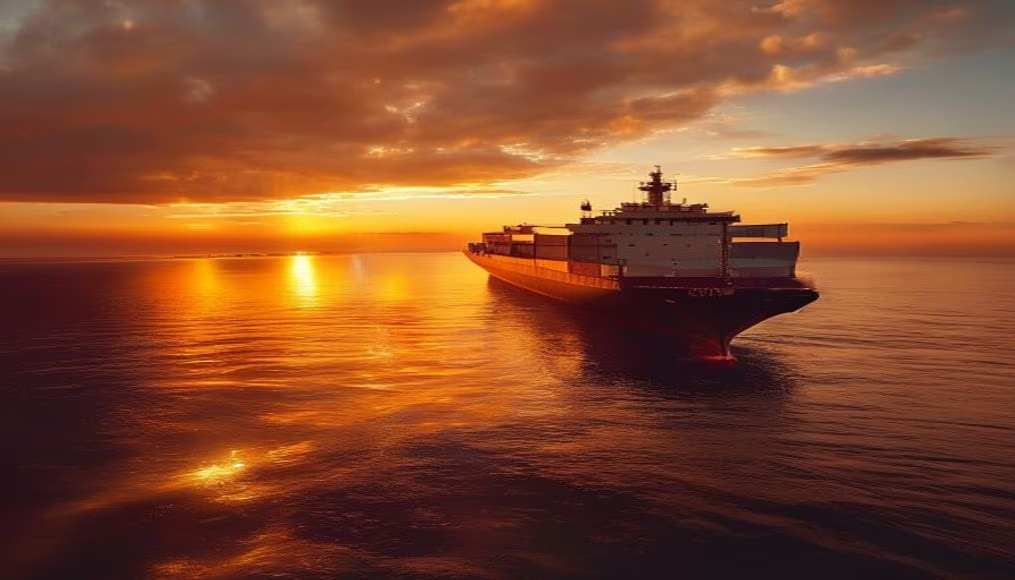
Shipping containers stacked port
1344×768 · AVIF · CC BY 4.0
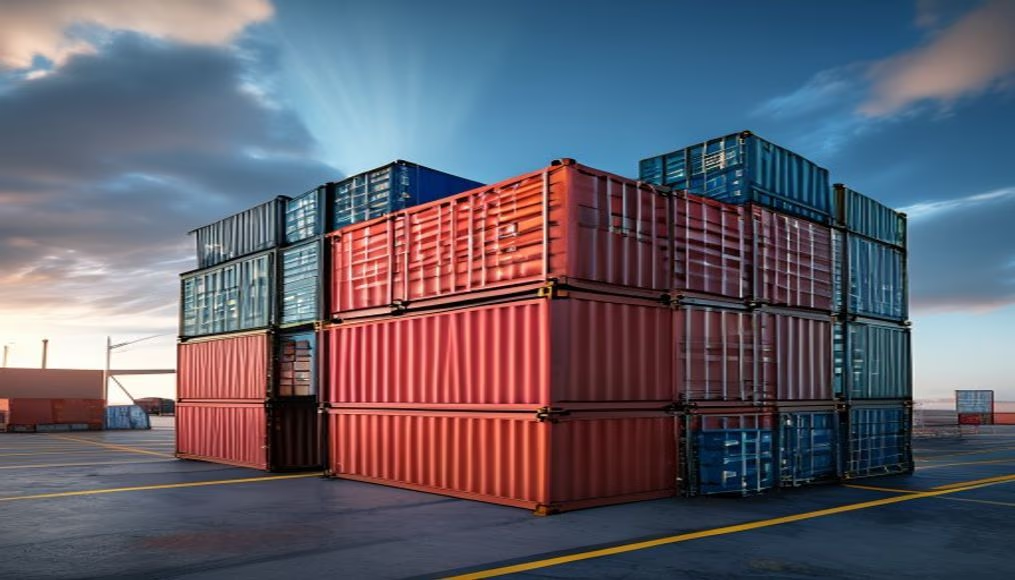
Stacked shipping containers at ports are the backbone of global trade, revolutionizing cargo transport since the 1950s.
About this subject
The invention of the standardized shipping container by Malcolm McLean in the 1950s transformed global logistics. Before that, cargo was transported in a fragmented manner, with high costs and long handling times. Containers enabled integration between ships, trains, and trucks, creating an intermodal system that drove globalization. Today, about 90% of non-bulk trade is moved in containers, with over 800 million TEUs (20-foot equivalent units) transported annually.
At ports, containers are stacked in vast yards, organized by origin vessel, destination, weight, and cargo type. Gantry cranes and automated stacking cranes move the units, which can reach up to 10 stories high. Efficient stacking management is crucial to avoid congestion and reduce vessel turnaround time. Major ports like Rotterdam, Singapore, and Shanghai handle tens of millions of TEUs per year, using RFID and GPS tracking systems to locate each container.
Despite the benefits, the system faces challenges such as trade imbalances, which create thousands of empty containers needing repositioning. Additionally, maritime container shipping contributes about 3% of global CO2 emissions, prompting efforts for more efficient ships and alternative fuels. Initiatives like supply chain digitalization and AI-powered route optimization aim to make the sector more sustainable.
Interestingly, containers have also found new uses outside ports, such as modular housing, temporary offices, and even swimming pools. Yet their primary role remains at the heart of international trade, where colorful steel piles represent the complex network of exchanges connecting factories and consumers across all continents.
Frequently Asked Questions
Why are shipping containers stacked so high at ports?
To maximize use of limited land space and facilitate automated crane operations. High stacks reduce the area needed for storage, increasing the terminal's operational capacity.
How are containers organized in port yards?
They are grouped by origin vessel, final destination, weight, and cargo type. Each stack is recorded in a management system that provides exact location, enabling quick retrieval during loading and unloading.
What is the difference between TEU and FEU?
TEU stands for Twenty-foot Equivalent Unit, a standard measure for containers. FEU (Forty-foot Equivalent Unit) equals two TEUs, representing 40-foot-long containers.
Direct URL
https://pub-c7d6a6ea828543ac903a74a341ccb2e1.r2.dev/imagens/shipping-containers-stacked-port-commercial-product-photography-v9.avifHow to credit
Include a visible link back to UtilizAí. Copy one of the snippets below:
<a href="https://xn--utiliza-eza.com/en/midia/imagens/shipping-containers-stacked-port-commercial-product-photography-v9">Shipping containers stacked port</a> by <a href="https://xn--utiliza-eza.com">UtilizAí</a>, licensed under <a href="https://creativecommons.org/licenses/by/4.0/">CC BY 4.0</a>.
[Shipping containers stacked port](https://xn--utiliza-eza.com/en/midia/imagens/shipping-containers-stacked-port-commercial-product-photography-v9) by [UtilizAí](https://xn--utiliza-eza.com), CC BY 4.0
License: CC-BY-4.0