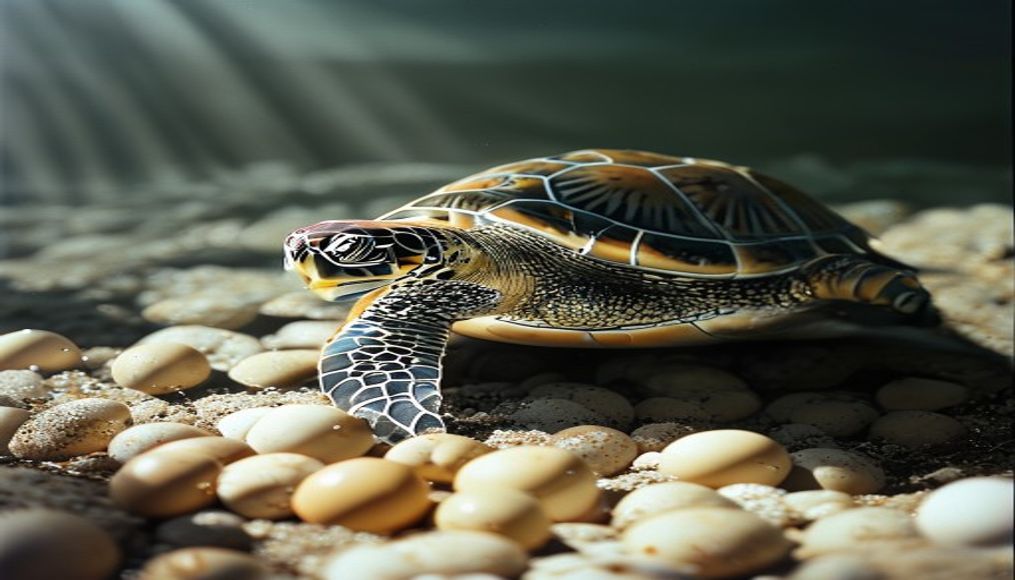
Sea turtle laying eggs
1344×768 · AVIF · CC BY 4.0
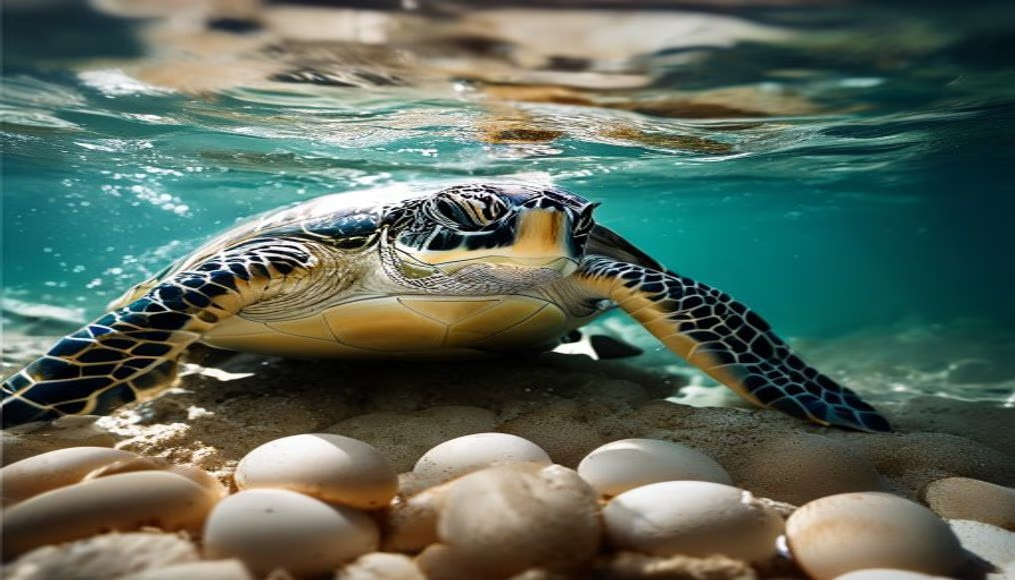
Sea turtles return to the beaches where they were born to lay eggs, an ancient ritual crucial for species conservation.
About this subject
Sea turtles are reptiles that inhabit tropical and subtropical oceans. Nesting occurs mainly at night on isolated sandy beaches. The female digs a hole with her rear flippers, deposits 50 to 200 eggs (depending on the species), and covers them with sand. This process lasts about one to three hours. After laying, she returns to the sea, leaving the eggs to incubate on their own for approximately 45 to 70 days.
The nesting moment is critical for turtle survival. Only one in a thousand hatchlings reaches adulthood. Major threats include light pollution on beaches, which disorients hatchlings, accidental bycatch, plastic ingestion, and habitat destruction due to coastal development. In Brazil, the five sea turtle species (loggerhead, hawksbill, green, olive ridley, and leatherback) are protected by law, and projects like Tamar monitor nesting beaches.
Interestingly, sand temperature determines the sex of hatchlings: warmer temperatures produce more females, while cooler temperatures yield more males. With global warming, there is concern about skewed sex ratios. Additionally, sea turtles are considered umbrella species, as their protection benefits the entire coastal ecosystem.
The turtle featured in this minimalist composition represents the delicacy and persistence of marine life. The image, with its clean lines and focus on the egg-laying moment, invites reflection on the importance of preserving these animals. Each nest is a hope for the continuity of a species that has navigated the oceans for over 100 million years.
Frequently Asked Questions
Why do sea turtles return to the same beach to lay eggs?
Females have a magnetic navigation ability that guides them back to the beach where they were born. This behavior, called natal philopatry, increases the chances of finding a suitable nesting site.
How many eggs does a sea turtle lay at once?
It depends on the species, but typically ranges from 50 to 200 eggs per clutch. The leatherback turtle (the largest species) may lay up to 100 eggs, while the olive ridley can lay 100 to 200 eggs.
What threatens the survival of sea turtle hatchlings?
Natural predators like birds and crabs, and human impacts: artificial lighting disorients hatchlings, plastic debris, accidental bycatch, and destruction of nesting beaches. Only about 0.1% of hatchlings reach adulthood.
Direct URL
https://pub-c7d6a6ea828543ac903a74a341ccb2e1.r2.dev/imagens/sea-turtle-laying-eggs-minimalist-composition-p1.avifHow to credit
Include a visible link back to UtilizAí. Copy one of the snippets below:
<a href="https://xn--utiliza-eza.com/en/midia/imagens/sea-turtle-laying-eggs-minimalist-composition-p1">Sea turtle laying eggs</a> by <a href="https://xn--utiliza-eza.com">UtilizAí</a>, licensed under <a href="https://creativecommons.org/licenses/by/4.0/">CC BY 4.0</a>.
[Sea turtle laying eggs](https://xn--utiliza-eza.com/en/midia/imagens/sea-turtle-laying-eggs-minimalist-composition-p1) by [UtilizAí](https://xn--utiliza-eza.com), CC BY 4.0
License: CC-BY-4.0