Roman scroll papyrus
1344×768 · AVIF · CC BY 4.0
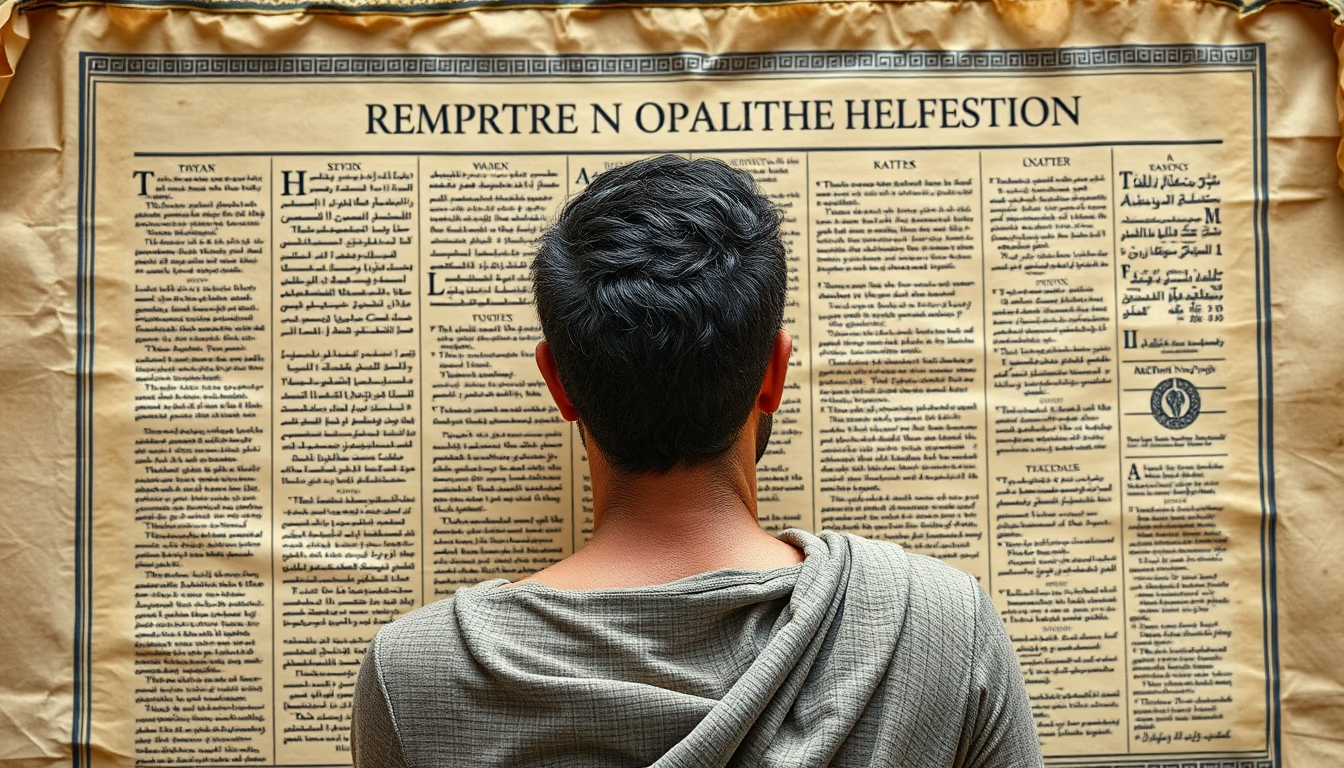
Roman scroll papyrus, a historical document revealing aspects of life and administration in the Roman Empire.
About this subject
Papyrus was one of the main writing materials in the ancient world, particularly in Egypt and the Roman Empire. Made from the Cyperus papyrus plant, the material was produced by cutting thin strips, overlapping and pressing them into sheets, which were then glued together to form long rolls. Romans used these rolls to record laws, literature, administrative correspondence, and philosophical works, making them essential for the empire's bureaucracy and culture.
Roman papyrus scrolls, or volumina, were stored in libraries and archives, but their fragility to moisture and fire meant few survived to the present day. Notable exceptions include the Herculaneum papyri, carbonized by the eruption of Mount Vesuvius in 79 AD, which preserved Epicurean texts. These documents are invaluable sources for historians, revealing details of daily life, economy, and Roman thought.
The transition from scroll to codex, the precursor to the modern book, occurred around the 4th century, driven by the practicality and durability of parchment. However, papyrus continued to be used into the Middle Ages, especially in ecclesiastical contexts. Today, restoration and decipherment of these archaeological pieces rely on techniques such as multispectral imaging and artificial intelligence, allowing previously illegible texts to be read.
New fragments of Roman papyri continue to be discovered at sites like Oxyrhynchus in Egypt, where thousands of papyri were found in ancient garbage dumps. These finds expand our understanding of provincial administration, slavery, and family life in the Roman world.
Frequently Asked Questions
How were Roman papyrus scrolls produced?
Scrolls were made from the fibers of the papyrus plant's stem, cut into thin strips, overlapped and pressed. The resulting sheets were glued edge to edge to form a long strip, usually 20 to 30 sheets, rolled around a wooden or ivory cylinder.
Why are Roman papyrus scrolls important?
They were crucial for Roman administration, recording laws, decrees, and censuses. They also preserved literary and philosophical works, such as Virgil's poems and Cicero's treatises, which otherwise would have been lost.
Why are Roman papyrus scrolls rare today?
Papyrus is highly perishable: it deteriorates with moisture, fungi, and fire. Most Roman scrolls have disappeared over the centuries. The few that survive come from exceptional conditions, such as the dry Egyptian desert or carbonization in Pompeii and Herculaneum.
Direct URL
https://pub-c7d6a6ea828543ac903a74a341ccb2e1.r2.dev/imagens/roman-scroll-papyrus-national-geographic-style-p8.avifHow to credit
Include a visible link back to UtilizAí. Copy one of the snippets below:
<a href="https://xn--utiliza-eza.com/en/midia/imagens/roman-scroll-papyrus-national-geographic-style-p8">Roman scroll papyrus</a> by <a href="https://xn--utiliza-eza.com">UtilizAí</a>, licensed under <a href="https://creativecommons.org/licenses/by/4.0/">CC BY 4.0</a>.
[Roman scroll papyrus](https://xn--utiliza-eza.com/en/midia/imagens/roman-scroll-papyrus-national-geographic-style-p8) by [UtilizAí](https://xn--utiliza-eza.com), CC BY 4.0
License: CC-BY-4.0