Roman scroll papyrus
1344×768 · AVIF · CC BY 4.0
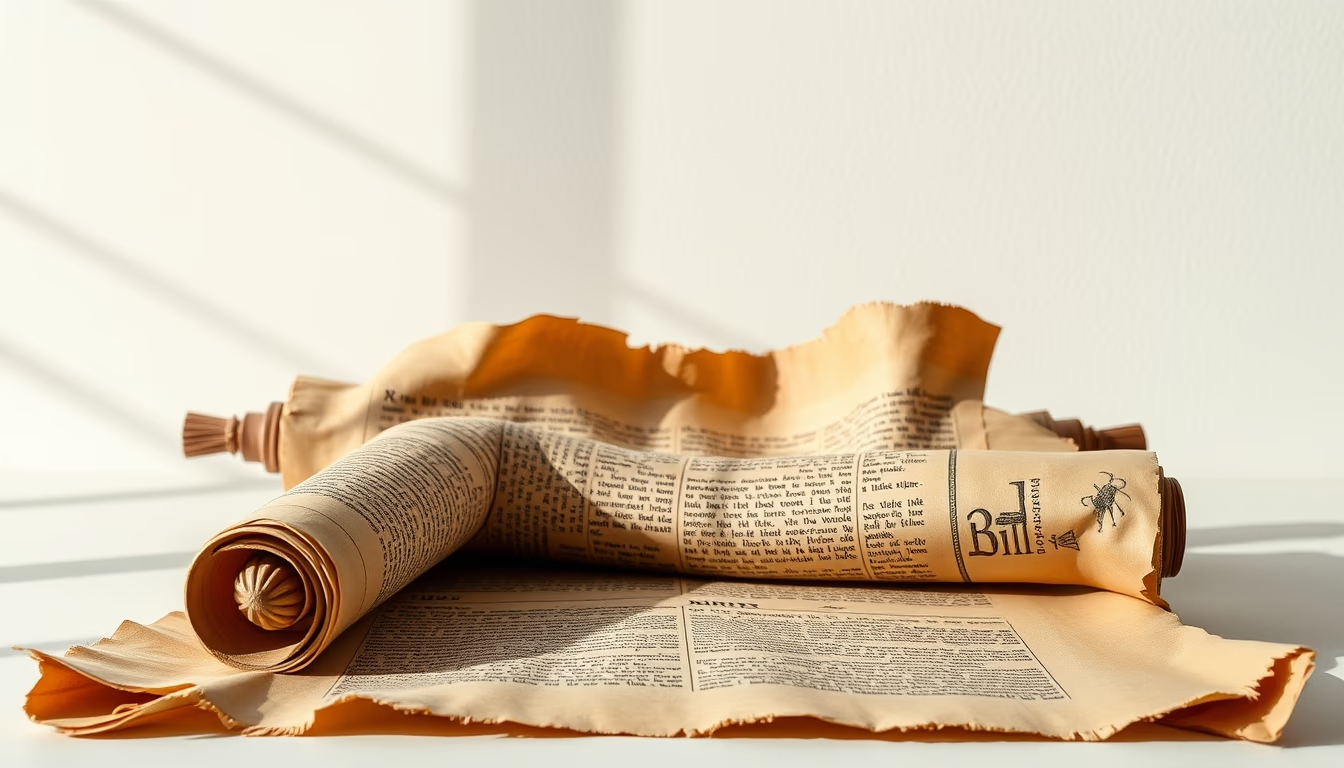
Papyrus scrolls were the main writing support in ancient Rome, used for literature, legal documents, and correspondence.
About this subject
In ancient Rome, papyrus was the most widespread writing medium, mainly imported from Egypt, where it was produced from the Cyperus papyrus plant. Scrolls (volumina) were made by gluing papyrus sheets side by side to form a long strip that was rolled onto a wooden or ivory cylinder. Text was written in parallel columns, read by unrolling the scroll with the right hand and rolling it up with the left.
Romans used these scrolls for various purposes: literature (works by Virgil, Horace, Cicero), legal documents (wills, contracts), and private correspondence. Papyrus production was a complex craft: stalks were cut, the bark removed, and the inner pith was cut into thin strips, which were overlapped and pressed to form a sheet. Quality varied, with hieratic papyrus being the finest and amatic the coarsest.
Preservation of papyri is rare because the material is fragile and degrades in humid climates. Most surviving Roman papyri were found in dry sites, such as the cities of Pompeii and Herculaneum, buried by the eruption of Mount Vesuvius in 79 AD, or in rubbish dumps in the Egyptian desert. These finds provide valuable insights into daily life, administration, and literary culture of the Roman Empire.
The scroll format was gradually replaced by the codex (book of pages) starting in the 1st century AD, especially among Christians, due to economy and practicality. Nevertheless, the papyrus scroll remained a symbol of scholarship and power in ancient Rome, immortalized in statues and paintings.
Frequently Asked Questions
How was papyrus made in ancient Rome?
Papyrus was made from the Cyperus papyrus plant. Stalks were cut, the bark removed, and the pith sliced into thin strips. These strips were overlapped in two perpendicular layers, pressed, and dried in the sun to form a sheet.
Why have few Roman papyri survived?
Papyrus is fragile and degrades easily in humid conditions. Most surviving papyri have been found in dry locations, such as the Egyptian desert or buried under volcanic ash in Pompeii and Herculaneum.
What replaced the papyrus scroll?
The codex, or book of pages, gradually replaced the scroll from the 1st century AD onward. The codex was more economical, could be written on both sides, and was easier to consult.
Direct URL
https://pub-c7d6a6ea828543ac903a74a341ccb2e1.r2.dev/imagens/roman-scroll-papyrus-minimalist-composition-p3.avifHow to credit
Include a visible link back to UtilizAí. Copy one of the snippets below:
<a href="https://xn--utiliza-eza.com/en/midia/imagens/roman-scroll-papyrus-minimalist-composition-p3">Roman scroll papyrus</a> by <a href="https://xn--utiliza-eza.com">UtilizAí</a>, licensed under <a href="https://creativecommons.org/licenses/by/4.0/">CC BY 4.0</a>.
[Roman scroll papyrus](https://xn--utiliza-eza.com/en/midia/imagens/roman-scroll-papyrus-minimalist-composition-p3) by [UtilizAí](https://xn--utiliza-eza.com), CC BY 4.0
License: CC-BY-4.0