Roman scroll papyrus
1344×768 · AVIF · CC BY 4.0
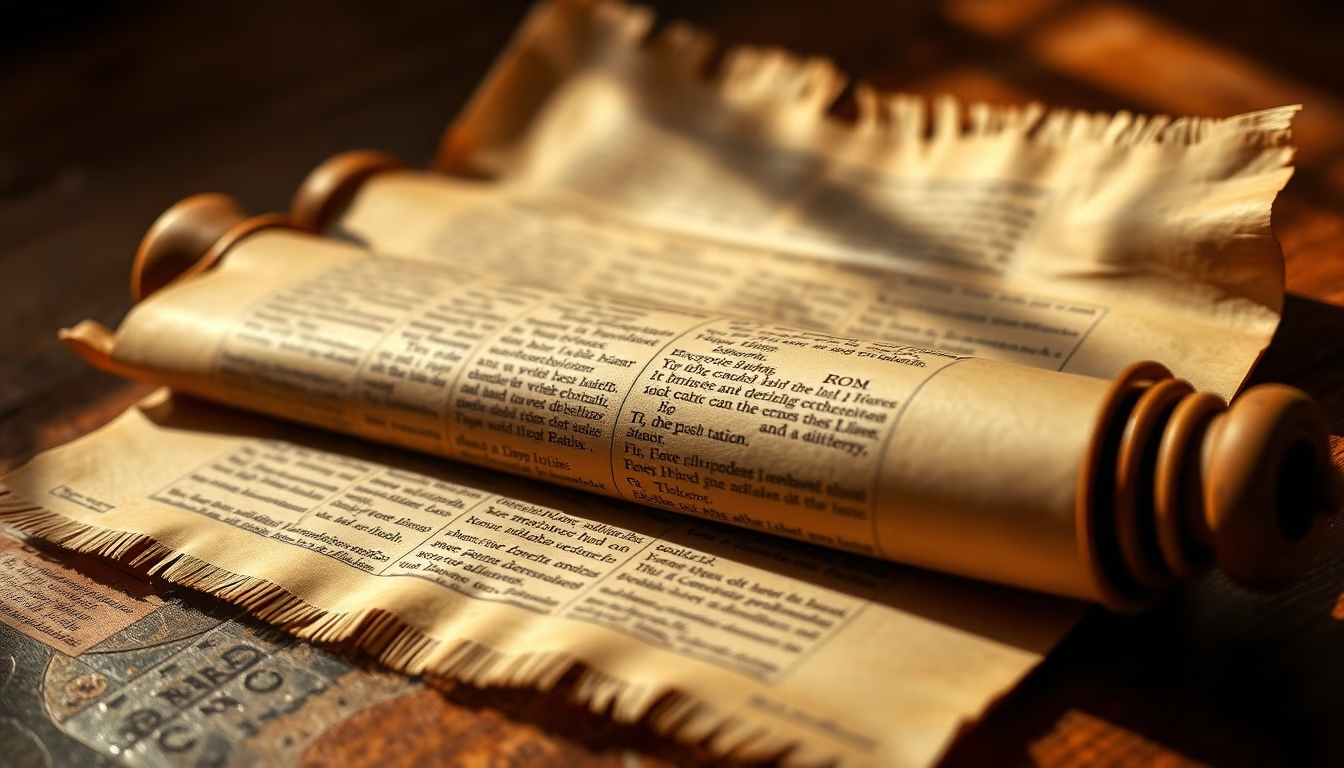
Roman papyrus scrolls are historical records that reveal the life, administration, and culture of the Roman Empire.
About this subject
Roman papyrus scrolls are among the most valuable sources for studying classical antiquity. Made from the Cyperus papyrus plant, abundant in the Nile Delta, these rolls were the primary writing support in the Greco-Roman world until the parchment codex became popular. The manufacturing process involved cutting the stem into thin strips, layering them perpendicularly, and pressing them to form sheets that were glued together into long rolls. The Romans adopted this technology from the Egyptians and spread it throughout the empire, using it for administrative documents, literature, correspondence, and philosophical treatises. A notable example is the Villa of the Papyri in Herculaneum, which contained a library of hundreds of rolls carbonized during the eruption of Mount Vesuvius in 79 AD. These papyri, partially readable thanks to modern techniques such as computed tomography, include works by Epicurus and Philodemus. Preservation is challenging: papyrus is highly sensitive to humidity, heat, and handling. Many fragments have been discovered in arid conditions in Egypt, like the Oxyrhynchus Papyri, ranging from literary texts to tax receipts, offering a vivid portrait of Roman daily life. Writing was done with lampblack ink mixed with gum arabic, applied with a reed pen (calamus). The scroll format influenced knowledge organization: texts were divided into columns (volumina) and read by unrolling with both hands. Despite their fragility, Roman papyri are irreplaceable witnesses to the transmission of classical culture. Modern paleography and philology, combined with multispectral imaging, allow the recovery of faded or damaged texts, revealing new works and historical contexts.
Frequently Asked Questions
How were Roman papyri made?
Papyrus was made from the stem of the Cyperus papyrus plant. Strips were cut, layered perpendicularly, and pressed to form sheets, which were then glued into long rolls. The Romans adopted this process from the Egyptians.
Where were the most important Roman papyri found?
Key discoveries include the Villa of the Papyri in Herculaneum (buried by Vesuvius in 79 AD) and the Oxyrhynchus Papyri in Egypt, which contain thousands of fragments of various texts.
Why are Roman papyri so fragile?
Papyrus is an organic material that deteriorates easily with moisture, heat, and handling. Most surviving examples come from extremely dry conditions or carbonized contexts, such as Herculaneum.
Direct URL
https://pub-c7d6a6ea828543ac903a74a341ccb2e1.r2.dev/imagens/roman-scroll-papyrus-magazine-editorial-p5.avifHow to credit
Include a visible link back to UtilizAí. Copy one of the snippets below:
<a href="https://xn--utiliza-eza.com/en/midia/imagens/roman-scroll-papyrus-magazine-editorial-p5">Roman scroll papyrus</a> by <a href="https://xn--utiliza-eza.com">UtilizAí</a>, licensed under <a href="https://creativecommons.org/licenses/by/4.0/">CC BY 4.0</a>.
[Roman scroll papyrus](https://xn--utiliza-eza.com/en/midia/imagens/roman-scroll-papyrus-magazine-editorial-p5) by [UtilizAí](https://xn--utiliza-eza.com), CC BY 4.0
License: CC-BY-4.0