Rock garden raked patterns
1344×768 · AVIF · CC BY 4.0
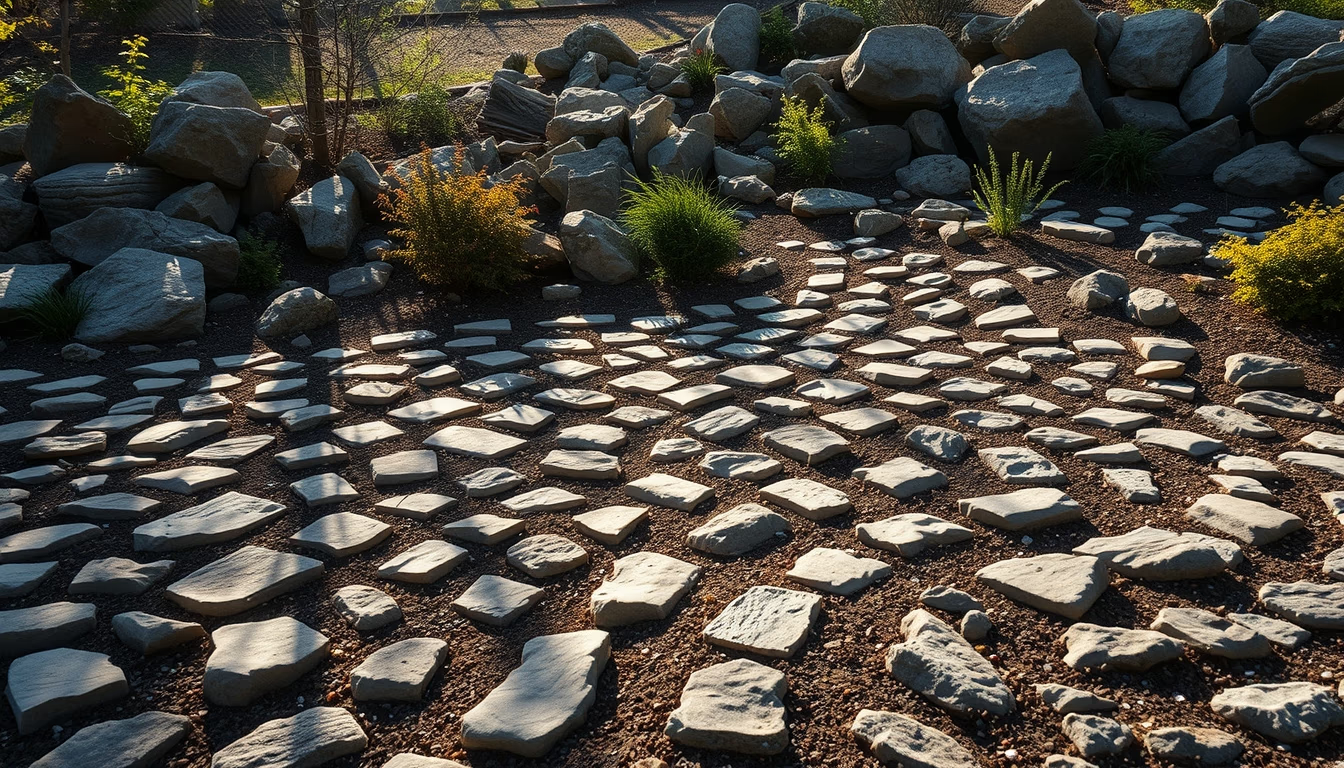
Raked patterns in Japanese dry gardens, such as those at Ryoanji Temple, represent waves and flow, inviting meditation.
About this subject
Raked patterns in rock gardens (karesansui) are a central manifestation of Zen aesthetics. Originating in the Muromachi period (14th-16th centuries), these dry gardens use fine gravel or sand meticulously combed into wavelike forms that symbolize water, clouds, or the very flow of time. The act of raking is itself a meditative practice, requiring focus and precision. Monks often redo the patterns daily, renewing the contemplative experience.
The most famous garden with such patterns is at Ryoanji Temple in Kyoto. Although it features only 15 stones arranged on white gravel, it is the parallel grooves that guide the eye and create a sense of continuous movement. These grooves are not random; they follow the topography and composition of the stones, establishing a visual relationship between the fixed (rocks) and the ephemeral (sand).
Technically, the tool used is a wooden rake with wide teeth, producing grooves of uniform depth. The most common pattern is concentric waves around stones, mimicking ripples in water. Other designs include straight parallel lines, spirals, or checkerboard patterns. Each choice carries symbolic meaning: straight lines represent calm, while waves suggest movement or impermanence.
Beyond Japan, the practice has spread worldwide, inspiring contemporary landscape designers. However, the original context remains Zen: the raked garden is a support for meditation, a visual reminder of transience and essential simplicity. Dramatic lighting, such as side or backlighting, enhances the texture of the grooves, creating shadows that emphasize depth and contrast, evoking an atmosphere of timeless serenity.
Frequently Asked Questions
What is the origin of dry gardens with raked sand patterns?
Dry gardens (karesansui) originated in Japan during the Muromachi period (14th-16th centuries), influenced by Zen Buddhism. They replace water with gravel or sand, maintaining the symbolism of rivers and seas.
Do the raked patterns have specific meanings?
Yes, each pattern carries symbolism: straight lines represent calm and order, concentric waves evoke water movement and impermanence, and spirals can symbolize a spiritual journey.
Does maintaining the patterns require a lot of work?
Yes, patterns need frequent maintenance, often daily, as wind and rain erase them. In temples, monks redo the grooves as part of their meditative practice.
Direct URL
https://pub-c7d6a6ea828543ac903a74a341ccb2e1.r2.dev/imagens/rock-garden-raked-patterns-rembrandt-lighting-dramatic-shadows-fresh8.avifHow to credit
Include a visible link back to UtilizAí. Copy one of the snippets below:
<a href="https://xn--utiliza-eza.com/en/midia/imagens/rock-garden-raked-patterns-rembrandt-lighting-dramatic-shadows-fresh8">Rock garden raked patterns</a> by <a href="https://xn--utiliza-eza.com">UtilizAí</a>, licensed under <a href="https://creativecommons.org/licenses/by/4.0/">CC BY 4.0</a>.
[Rock garden raked patterns](https://xn--utiliza-eza.com/en/midia/imagens/rock-garden-raked-patterns-rembrandt-lighting-dramatic-shadows-fresh8) by [UtilizAí](https://xn--utiliza-eza.com), CC BY 4.0
License: CC-BY-4.0