Rock garden raked patterns
1344×768 · AVIF · CC BY 4.0

The wavy patterns in zen rock gardens represent water and teach meditation through the art of sand raking.
About this subject
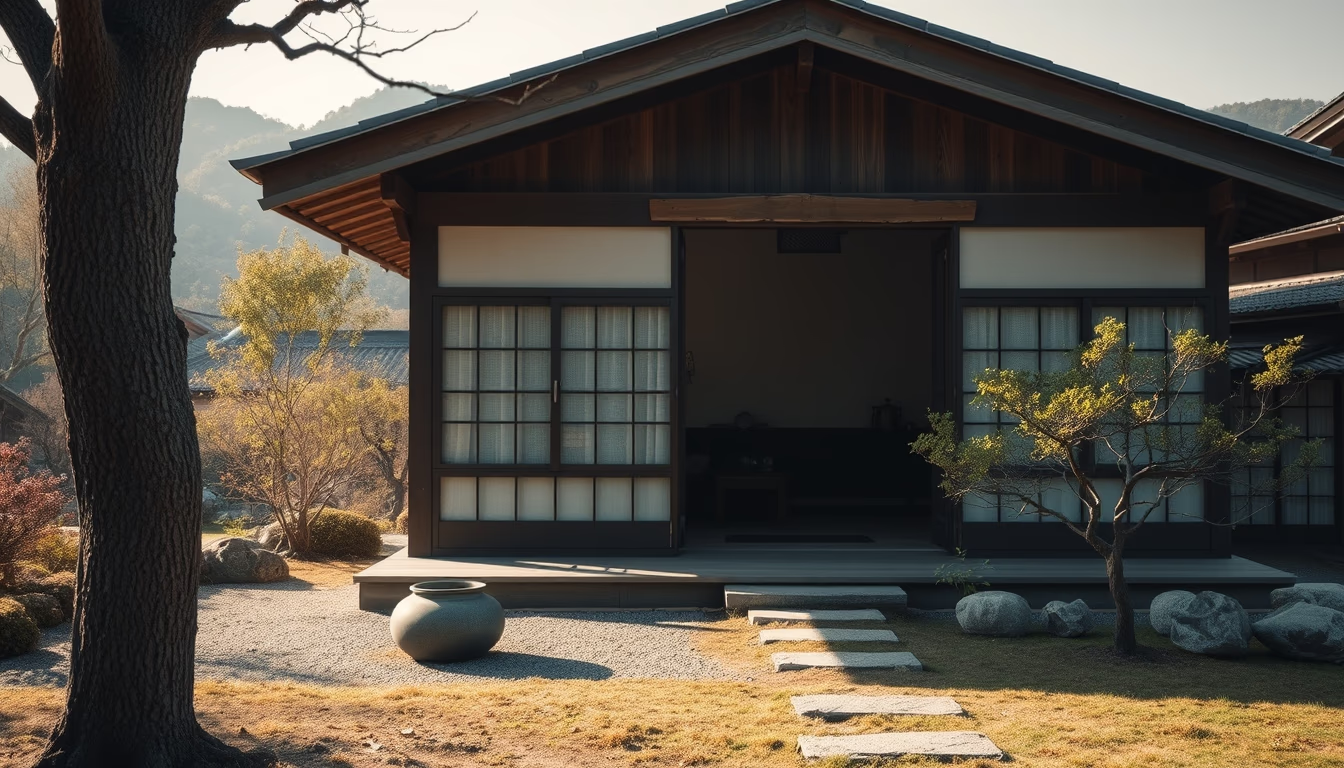
Japanese rock gardens, known as karesansui (dry landscape), are a centuries-old art form dating back to the Muromachi period (14th to 16th centuries). They consist of fine gravel or sand carefully raked into patterns, strategically placed stones, and occasionally moss. The act of raking the sand into concentric or wavy patterns is not merely aesthetic but also a meditative practice for Zen monks. These patterns, often called 'samon', mimic the flow of water in a river or ripples on the ocean.
The most iconic garden of this style is Ryoan-ji in Kyoto, whose arrangement of stones and raked gravel is famous for its simplicity and philosophical depth. It is believed that the patterns represent sea waves, with the stones symbolizing islands or mountains emerging from the void. The daily maintenance required to keep the lines sharp reinforces discipline and mindfulness, core concepts in Zen Buddhism.
Interestingly, the patterns are not random: each rake stroke must be calculated to create fluid, symmetrical curves. In traditional temples, monks refresh the patterns each morning as part of their active meditation routine. The absence of living elements like flowers or trees emphasizes transience and the essence of nature in its most abstract form.
Outside Japan, rock gardens have spread as symbols of tranquility and minimalism. Many Western parks and homes have adapted the concept, but the original raking technique remains an art requiring patience and intention.
Frequently Asked Questions
What do the patterns in a rock garden mean?
The raked patterns, called samon, represent moving water such as ocean waves or streams. They symbolize the fluidity of life and invite contemplation.
How is the maintenance of patterns done in Zen gardens?
Monks or gardeners use wooden rakes to redo the lines daily, ensuring the patterns remain crisp. The process itself is a meditative practice.
What is the most famous rock garden in the world?
Ryoan-ji in Kyoto, Japan, is the most celebrated Zen dry garden. It features 15 stones arranged on raked white gravel, and its composition is studied for its symmetry and mystery.
Direct URL
https://pub-c7d6a6ea828543ac903a74a341ccb2e1.r2.dev/imagens/rock-garden-raked-patterns-macro-closeup-fresh13.avifHow to credit
Include a visible link back to UtilizAí. Copy one of the snippets below:
<a href="https://xn--utiliza-eza.com/en/midia/imagens/rock-garden-raked-patterns-macro-closeup-fresh13">Rock garden raked patterns</a> by <a href="https://xn--utiliza-eza.com">UtilizAí</a>, licensed under <a href="https://creativecommons.org/licenses/by/4.0/">CC BY 4.0</a>.
[Rock garden raked patterns](https://xn--utiliza-eza.com/en/midia/imagens/rock-garden-raked-patterns-macro-closeup-fresh13) by [UtilizAí](https://xn--utiliza-eza.com), CC BY 4.0
License: CC-BY-4.0