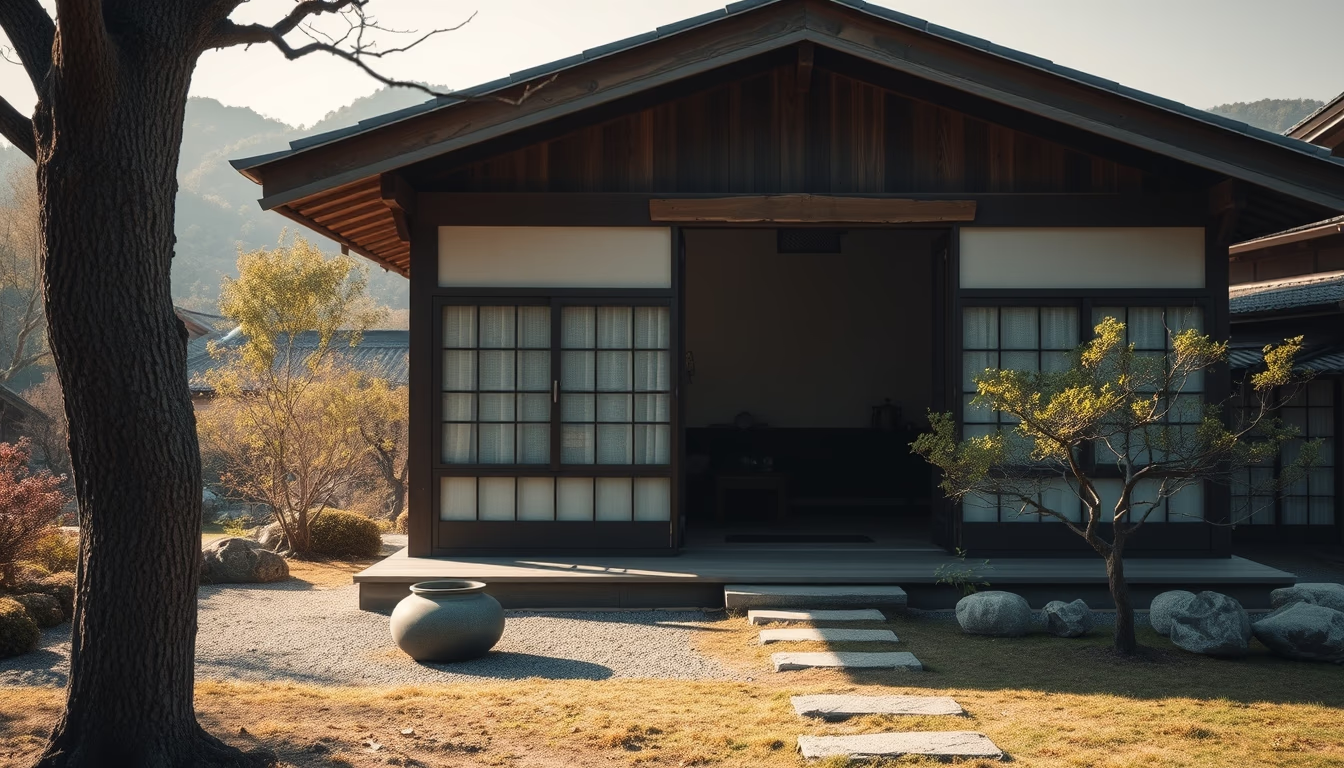
Rock garden raked patterns
1344×768 · AVIF · CC BY 4.0
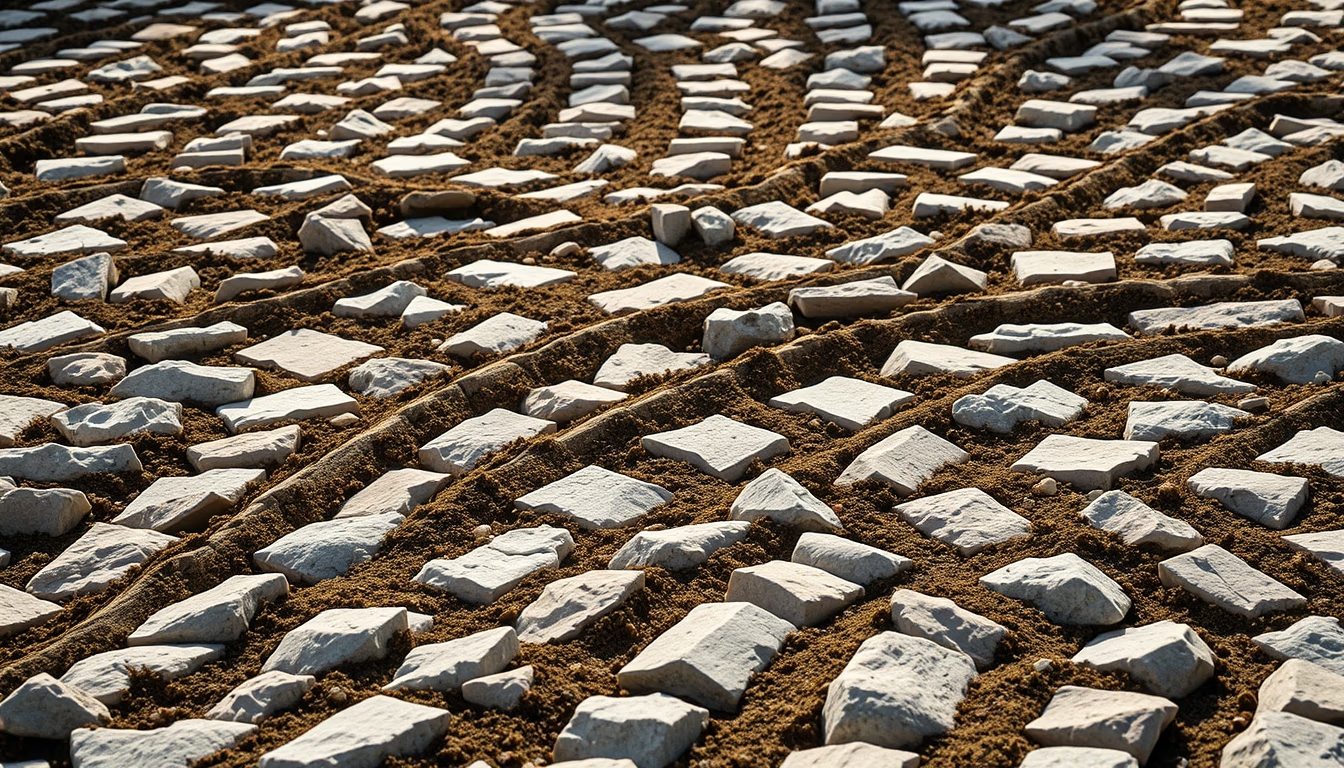
The meticulously raked patterns in Japanese dry gardens, known as karesansui, symbolize water and nature's flow through precise lines and zen ripples.
About this subject
The raked sand or gravel patterns in Japanese dry gardens, known as karesansui, are an art form dating back to the Muromachi period (1336, 1573). Originally influenced by Zen Buddhism, these gardens were created for meditation and contemplation, replacing water with gravel or sand to represent rivers, oceans, and waves. The act of raking, typically done with wooden rakes, is not merely decorative: straight lines symbolize calm and order, while concentric circles around stones evoke islands or mountains surrounded by water.
One of the most famous examples is the garden of Ryoan-ji in Kyoto, where 15 stones are arranged on raked gravel. The wavy pattern, called samon, is drawn daily by monks, requiring training and precision. Constant maintenance is part of Zen practice: each rake pattern is a lesson in impermanence, renewed every day. Additionally, raking techniques vary by gardener, and specific patterns like nyoi (cloud shape) have symbolic meanings related to luck and protection.
These patterns can also be found in contemporary gardens and meditation spaces worldwide, adapted to different cultures. The use of music and the smooth movement of raking are often integrated into mindfulness practices. Interestingly, gravel size and groove depth influence texture: finer gravel allows sharper lines, while coarser gravel creates a more organic effect. Color choice is also important: white sand (as in Daitoku-ji Temple) conveys purity, while dark gray (common in modern gardens) evokes serenity.
Recent studies analyze how these patterns affect the human brain: visual repetition seems to induce a state of relaxation similar to meditation. This connection between art and neuroscience reinforces karesansui's relevance not only as aesthetic expression but as a therapeutic tool. Dry gardens continue to inspire architects, designers, and artists, proving that simple grooves in sand can carry centuries of meaning.
Frequently Asked Questions
What is the meaning of the wavy patterns in Zen gardens?
The wavy patterns represent water in motion, such as rivers and ocean waves. Concentric circles around stones symbolize islands or mountains surrounded by water, inviting contemplation of nature's flow.
How are the raked patterns maintained in dry gardens?
Trained monks or gardeners use special wooden rakes to draw the lines daily. The process requires technique and focus, and each raking is redone every day, reinforcing the Zen concept of impermanence.
What is the difference between a Zen garden, karesansui, and a Japanese garden?
Japanese garden is a broad term including many styles. Karesansui is a specific type of dry garden without real water, featuring raked gravel and stones. 'Zen garden' is a Western term often referring to karesansui, but not every Zen garden is dry.
Direct URL
https://pub-c7d6a6ea828543ac903a74a341ccb2e1.r2.dev/imagens/rock-garden-raked-patterns-fine-art-photography-fresh15.avifHow to credit
Include a visible link back to UtilizAí. Copy one of the snippets below:
<a href="https://xn--utiliza-eza.com/en/midia/imagens/rock-garden-raked-patterns-fine-art-photography-fresh15">Rock garden raked patterns</a> by <a href="https://xn--utiliza-eza.com">UtilizAí</a>, licensed under <a href="https://creativecommons.org/licenses/by/4.0/">CC BY 4.0</a>.
[Rock garden raked patterns](https://xn--utiliza-eza.com/en/midia/imagens/rock-garden-raked-patterns-fine-art-photography-fresh15) by [UtilizAí](https://xn--utiliza-eza.com), CC BY 4.0
License: CC-BY-4.0