Robotic prosthesis hand
1344×768 · AVIF · CC BY 4.0
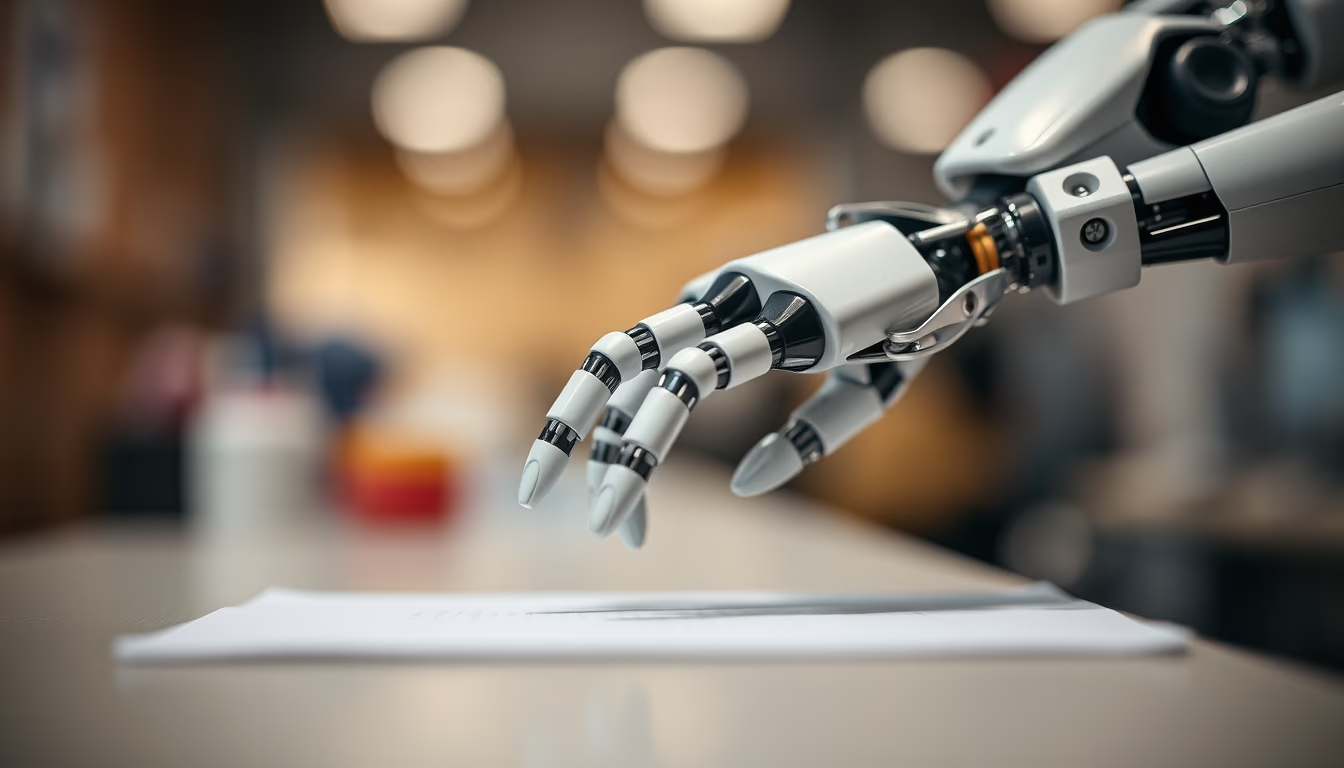
Robotic prosthetic hands combine advances in engineering, artificial intelligence, and biomechanics to restore motor and sensory functions in amputees.
About this subject
Robotic prosthetic hands represent one of the most dynamic fields of biomechatronics. Unlike traditional passive or mechanical prostheses, these devices use myoelectric sensors that capture electrical signals from the user’s residual muscles. Electrodes placed on the skin detect muscle contractions and translate those signals into precise finger movements, enabling actions such as pinch, palmar grip, and individual digit motion. Advanced models like the i-Limb or Michelangelo hand incorporate microprocessors that adjust force and speed in real time, providing a more natural experience.
Development accelerated in the last two decades thanks to miniaturization of electronic components and lower cost of inertial sensors. Integration with artificial intelligence allows machine learning algorithms to recognize specific muscle patterns, reducing user training time. Additionally, some modern prostheses include sensory feedback: pressure sensors in the fingers send electrical stimuli to nerve endings in the stump, enabling the user to feel texture or hardness of objects.
In Brazil, robotic prostheses use is still limited due to high cost, often exceeding one hundred thousand reais. Initiatives like the Biomedical Engineering Laboratory of the Federal University of Uberlândia develop low-cost models using 3D printing and affordable components. Globally, competition among companies like Ottobock, Touch Bionics, and Open Bionics drives innovation: Open Bionics, for instance, created the Hero Arm, inspired by superhero films, which is 3D printed and customizable. Despite advances, social acceptance and psychological adaptation remain significant challenges for amputees.
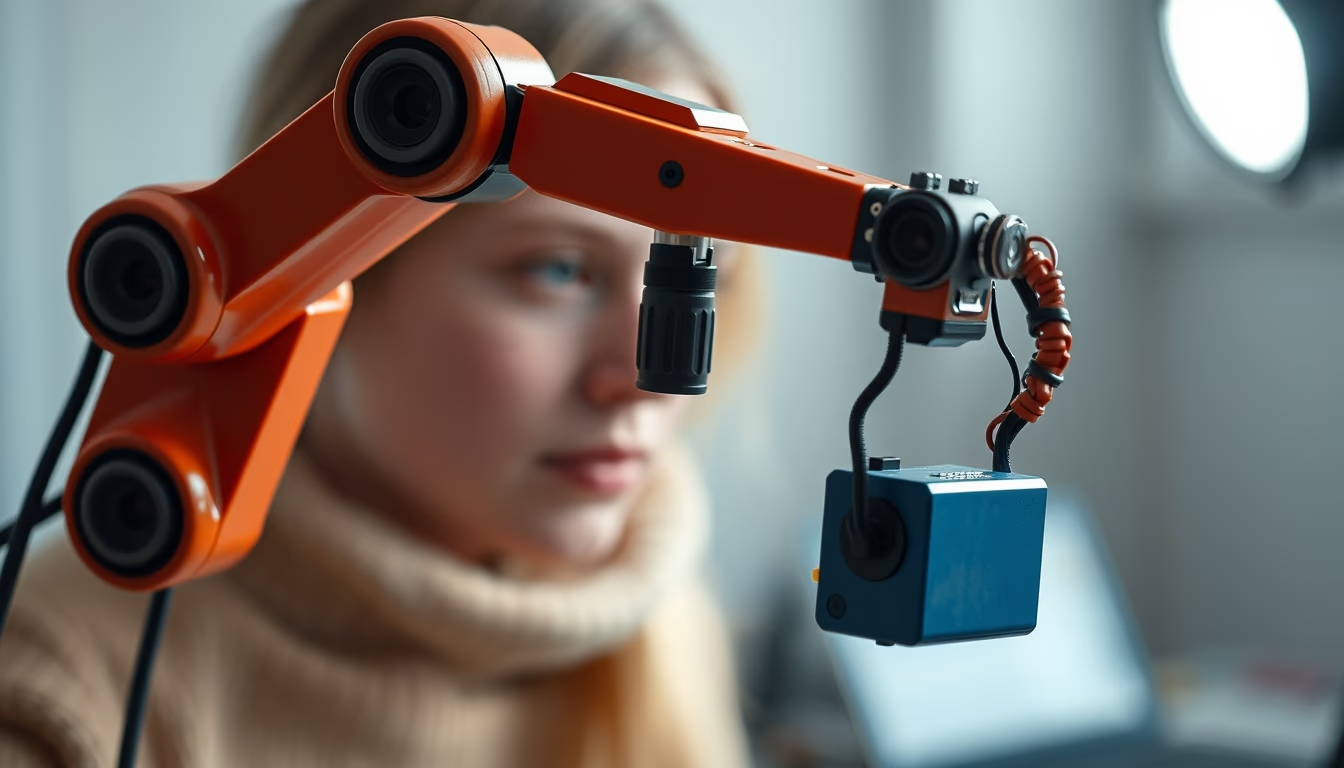
Interestingly, the tilt-shift technique applied to images of robotic prostheses, as in this photograph, creates a miniature effect that highlights the device’s mechanical complexity. This visual tool is often used in science communication to make technology more accessible and fascinating to the lay public. However, the true impact of these robotic hands goes beyond aesthetics: they represent the convergence of biology and machine, restoring independence to thousands of people worldwide.
Frequently Asked Questions
How does a robotic prosthetic hand work?
It uses myoelectric sensors that detect electrical signals from the residual muscles. These signals are processed by a microcontroller that commands motors in the fingers, enabling movements like opening and closing the hand.
How much does a robotic prosthetic hand cost in Brazil?
Costs range from BRL 30,000 to over BRL 200,000, depending on features. Few health insurance plans cover it, and the public health system offers only cosmetic or simple mechanical prostheses.
Is there a robotic prosthesis with a sense of touch?
Yes, some advanced models have pressure sensors that stimulate nerves in the stump, conveying sensations of touch and texture. This sensory feedback is still being perfected.
Direct URL
https://pub-c7d6a6ea828543ac903a74a341ccb2e1.r2.dev/imagens/robotic-prosthesis-hand-tilt-shift-miniature-p8.avifHow to credit
Include a visible link back to UtilizAí. Copy one of the snippets below:
<a href="https://xn--utiliza-eza.com/en/midia/imagens/robotic-prosthesis-hand-tilt-shift-miniature-p8">Robotic prosthesis hand</a> by <a href="https://xn--utiliza-eza.com">UtilizAí</a>, licensed under <a href="https://creativecommons.org/licenses/by/4.0/">CC BY 4.0</a>.
[Robotic prosthesis hand](https://xn--utiliza-eza.com/en/midia/imagens/robotic-prosthesis-hand-tilt-shift-miniature-p8) by [UtilizAí](https://xn--utiliza-eza.com), CC BY 4.0
License: CC-BY-4.0