Robotic prosthesis hand
1344×768 · AVIF · CC BY 4.0
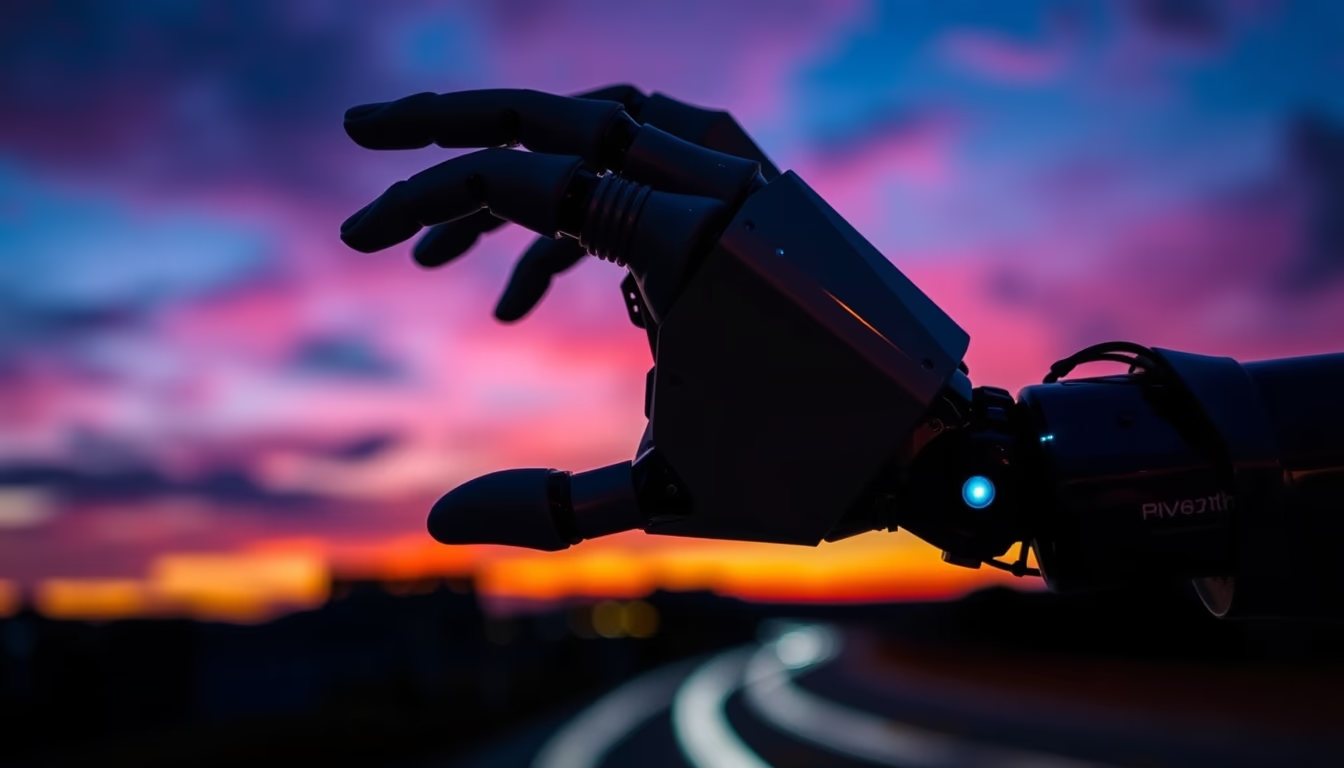
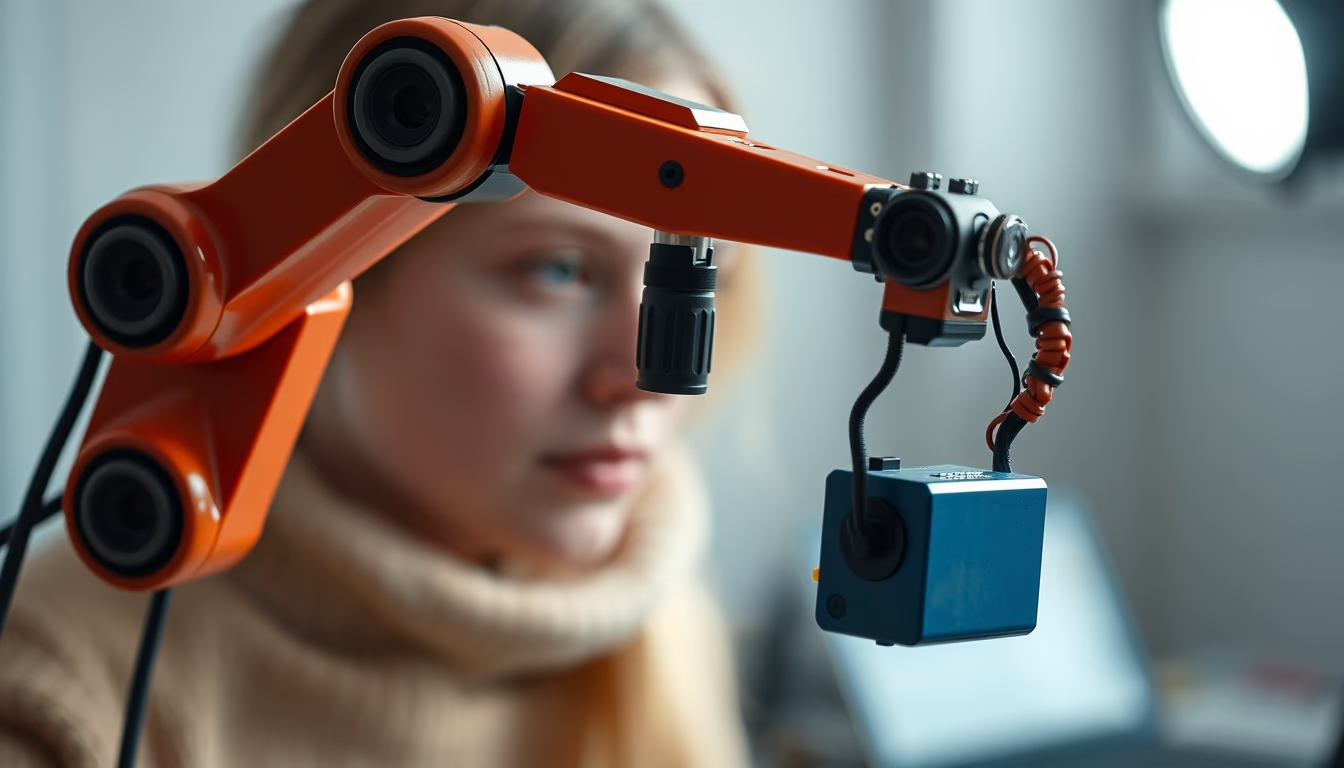
Advanced robotic prosthetic hand combines sensors, actuators and artificial intelligence to restore natural movements in amputees.
About this subject
Robotic prosthetic hands represent the state of the art in amputee rehabilitation. Unlike traditional mechanical hooks, these devices use myoelectric sensors that capture electrical signals from remaining muscles. These signals are processed by microcontrollers that drive electric actuators, enabling individual finger and hand movements. Models such as the Bebionic and i-limb offer multiple grip patterns, from holding a cup to picking up a coin.
The integration of artificial intelligence has revolutionized the field. Machine learning algorithms adjust the prosthesis response to each user's unique muscle patterns, reducing training time. Additionally, force and temperature sensors provide tactile feedback, though still not fully replicating natural sensation. Research into neural interfaces aims to directly connect the prosthesis to the nervous system, promising more intuitive control.
High cost, ranging from $10,000 to $80,000, still limits access. However, initiatives with 3D printing and open-source designs, like the Handiii, are lowering expenses. Customization is another benefit: each prosthesis can be anatomically and aesthetically adjusted, improving psychological acceptance and functionality.
Frequently Asked Questions
How does a robotic prosthetic hand work?
It captures electrical signals from the muscles of the residual limb using myoelectric sensors. These signals are interpreted by a processor that commands motors to move the fingers, allowing gripping of objects and precise movements.
How much does a robotic prosthetic hand cost?
Costs range from $10,000 to $80,000, depending on complexity and features (number of active fingers, tactile feedback, customization). Simpler 3D printed models can cost under $2,000.
Can a robotic prosthetic hand feel touch?
Some advanced prostheses include sensors that transmit pressure and temperature sensations to the user's skin via electrodes. However, the sensation is still limited and not equivalent to that of a biological hand.
Direct URL
https://pub-c7d6a6ea828543ac903a74a341ccb2e1.r2.dev/imagens/robotic-prosthesis-hand-long-exposure-p5.avifHow to credit
Include a visible link back to UtilizAí. Copy one of the snippets below:
<a href="https://xn--utiliza-eza.com/en/midia/imagens/robotic-prosthesis-hand-long-exposure-p5">Robotic prosthesis hand</a> by <a href="https://xn--utiliza-eza.com">UtilizAí</a>, licensed under <a href="https://creativecommons.org/licenses/by/4.0/">CC BY 4.0</a>.
[Robotic prosthesis hand](https://xn--utiliza-eza.com/en/midia/imagens/robotic-prosthesis-hand-long-exposure-p5) by [UtilizAí](https://xn--utiliza-eza.com), CC BY 4.0
License: CC-BY-4.0